

[Warning: Minor spoilers for The Farseer Trilogy.]
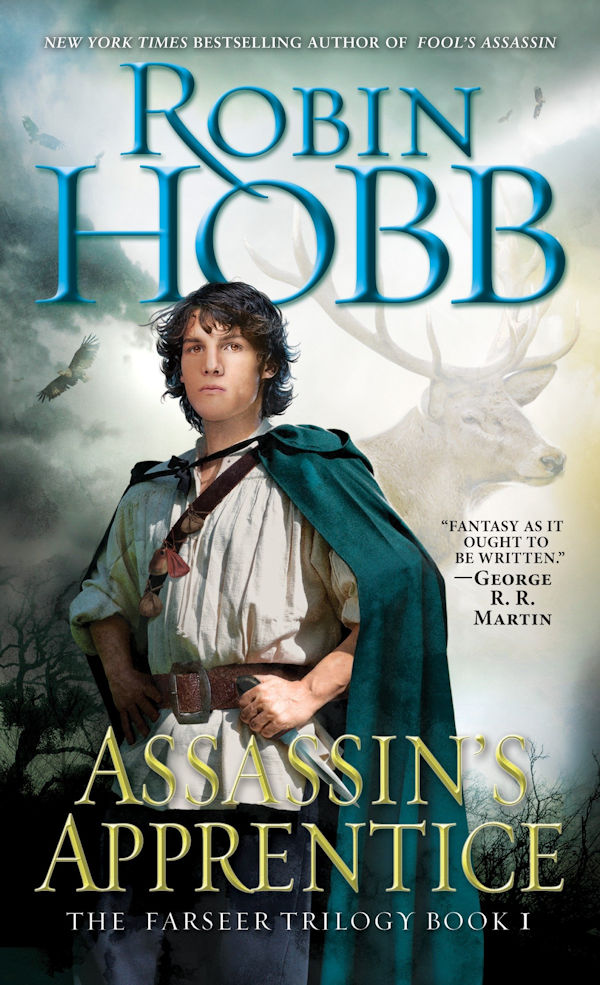
At first glance, Robin Hobb’s storied Farseer Trilogy, which includes Assassin’s Apprentice (1995), Royal Assassin (1996), and Assassin’s Quest (1997), and which introduces the famous Fitz (FitzChivalry Farseer), bears little resemblance to modern romantasy. True, we follow Fitz’s tumultuous relationship with his main romantic interest, Molly, but their path is hardly the hyper-focused, emotional roller-coaster-esque, and physically driven romance we’ve come to expect from romantasy novels, along the lines of Rebecca Yarros’ The Empyrean series or Sarah J. Maas’s A Court of Thorns and Roses. Furthermore, romance is definitely not the main focus of the plot, nor the driving factor behind how the story unfolds. Still, a closer look at the pace, structure, most pivotal relationships, and overall creative choices made by Hobb illuminates surprising parallels. Ones which speak to the enduring success of her trilogy as well as to the more recent popularity of modern romantasy.
A key aspect of romantasy is the depth of the character through which the story is told. The building of this depth quite often supersedes the overall arc of the plot (a.k.a. saving the world) and yet is intrinsically intertwined with that plot. This is also the case for The Farseer trilogy. Fitz’s personal quests, those that hone his character, often hold greater importance in his mind and heart than saving the world. In fact, he may be viewed as a reluctant hero. Many more of his actions are driven by his personal desires and growth than by the overall purpose of saving his home of the Six Duchies from the marauding Red Ships.
”Not all men are destined for greatness,” I reminded him.
“Are you sure, Fitz? Are you sure? What good is a life lived as if it made no difference at all to the great life of the world? A sadder thing I cannot imagine. Why should not a mother say to herself, if I raise this child aright, if I love and care for her, she shall live a life that brings joy to those about her, and thus I have changed the world? Why should not the farmer that plants a seed say to his neighbor, this seed I plant today will feed someone, and that is how I change the world today?”
“This is philosophy, Fool. I have never had time to study such things.”
“No, Fitz, this is life. And no one has time not to think of such things. Each creature in the world should consider this thing, every moment of the heart’s beating. Otherwise, what is the point of arising each day?”
– Royal Assassin, Robin Hobb
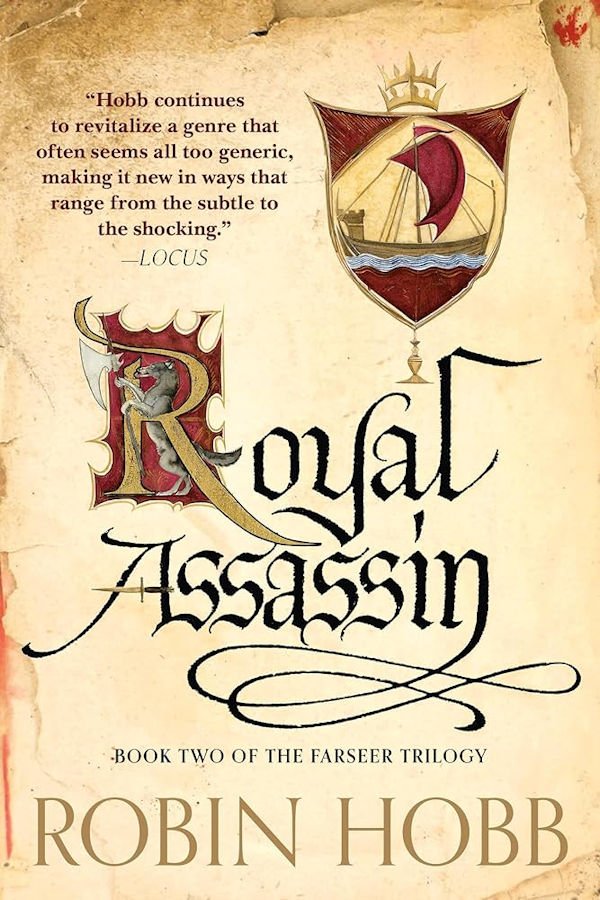
Despite Fitz’s reluctance to be the hero, Hobb keeps readers believing in his choices, and sympathizing with them, in much the same way employed by many romantasy authors: through first-person storytelling. The use of first-person narrative, seen in both The Farseer trilogy and many top romantasy novels, is key to the success of this hallmark characterization. As in romantasy, without the depth of emotion, thought, and, as the series continues, body of history the reader holds with the main character, the decisions made would be less understandable to the reader. Actions that might be viewed as errors in judgement, or as not in the best interest of the overall plot arc of saving the world, would risk throwing the reader out of the story.
In romantasy, these actions often involve reuniting with lovers who have proven emotionally or otherwise harmful, and putting the romantic relationship above attempts to save the world. In The Farseer trilogy, a typical example would be Fitz’s choice to seek personal vengeance over finding his king. In both cases, because of the emotional investment created by deep characterization, these choices draw the reader in more deeply instead of pushing them away.
”To hunt that one is as wise as to go hunting a porcupine.”
“I cannot leave this alone, Nighteyes.”
“I understand. I am the same about porcupines.”
– Assassin’s Quest, Robin Hobb
In addition to the combination of character depth and first-person narrative, a romantasy parallel can be seen in both of Fitz’s most important relationships over the course of the trilogy. The first of these is Fitz’s relationship with the Fool. If we set aside the physical aspect of key romantasy unions, the friendship between Fitz and the Fool bears many of the hallmarks of those relationships. The long, slow build. The intervention of fate. The Fool’s care of Fitz being juxtaposed with the perceived verbal and emotional harm the Fool often administers. Even how they are drawn together by both being of special interest to the king and the Fool’s general ostracism, which could be seen in turn as reflections of Forced Proximity and Forbidden Love tropes.
”Chade, I know the Fool is strange. But I like it when he comes to talk to me. He speaks in riddles, and he insults me, and makes fun of me, and gives himself leave to tell me things he thinks I should do, like wash my hair, or not wear yellow. But…”
“Yes?” Chade prodded as if what I were saying was very important.
“I like him,” I said lamely. “He mocks me, but from him, it seems a kindness. He makes me feel, well, important. That he could choose me to talk to.”
– Assassin’s Apprentice, Robin Hobb
The second most enduring, tumultuous, and romantasy-like relationship of Fitz is his struggle with magic itself. Throughout much of the trilogy, Fitz battles to fend off his Wit, the forbidden connection he feels with all living things, and most acutely with those animals with whom he bonds. Meanwhile, he is also gifted with the Skill, a more excepted but equally perilous form of magic which many feel he should not be permitted to possess. Both forms of magic are dangerous to Fitz, due to both internal and external factors. Both are seductive, each to the point where Fitz could lose himself through using them. Both cause him pain and yet bring him strength. And he must reconcile both within him in order to succeed. A more romantasy style relationship, and torment, could hardly be crafted.
“The Wit is a dark path. To link oneself with a beast is to invite the beast inside, and in the end, it is the beast that rules.”
– Royal Assassin, Robin Hobb
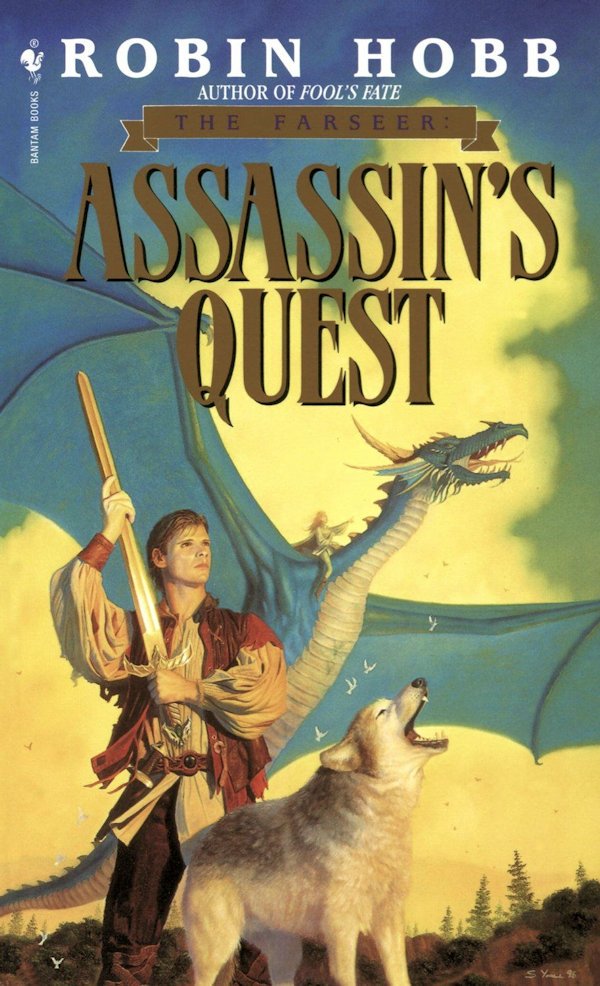
“And this is the thing that every practitioner of the Skill, weak or strong, must always guard against. For in using the Skill, the user feels a keenness of life, an uplifting of being, that can distract a man from taking his next breath.”
– Assassin’s Quest, Robin Hobb
While it’s doubtful that modern romantasy writers set out to consciously mimic Hobb’s masterful construction, the choice of first person, the intricate and deep emotional growth, and the form both give to key relationships, draw strong parallels. Bringing together these significant aspects of storytelling helped create one of the most successful and enduring pieces of fantasy literature, and it is wonderful to see them employed so successfully in new works. Intentionally mimicked or not, hats off to Hobb’s for her rich, intricate, engrossing characters and world, and for the joy she has brought to millions of readers.
And always remember…
“Don’t do what you can’t undo, until you’ve considered what you can’t do once you’ve done it.”
– Assassin’s Apprentice, Robin Hobb
And perhaps more importantly,
“Wolves have no kings.”
– Royal Assassin, Robin Hobb

