

My quarterly anime watch list is usually stacked. With returning mainstays and new shows, it’s difficult to curate a concise list without adding every title that looks intriguing. Last autumn, one new anime escaped my notice, though it remained highly recommended by my anime watcher cohort. I found a slot this winter amidst my already bountiful list for that show.
And proceeded to binge the heck out of it.
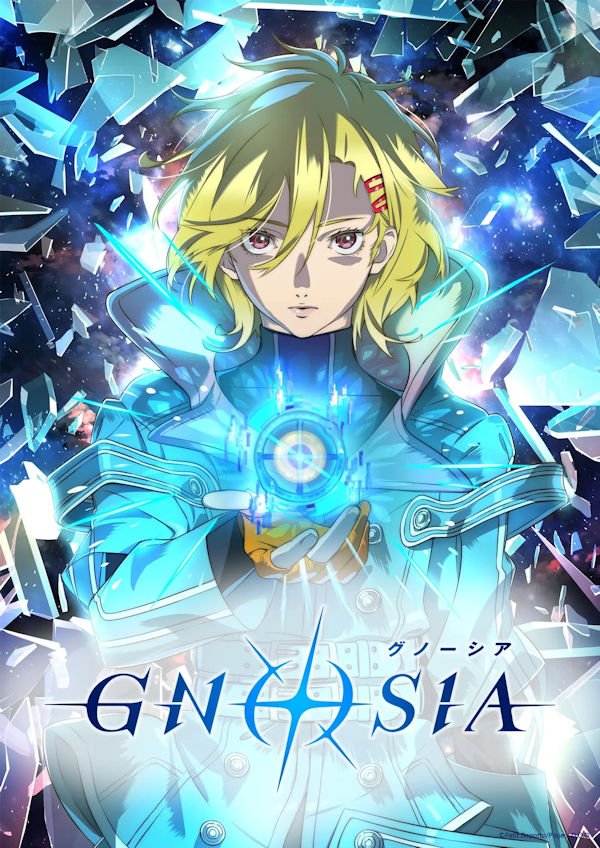
Most anime I watch is adapted from a manga. There are some original outliers, but they’re harder to come by. Some are based on games, which I usually avoid. For me, most videogame adaptations don’t work. They’re glutted with battle sequences, stagnant plotlines, and uninteresting characters. Autumn 2025’s Gnosia proves to be an exception.
Adapted from a 2019 visual novel role-playing game of the same name, Gnosia immerses the viewer in an intense game of whodunnit. Or, more aptly, a game of “who’s gonna do it”. Similar to the Werewolf game and 2018’s phenom Among Us, the main character is forced to find villains among a group of strangers. It sounds easy, but each round becomes trickier than the last.
Like in the game, the viewer awakens with Yuri, the nonbinary main character, who experiences disorienting amnesia. Taken from a medical pod after being injured in the escape from a dangerous planet, Yuri finds themself on an older spaceship with barely functioning tech. They meet fellow refugees who explain that the ship’s AI has detected a threat on board, and they must figure out which crew member is that threat and put them in cold storage. Easy enough. Except for that pesky amnesia. The core cast includes Setsu, a military officer and Yuri’s closest compatriot; Racio, a know-it-all tsundere who ends up in cold sleep often due to their attitude problem; Jina, a softspoken flight traffic controller; and SQ, a hyper cutie prone to flirting with everyone.
The first episode leads the viewer confidently through the plot, which twists and turns just enough to pique interest for the next one. Set in a universe where humans have spread from Earth and settled the stars, a massive threat has emerged. Like in Among Us, the ship is infiltrated by imposters. In this iteration, they are Gnosia-infected humans who turn violent due to a mysterious disease. The planet Yuri and co escaped from fell to the murderous Gnosia, and since their ship is infected, they’re not allowed to land on other planets or space stations. The AI, LeVi, tells Yuri and crew how many Gnosia infiltrators are onboard, and they debate in a tribunal setup to figure things out before the Gnosia-infected equals the number of true humans. If that balance is reached, the Gnosia automatically take over. In that event, it’s logical that LeVi also self-destructs the ship.
Game over.
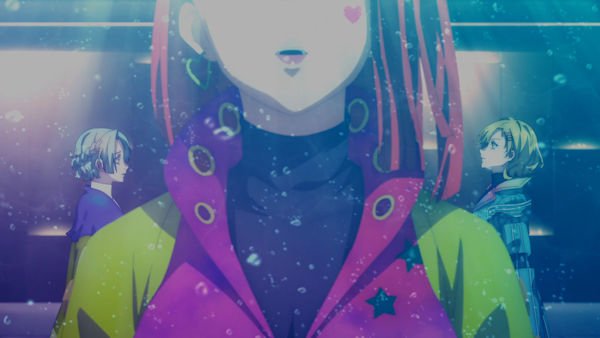
Poor Yuri is unable to solve the first episode’s mystery and is plunged into a time loop where they must reason out who is the Gnosia again and again. The twist: Yuri is universe-hopping in the loop, where the infected person or people differs each time. They wake up in the same medical pod with gained knowledge from each loop, trying to beat the infected and ultimately complete the loop. This journey is agonizing for Yuri but thrilling for us. How are they supposed to trust anyone if that person changes personalities in the next loop? It’s devastating when Setsu, Yuri’s emotional anchor, unmasks as a Gnosia in one episode. I’m not usually a fan of time loops or time travel in narratives, but the mechanics for this show felt unique and compelling.
Besides regenerating at a “save point”, many gameplay tropes remain, such as the introduction of various crew jobs that throw wrenches into Yuri’s investigations. The engineer, doctor, guardian angel, and various other “jobs” change the plot’s flow and further challenge Yuri and the viewer to solve each mystery. Plus, the core cast is joined by new crewmates as the episodes pile up. Starting with five, Yuri is soon surrounded by fifteen people in infinite combinations. Standouts include Otome, a talking Beluga whale who can be infected by the Gnosia, and Kukrushka, a mute living doll who is more than what she seems. Refreshingly, the show is very inclusive. Episode One has three nonbinary characters among five! One of them identifies as asexual as well. A nice change from the usual anime gender dynamics.
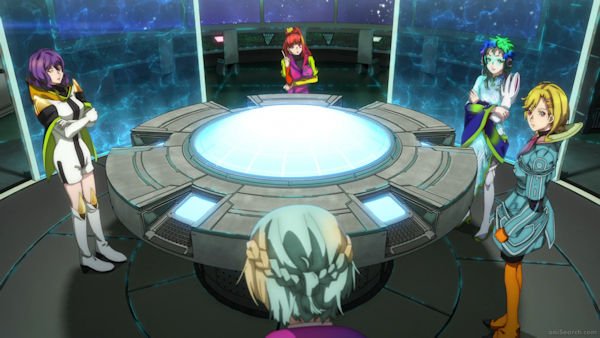
I worried that being so similar to a game would put me off this show, but unique personalities and character designs kept things fresh, and the mysteries kept me guessing. I loved the episodes where I didn’t figure out who the Gnosia was until it was too late. There were many genuinely disturbing moments, which will please most horror fans. Despite some plot holes—why can the Gnosia only kill one person a night during hyperspace travel? Why not more?—I was engaged the entire time. Lush animation and quirky, colorful costuming helped as well; it felt like I was on a real ship with real people. The music was lovely, with a punchy OP and general haunting tone.
At twenty-one episodes, I wanted more. They could have done a full season of twenty-four episodes and expanded on some characters and their backstories. Some felt more like cyphers than fully fleshed-out people, but I did want to know more. They didn’t fade into the background but would have benefited from additional moments to shine. A major antagonist was introduced, who also needed time for proper development. They were terrifying as is, but I would have loved to see an expanded series with more for them to do.
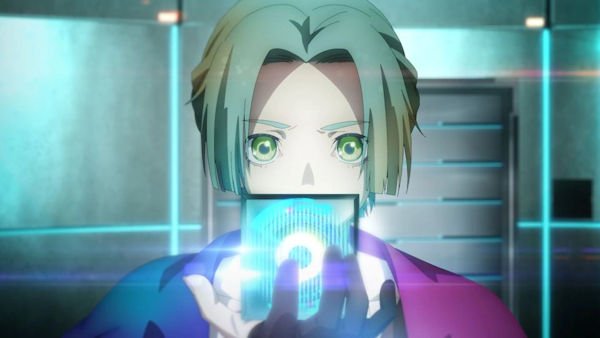
I recommend this show to sci-fi fans, especially those who love mysteries, horror, and cyberpunk. Yuri’s earnest hunt for the truth made them easy to root for, and following them through the loops was engaging. The show felt different from other anime offerings this season, with its unique character designs and interesting take on gaming adaptations. Investing in Yuri finishing that final loop was well worth the time.

