

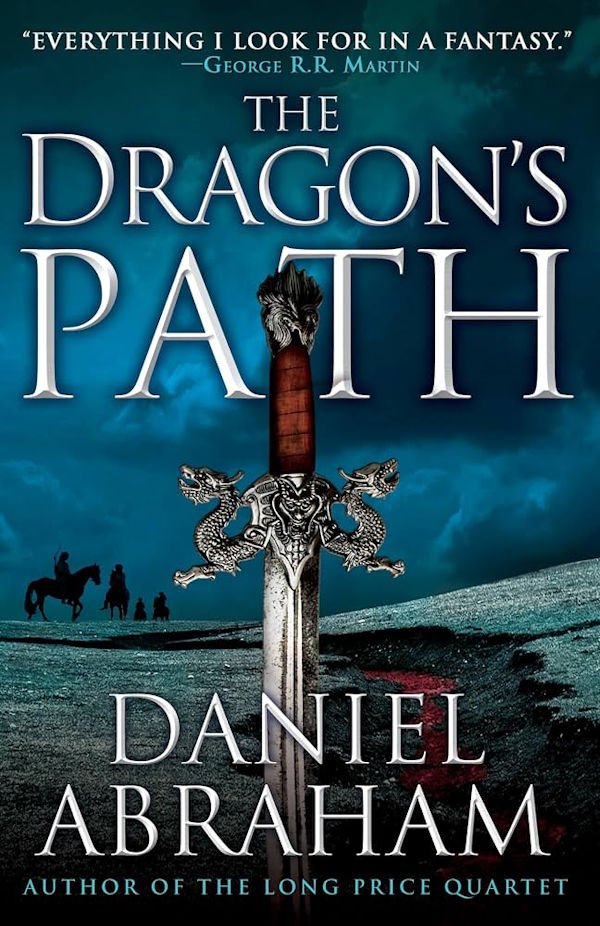
There are few epic fantasy series that have risen as high on my list of favorites on a reread as The Dagger and the Coin by Daniel Abraham. Along with movies like Ford v Ferrari and anime like Haikyu!!, this series falls into the very exclusive category of media that has gotten me engaged with and, indeed, hyped about a subject I normally wouldn’t have given a passing glance.
In this case: economics.
Marcus Wester, an infamous soldier-turned-mercenary, and his Tralgu second-in-command, Yardem, are trying to leave the doomed city of Vanai. Their biggest obstacle to achieving this is a law that only mercenary companies with a certain number of men are allowed out, and the vast majority of their men have just been arrested.
But let’s back up a bit: why is Vanai doomed?
Because it’s about to be invaded by an Antean army. Then when a vainglorious and rather incompetent soldier, Geder Palliako, gains ultimate authority in Vanai, and is disrespected by its civilians and his own men, he decides to put the city to the torch in a petulant fit of spite.
Fortunately, before this all begins, Marcus and Yardem team up with a troupe of actors pretending to be soldiers, allowing them to depart earlier. Also joining them, disguised as the carriage boy, is Cithrin bel-Sarcour, an accounting ward of Vanai bank, tasked with smuggling Vanai’s vast wealth from the city before it falls. Despite being a minor player at first, Cithrin becomes the closest thing to a main character, and her rise in the world of banking is fascinating.
Readers of the first book might have noticed there is one character from book one who is missing from that summary, one of my favorites who introduces the wider political system of the Antean court. However, readers of the rest of the series might also know why I’ve excluded him. Besides trying to avoid spoilers, that’s also what happens when your first book has five amazingly well-thought-out point-of-view characters.
Each story beat introduced above is merely a seed to grow in the tumultuous events of the series as a whole. Once Geder gains unexpected fame for his bold choice to burn down an entire city, his passion for speculative essays puts him on a quest to find the cult of the spider goddess, where the true threat of the story arises. The priests of this cult have the ability to detect lies and compel people to believe whatever they tell them. One such priest, Baraship, intends to use these abilities along with Geder’s newfound political influence to spread his religion throughout the lands of Antea.
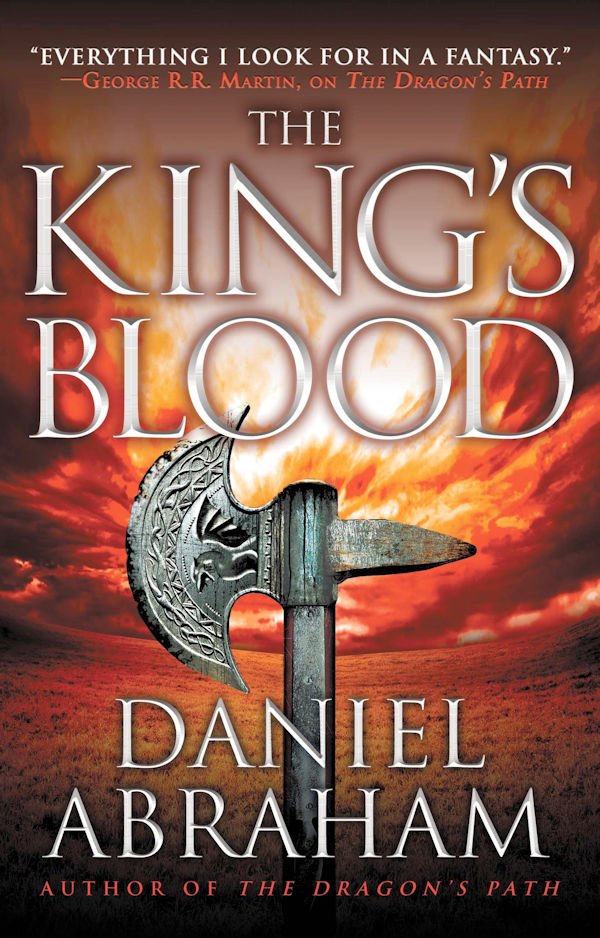
Although it took three paragraphs, that’s the gist of this series. That it took this long to summarize should give an idea of just how complex it is. Book one, The Dragon’s Path, introduces the characters and sets up the dominoes for book two, The King’s Blood, to knock down, and when they are, the chaos and payoffs are just as satisfying as watching those dominoes fall. This series definitely falls into a prestigious list of series where the sequels just keep getting better with each book.
What I love about this epic is the cause and effect of each decision played out on a world stage and how, despite being countries apart, you can easily see how one thing impacts another, particularly in the areas of commerce, banking, and war. This is particularly true amid the escalation of wars caused by the spider priests, and alongside them, the growing resolve of the main characters to do something about it.
This manifests in the complicated and fraught relationship between Cithrin and Geder, as Geder’s infatuation with Cithrin grants her influence over him and his creeping domination of the world. Each of the characters’ actions and decisions play off the others: how Cithrin’s actions impact Marcus, how Geder’s actions impact Cithrin, how Geder’s conquests impact the different races; each aspect reveals the frailty of politics when dishonesty and freedom of thought are removed from it.
Although they’re all flawed and don’t always behave cleverly, all of the characters are clever in their own rights, and that is reflected in their actions. Decisions considered smart in the moment, have serious implications later on. For this reason, it’s hard not to think the author, Daniel Abraham (who is also one of the coauthors of The Expanse, by the way) is a clever guy himself, because both the events, characters, and how it’s written all reflect that, using and playing off tropes and story beats that harken back to other classic fantasies yet with more detail and more depth.
It is a complicated series, which is why I think it wasn’t as popular as other famous epics. Still, maybe this retrospective of the series shows it’s one of the many that benefits from a second reading, because I know I was confused the first time. After reading The Expanse, I had enough reason to go back and give it another go. And I’m so glad I did.
The Expanse is my favorite sci-fi epic, and with The Dagger and the Coin now among my top fantasy epics, it should be no surprise that Abraham has become one of my favorite authors to read. I’ve continued with his latter series, his new fantasy series under his name, and his new sci-fi series coauthored as James S.A. Corey.
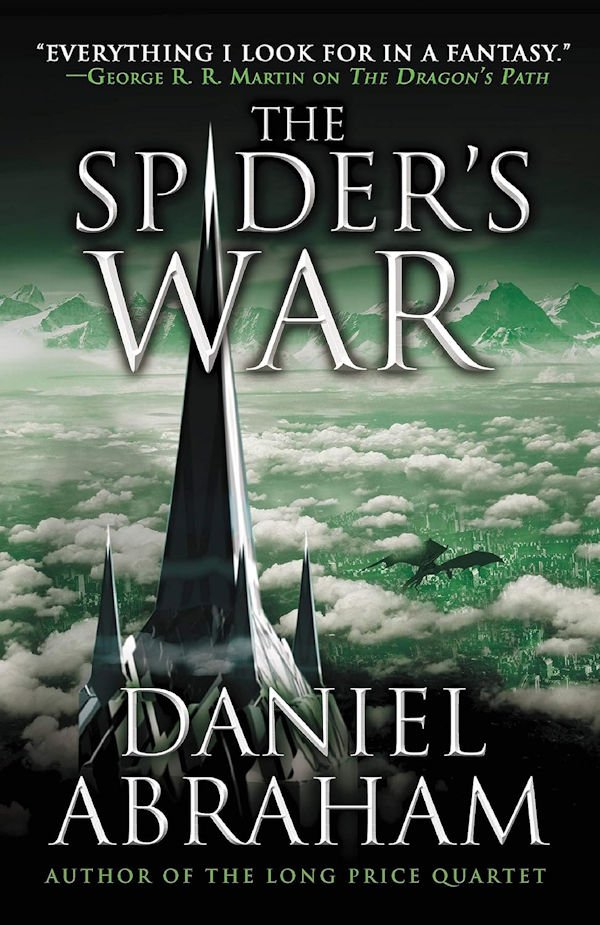
My last comment, and praise for The Dagger and the Coin, and another category these modern epic fantasy series fall into, is that it’s finished. The last book, The Spider’s War, was released over a decade ago, and it ended incredibly well. Yet, given the complex nature of its story, I sometimes wonder how many people got to appreciate it as I did.

