

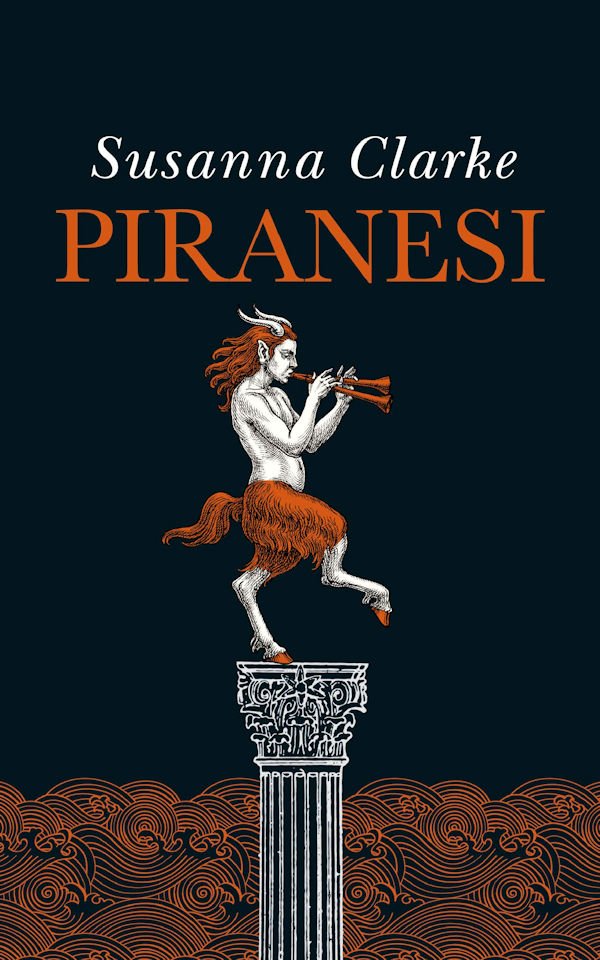
Piranesi’s house is no ordinary building: its rooms are infinite, its corridors endless, its walls are lined with thousands upon thousands of statues, each one different from all the others. Within the labyrinth of halls an ocean is imprisoned; waves thunder up staircases, rooms are flooded in an instant. But Piranesi is not afraid; he understands the tides as he understands the pattern of the labyrinth itself. He lives to explore the house.
There is one other person in the house—a man called The Other, who visits Piranesi twice a week and asks for help with research into A Great and Secret Knowledge. But as Piranesi explores, evidence emerges of another person, and a terrible truth begins to unravel, revealing a world beyond the one Piranesi has always known.
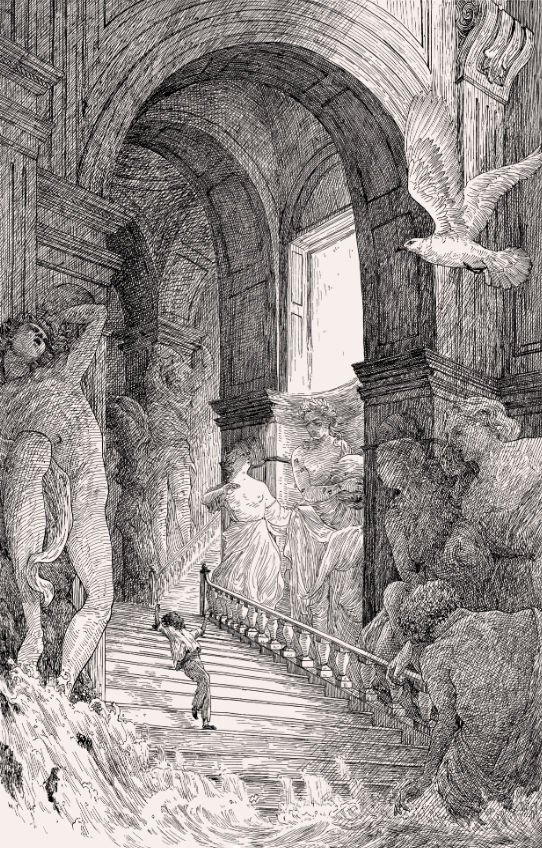
For years, Piranesi has been popping up on my feeds, or referenced in author discussions, or staring at me from my third-tier TBR, kept at arm’s length by what transpired as a fundamental misunderstanding. I read Susanna Clarke’s Jonathan Strange & Mr Norrell well over a decade ago and it was a decent, if bloated, novel with an engaging faux-nineteenth century prose and alt-history. While impressive, there wasn’t anything that had me clamouring for whatever she wrote next. Piranesi’s cover art led me to the assumption it had a nautical plot, which was simply not going to work for my tastes—a certain famous albatross notwithstanding.
However, Alice Cao’s internal artwork for the recent Broken Binding edition of the book changed everything. There were no battered coastlines or distant ships. What I found instead was a House, statues, and solemnity.
What I presumed to be a sea-based novel turned out to be something far more strange and evocative, far more challenging yet gentle. To sum it up would fall way short of my experience with such a spatially wondrous psychological mystery. As I navigated the world with our narrator, a clear literary lineage revealed itself, tethering itself to a rich heritage of some fascinating corners of speculative fiction.
This article is designed to chart my journey through the corridors of Clarke’s House, stopping to explore some of the literary waypoints that came to mind.
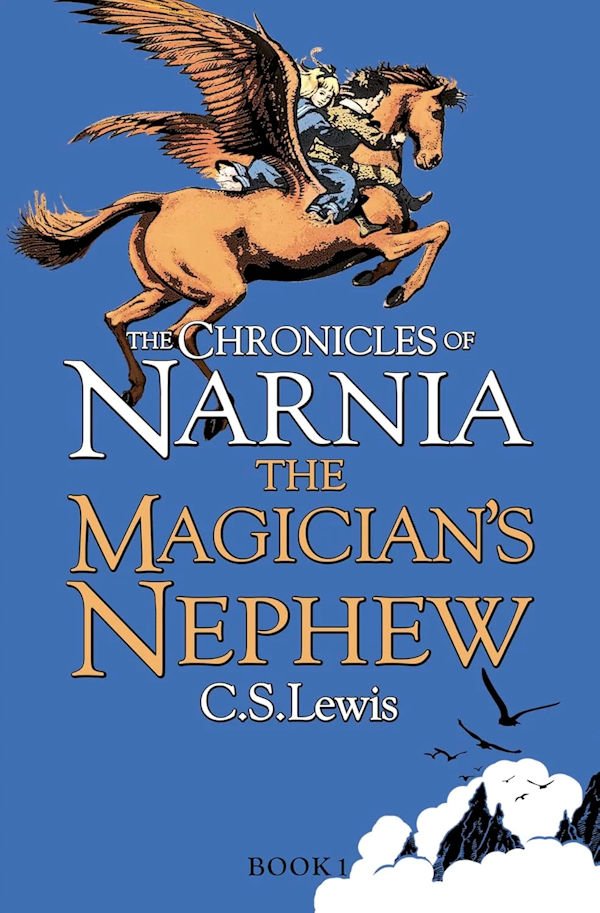
The novel opens with an epigraph from C. S. Lewis’ The Magician’s Nephew, and it could not be a more fitting choice considering how its influence permeates through the novel. The House feels like a blueprint that parallels Lewis’ “wood between worlds,” with pillars replacing trees, and cool stone replacing sunlit forest pools.
The two antagonists share a drive to exploit these ancient, otherworldly spaces; arrogant Uncle Andrew and Clarke’s villainous Arne-Sayles both feel these worlds are there for the benefit of the elite. Clarke taps directly into Lewis’ critique of intellectual hubris, positioning the House as a sanctuary to be treated with reverence.
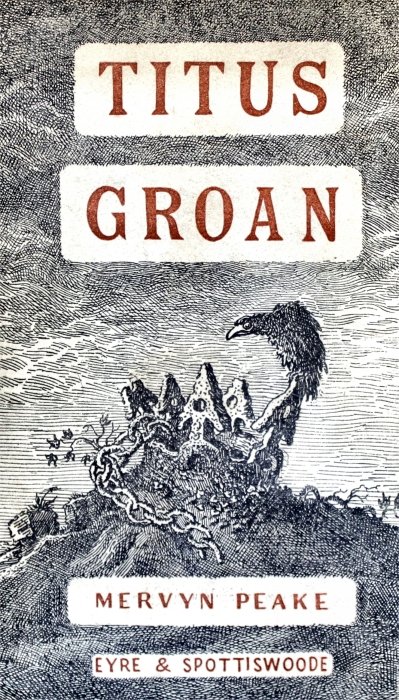
If Lewis provided more of a threshold between worlds, Mervyn Peake’s Gormenghast trilogy focuses on the stone structure that pens it all in. The endless halls, thousands of statues, and forgotten corridors instantly brought to mind the suffocating grandeur of Titus Groan.
Although I’ve only read the first in the trilogy, it’s clear Peake’s massive structure is designed to be a character in and of itself, capable of manipulating those who rattle around whilst trapped inside—shaping lives and the very direction of the kingdom. Although Gormenghast is an oppressive and cruel gothic monument riddled with decay and cruelty, and the House is filled with birds and light, and swept clean by tides, I was frequently reminded of the Groan family’s stone prison due to the personification and power the settings hold over their inhabitants.
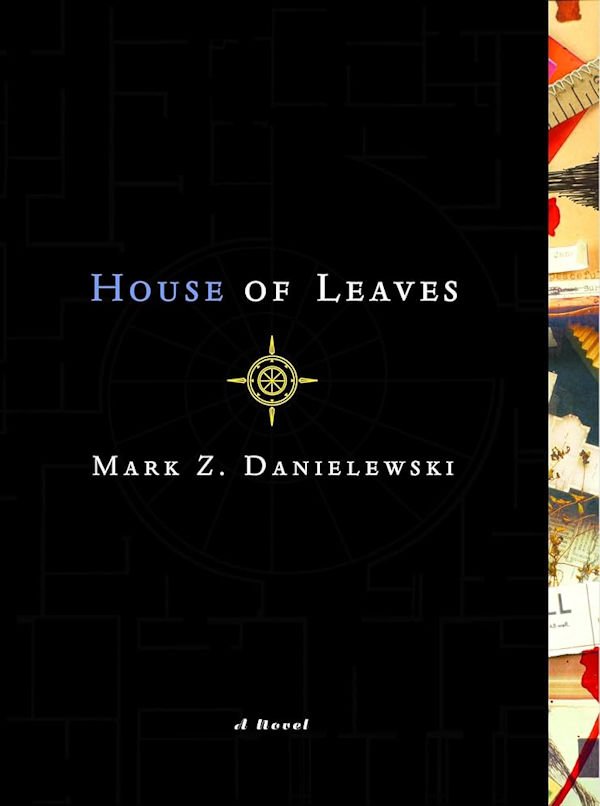
The feeling that we’re listening to a narrator recording his own slow entrapment swells to unbearable levels as Piranesi unfolds, something it has in common with one of my favourite and least favourite novels of all time: Mark Z. Danielewski’s infamous mind-bending horror House of Leaves, a book I had to literally remove from my bedroom before I slept to keep the nightmares at bay.
Both novels centre on a structure that defies physical law—a building that seemingly is larger on the inside than the outside, stretching into pitch-black voids and unmapped halls, feeling as if it never stays still or in one shape.
Yet the truer similarity lies in the narrator’s voice. In House of Leaves, The Navidson Record captures the obsessive documentation of an expanding space. In Piranesi, our guide logs the positions of statues, the timings of tides, and the exact inventory of bones. There is a shared psychological rhythm in these two texts: the surreal horror of a world with skewed geometry, paired with an earnest narrator who uses rigid categorisation as protection against fear and madness.
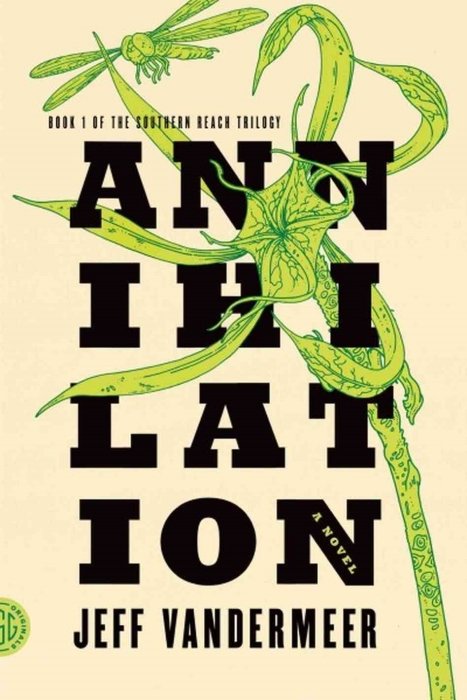
Jeff VanderMeer’s Annihilation is another story I kept coming back to as Piranesi progressed, and I felt it served as a kind of structural twin. Both novels appear to be presented as field journals written by unnamed, deeply observational narrators navigating a surreal, isolated environment that actively warps their memories and perceptions.
More importantly, both protagonists share an earnest, scientific devotion to the place that is essentially consuming them. Where another survivor might see Area X or the House as a prison to escape, both the Biologist and Piranesi view their surroundings with profound respect bordering on the religious. In their minds, they are not conquerors or captives, but they exist to log the ecosystem, unaware or unbothered by the fact the environment is subtly rewriting who they are.
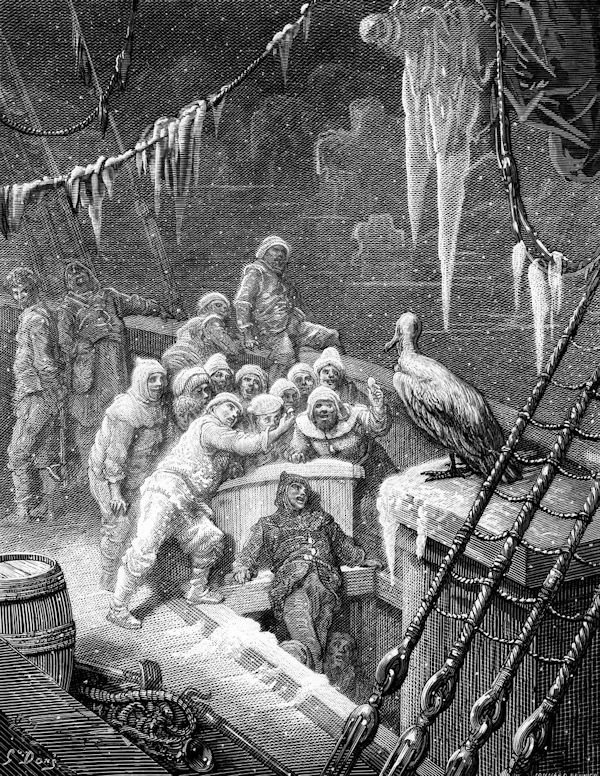
Returning to my unfounded assumption that this was a maritime tale, the presence of the ocean sweeping through hall after hall brought to mind “The Rime of the Ancient Mariner.” The incredible elemental scale of Samuel Taylor Coleridge’s epic can be seen in the House’s tides, weathered bones, and, most clearly, the addition of the albatross embodying destruction, guilt, and the potential of good fortune. Furthermore, Clarke’s writing style evokes classic literature—a tool sharpened in her debut novel.
Both the Mariner and Piranesi live in a state of solemn isolation, penned in by supernatural laws they couldn’t possibly understand. There is a deeply romantic, almost spiritual weight to this solitude. Both protagonists are figures moving through a monumental landscape where the natural forces are not merely scenery, but active, divine forces toying with them.
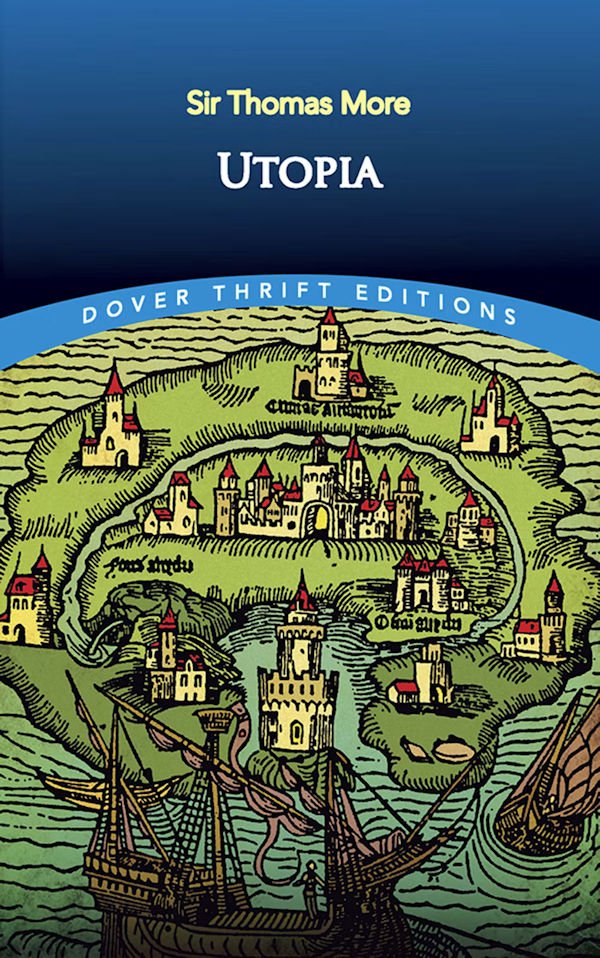
Finally on this literary museum tour, Piranesi’s spiritual reverence towards the House creates an interesting dissonance, and I couldn’t help but think back to Thomas More’s Utopia, a text I dragged my way through during an online Literature course, only to find myself thinking about it more than I do the Roman Empire. This is a fascinating detached analysis of an alien society’s principles that clash widely with that of the narrator’s sixteenth century European upbringing.
Piranesi inverts this in a fascinating way; rather than More’s outsider recording the customs of ‘others’, Clarke’s narrator is the culture that More explores—an antithesis of consumerism and greed. Piranesi makes do with what the House provides, trusting in his deity’s generosity and accepts what he is given. When the outside world intrudes on Piranesi’s life, it is the motives and values of modern humanity that feels barbaric, rather than the House itself. Likewise, More looks at the barbarism of contemporary society through the eyes of a utopia.
Maybe this is a pessimistic conclusion, but reading Piranesi when I did makes me wonder about the quantity of important novels I may have overlooked or under-appreciated over my many years of reading speculative fiction. Truly, this is one of the most profound and genuinely brilliant works of literature I’ve ever read, but I almost dismissed it as a poor man’s Hornblower and, had I read it earlier, may not have had the context of these aforementioned novels to see it as a profound meditation on what it means to be human and our relationship with the world around us.
Of all the modern fantasy books I’ve read over the past decade, Piranesi is one I’m confident will be held in the same literary regard as Coleridge, More, Lewis et al many years from now.

