

Also known as The Emperor’s Blades trilogy after the first book in the series, Chronicle of the Unhewn Throne is quite a ride. I read book one back when it was first released in 2014 and, along with the many other fantasy stories I read back then, was content with the first book, deciding Staveley’s story wasn’t what I was looking for at the time. When the third book was released, I had no other books on my to-read list, so I decided to give book two a try, knowing his prose was good enough that I could lose myself in it for a while. And I’m glad I did.
The second book was fantastic, and the third was just as satisfying. I quickly realized the reason I thought the first book was only “alright” was it was setting up for the rest of the series, and if it weren’t for the delivery in its sequels, I might’ve regretted continuing. Instead, I was pleasantly surprised and glad I gave the rest of the trilogy a shot.
The Emperor’s Blades by Brian Staveley
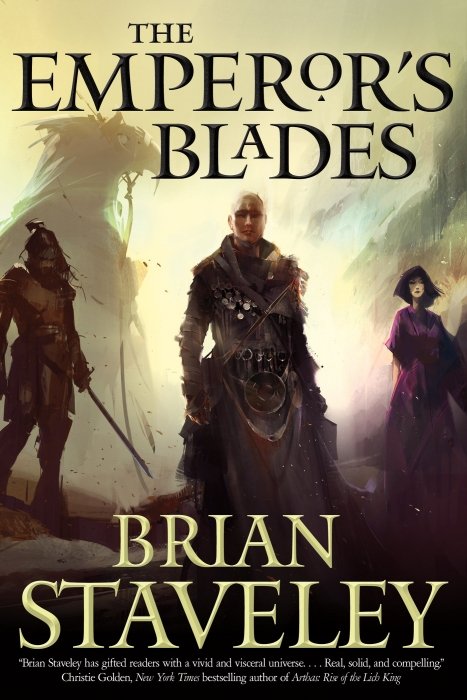
The Emperor has been murdered, leaving the Annurian Empire in turmoil. Now his progeny must bury their grief and prepare to unmask a conspiracy.
His son Valyn, training for the empire’s deadliest fighting force, hears the news an ocean away. He expected a challenge, but after several ‘accidents’ and a dying soldier’s warning, he realizes his life is also in danger. Yet before Valyn can take action, he must survive the mercenaries’ brutal final initiation.
Meanwhile, the Emperor’s daughter, Minister Adare, hunts her father’s murderer in the capital itself. Court politics can be fatal, but she needs justice. And Kaden, heir to an empire, studies in a remote monastery. Here, the Blank God’s disciples teach their harsh ways—which Kaden must master to unlock their ancient powers. When an imperial delegation arrives, he’s learnt enough to perceive evil intent. But will this keep him alive, as long-hidden powers make their move?
The story follows the three children of the emperor and their attempts to gain control of the empire after their father is assassinated. It’s not until the second book, however, that readers are shown how deep the plots behind this scheme runs and the immortals who have been playing three-dimensional chess in the background. What makes the story unique is the way the three siblings are developed: one trained to be an elite soldier who can fight on giant birds, one trained to be a monk who can enter a frame of mind where he feels no emotion, and one trained in court politics, and in many respects, fails to make a rational decision throughout most of the series.
The Providence of Fire by Brian Staveley
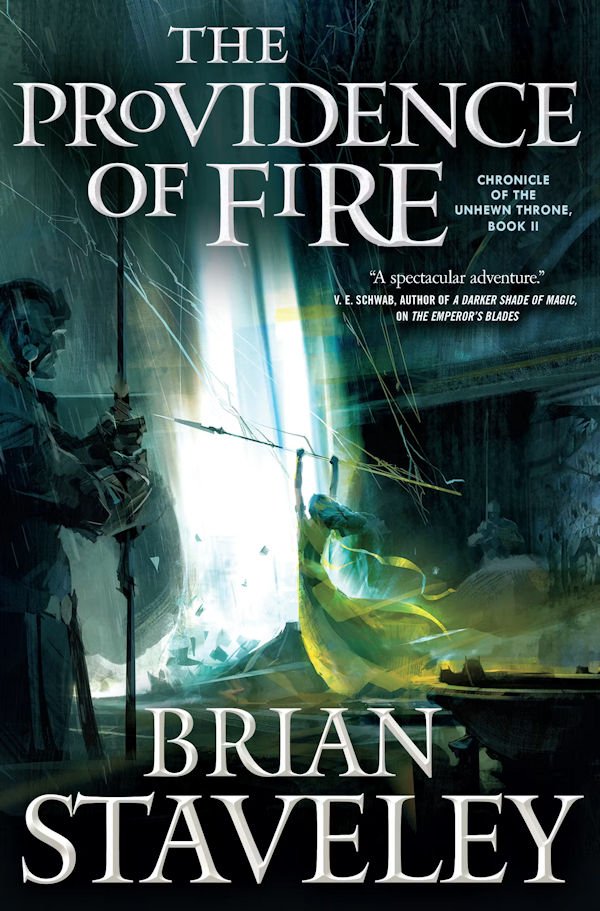
The conspiracy to destroy the ruling family of the Annurian Empire is far from over.
Having learned the identity of her father’s assassin, Adare flees the Dawn Palace in search of allies to challenge the coup against her family. Few trust her, but when she is believed to be touched by Intarra, patron goddess of the empire, the people rally to help her retake the capital city. As armies prepare to clash, the threat of invasion from barbarian hordes compels the rival forces to unite against their common enemy.
Unknown to Adare, her brother Valyn, renegade member of the empire’s most elite fighting force, has allied with the invading nomads. The terrible choices each of them has made may make war between them inevitable.
Between Valyn and Adare is their brother Kaden, rightful heir to the Unhewn Throne, who has infiltrated the Annurian capital with the help of two strange companions. The knowledge they possess of the secret history that shapes these events could save Annur or destroy it.
Like all great epic fantasy, the writing is dense with descriptions of setting and characters’ inner thoughts. While the characters are unique and interesting in their own way, I also felt they were all a little cold. It makes sense within the story’s plot, but I found myself wishing that some of the gallows humor from the minor characters would leak into the three siblings. Then, they would have been a bit more likable. What redeems this is the writing is incredibly clear and draws a detailed image of the scenes, whether they be a courtroom or a battlefield. There is also no ambiguity with most of the characters; their thoughts and lamentations are always clearly constructed and multidimensional, which is why it’s a shame there wasn’t much story away from the core plot.
A big part of the series is its exploration of the philosophies of suffering and the cost of human emotions. The idea that we would all be more rational without the shackles of emotion is at odds with the idea that we would lose most of our meaning if we didn’t have them. What confused me was how the philosophy considered the bleed-through between emotions and physical pain, and what level of suffering is in the emotion and what is a part of the human nervous system. When these ideas are embodied in the forms of gods who can manipulate them, this divide isn’t entirely clear and, if looked into, might snag on the themes the author was trying to portray.
The Last Mortal Bond by Brian Staveley
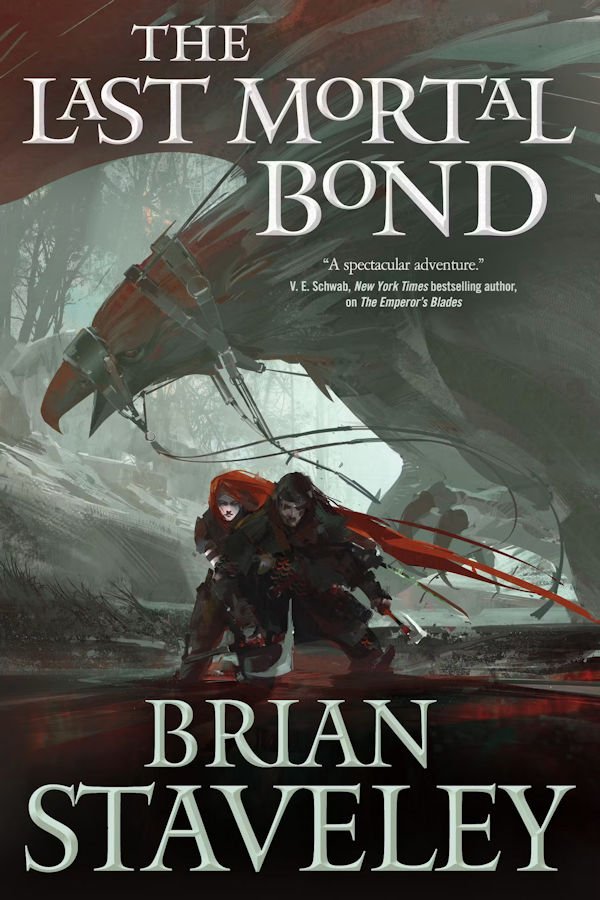
The ancient csestriim are back to finish their purge of humanity; armies march against the capital; leaches, solitary beings who draw power from the natural world to fuel their extraordinary abilities, maneuver on all sides to affect the outcome of the war; and capricious gods walk the earth in human guise with agendas of their own.
But the three imperial siblings at the heart of it all—Valyn, Adare, and Kaden—come to understand that even if they survive the holocaust unleashed on their world, there may be no reconciling their conflicting visions of the future.
As with all series reviews, it is difficult to be accurate enough to describe the books yet vague enough not to spoil the entire plot. It’s a great series to lose yourself in for a couple of weeks, but as I mentioned at the start of this review, the first book has a lot of build-up involved, and although it’s a good series, don’t let book one dissuade you from trying the rest. The payoff is definitely worth it.

