


We are deeper into June and deep into the cuts for this year’s Self-Published Fantasy Blog-Off (SPFBO)! Today we bid farewell to three more books in our Fifth Fall. Five more will follow before we turn our full attention to our four semi-finalists.
A quick reminder: We don’t read in any particular order, and we don’t cut from worst to best either. We work through the books a few at a time until we reach the semi-finalists, each of whom gets their own dedicated review.
As always: Reading is subjective. What didn’t click for us might be exactly your kind of story. If anything here sounds appealing, please do give it a look!
And a sincere thank you to every author who entered. Putting your work forward for a competition takes real courage, and we appreciate each and every one of you for it.
You can keep up with round one of the contest on the official SPFBO website. And if you have no idea what I’m talking about, you can learn more here.
Shadow of the Pyre by R. T. Silveus
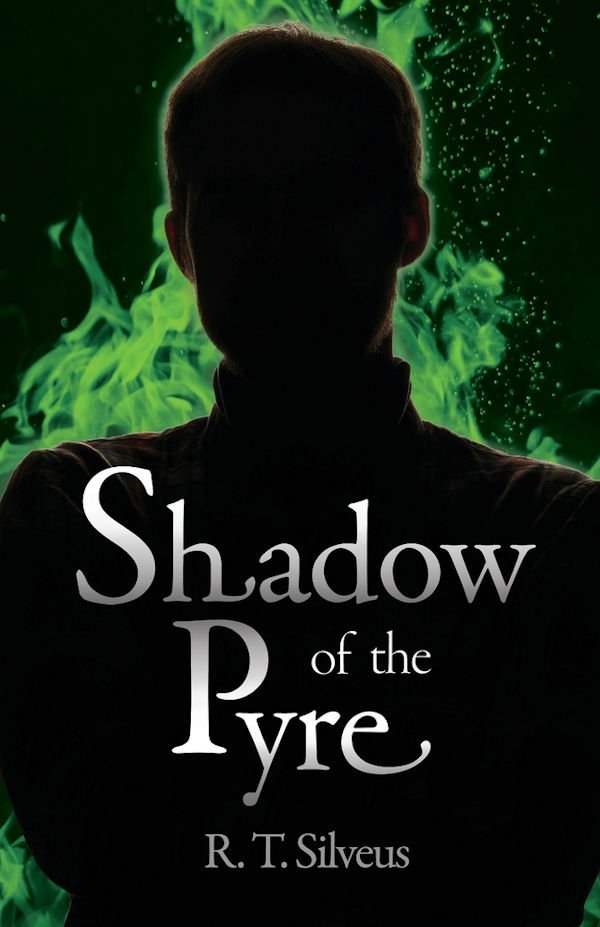
Blind obedience is the only way to survive in the king’s militia. Or at least, it’s the only way for humans to survive.
In a city dominated by a tyrannical Gurvel cult, soldiers who disobey, condemn not only themselves, but their entire squad, to either be “purified by fire” or forced to fight in The Games. Determined to keep his head down, Ronan strives to follow orders, but the torment of sending innocent people to their deaths is slowly destroying his will to live.
Humans aren’t the only ones who suffer oppression in the capital city. After wiping out the Speki, the cult is now on the cusp of enslaving all other forms of life. Eira, one of the remaining two Speki assassins, has vowed to kill the cult’s leader to avenge her people, but she might have to shatter her brother’s dreams in the process.
Meanwhile, Khartsaga, the son of the cult leader, desperately strives to earn his father’s respect but is shackled by his guilty conscience.
Cultist. Assassin. Soldier.
Who will rise to quench the fires of tyranny?
Shadow of the Pyre had a rough landing with most of the team. The prologue was the first stumbling block: several judges found it frontloaded with information, throwing names, places, and factions at the reader all at once before there was any foothold in the story. The immediate and intense violence also put some judges off before they had a chance to connect with anyone on the page.
Those who pushed further found more to criticise. The prose had punctuation and sentence structure issues significant enough to break immersion, and one judge felt the central plot development was predictable enough to call early and lost interest when it played out exactly as expected. The grimdark tone, including the use of fire as a method of execution, struck some as leaning into a trope that is starting to feel overused.
Sara was the exception on the team.
– – –
Sara
An epic fantasy with a mix of races, descriptive worldbuilding, and adult characters with detailed backstories! I particularly liked Ronan’s backstory with him accidentally betraying his family as a child. Having the chapter header as snippets from the book of Legends he sought was clever and I caught on pretty quick. I also really liked the chroma snails!
My one note would be that while the author’s voice was clear I wasn’t so sure each character POV was a distinct voice. And me being a romance girlie I was kind of thinking some romance between two particular characters would have been nice, but this story is purely adventure, not a whiff of romance. I’m interested in seeing what else this author writes!
– – –
A polarising one!
Liches Get Scritches by H. J. Tolson
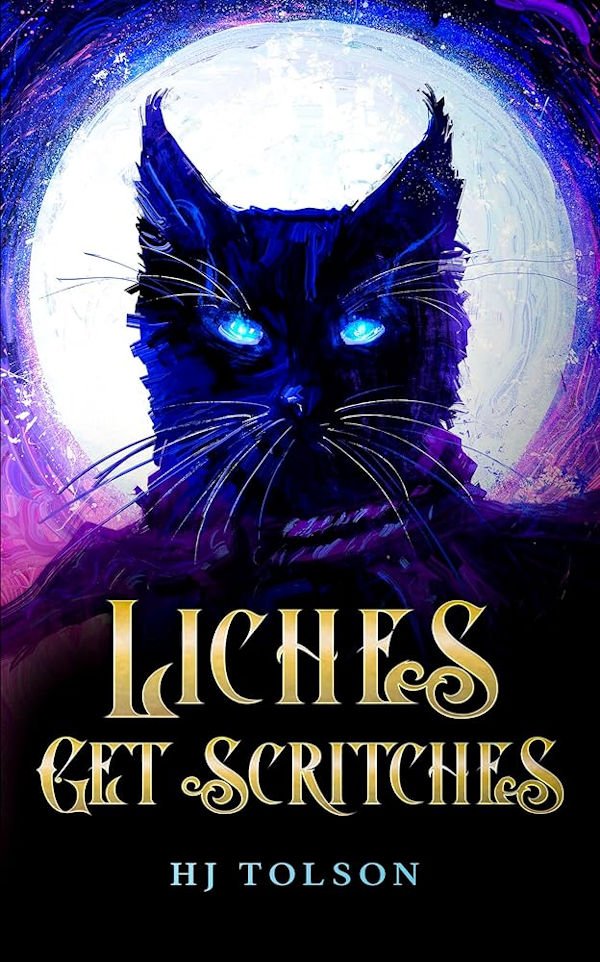
Jenkins Greenleaf is no stranger to death. After all, he has nine lives and intends on living each one to the full. Deep in the dreaming woods, across the river and through the marsh, he discovers a secret forest sect. There he learns the ancient art of cultivation, along with all the other spirit beasts.
Despite his affinity, his mentor warns him away from death qi. It is too dangerous, too unstable, and after all, there are so many other elements to cultivate.
But nine lives are simply not enough.
The road to immortality may start with clean fur and impeccable toe-beans, but how can one meditate without lungs to breath or blood to circulate?
Trials and heavenly tribulations follow, but a cat will always land on his feet.
The team was fairly split on this one, largely along the lines of how much patience you have for a slow-build slice-of-life opening.
Several judges found the early chapters charming but struggled to stay engaged as the story settled into the rhythm of Jenkins’ daily life. Without enough plot momentum or world context to anchor them, a few stepped away before things picked up. One judge who had read and enjoyed the author’s previous book found the comparison working against this one, though acknowledged that reading order might have made a difference.
Those who pushed through to the second half had a better time. Julia found the opening a bit slow, particularly if you already have some familiarity with cultivation fantasy, but felt the second half delivered: “The battles and fights were engaging and fun to read,” and Jenkins’ nine lives got a solid workout. She describes the tone well as “cozy dark,” a mix of necromancers, demon rats, and cute cat adventures, and sums Jenkins up neatly as “a cat calmly cleaning his paws while his enemies settle back into the soil.“
EG was the most enthusiastic on the team, and her full review speaks for itself.
– – –
EG
I walked into this book knowing nothing except it involved a cat. And that was enough to have me interested. The first couple of chapters, though, were enough to have me hooked.
This book follows Jenkins, a black cat of magnificent beauty, as he goes on his journey to cultivate qi and become the most powerful cat ever. Oh, and also to fly. But there’s something dark lurking in his forest home and he might be the only one able to deal with it.
This book is a sort of mix between slice-of-live cozy fantasy, grisly epic fantasy, and cultivation fantasy. I thoroughly enjoyed this genre mash-up even though it was entirely unexpected. Who would have thought that a cozy/grisly/cultivation story would be so fascinating?
The real interest for me lies in the characters and the narration. I love a good story from the perspective of the animal companion, especially when a particular animal’s quirks are brought through well. This does that excellently. Jenkins embodies all the arrogance and joie de vivre of cats everywhere, as well as the desire to nap in the sun and dig their claws into every moving thing. I was impressed with the consistency in the narration; I could tell it was a cat telling the story the entire way through and never got the impression that Jenkins was being anthropomorphised. (I mean, there is a little, because it’s a story being told by a cat to a human audience, but it wasn’t massive.)
The author’s writing is equally well crafted. I was never pulled out of the story to think over a word choice or an awkward sentence. Everything flowed smoothly and was intelligent and easy to read. Coupled with the entertaining dark-yet-cozy plot, I was happy to sit back and read this book.
My only real complaint about the book was the ending felt a little incomplete, like perhaps there was a sequel to Jenkins’ story coming. I did some research, and there are other books about Jenkins’ human, so it would appear this is more of a prequel or companion novel than anything. I’m a little disappointed about that, since Jenkins is such a good main character, but the story was crafted well enough that I’ll probably read it regardless. A very entertaining book.
– – –
For readers who love cultivation fantasy, cozy dark stories, or simply a magnificently arrogant cat narrator, this one is well worth a look. Just be prepared to give it a little time to find its footing.
Island of the Dying Goddess by Ronit J.
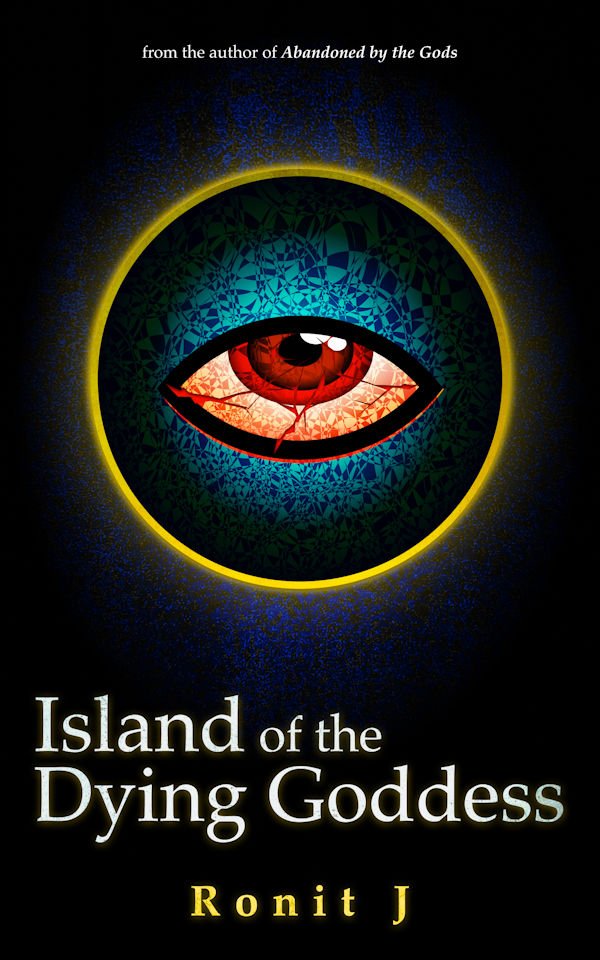
My name is Anawar, and I am an immortal explorer. A few days ago, I was stranded on Sawarrgh, an island where everything looks twisted and the air smells of mourning. The atmosphere has forced suppressed memories to resurface. I have to consciously keep them at bay, or I won’t be able to survive this island’s horrors.
There’s Ghaph, the mad warmongering god who mutilates his enemies and patches on their dismembered limbs. Then there’s Ndraja, the goddess who can enslave entire kingdoms with just her thoughts. But the worst is the nameless goddess who created Sawarrgh a millennium ago, caging it in a barrier that reverses time, forcing the island to relive the same year over and over.
Sawarrgh is a nightmare come alive. Here, existence itself is a curse. The living are barely alive. The stranded, condemned.
I need to escape this island, and in doing so, free Sawarrgh from its perpetual punishment.
And the only way to do that is to kill the goddess.
The team had mixed feelings on Island of the Dying Goddess. For those who pushed through, the emotional core was what stayed with them. Kerry appreciated the exploration of euthanasia and the weight of watching someone suffer, as well as the Southern Indian deities and the way they embody cultural and familial constraints around death. The personal experience behind the story comes through clearly, and that sincerity is something several judges acknowledged.
Where the book lost ground was in the characters and the horror elements. Several judges found the main characters hard to connect with, their motivations unclear and their presence less compelling than the wider world around them. One judge felt the grief theme was added on top of an action plot rather than woven through it. The body horror, while ambitious, didn’t land for everyone, feeling more confusing than unsettling in places.
A few judges didn’t make it far enough to reach the book’s strengths, finding the opening chapters too slow or the writing style too casual for the weight of the subject matter.
This is a book that asks difficult questions about mercy, suffering, and when letting go becomes an act of love. For readers willing to sit with that discomfort, Julia’s review makes clear there is something meaningful here, if it resonates with you.
– – –
Julia
This is a book that left me conflicted. Emotionally, some parts hit me hard and stayed with me, while others never quite reached me. In the end, I don’t regret reading it, but it also won’t be a favourite.
What kept me turning the pages was the way this story approaches grief, mercy, and the painful question of when letting go becomes an act of compassion. The theme of euthanasia, in particular, is something I feel close to and deeply believe is important to talk about. The emotional and mental health aspects felt raw, heavy, and sincere. There is a quiet exhaustion running through the book, the kind that comes from prolonged suffering and unresolved loss, and that emotional weight is what carried me through to the end.
I was especially drawn to the madness of the gods and their slow mental decline. The story makes a clear distinction between Gods and gods, and the power struggles between them add an unsettling layer to the world. Some of these beings are utterly monstrous, violent, cruel, and beyond redemption. Others feel strangely humane, understandable in their pain, even when their actions are questionable or wrong. That contrast worked very well for me. Watching power, grief, and immortality twist some of them beyond recognition while leaving others painfully aware of what they have lost was one of the strongest aspects of the book.
In comparison, the two main characters felt more distant to me. Even knowing they are not mere humans, one immortal and the other from a different race with his own losses, I struggled to form a clear emotional connection. Their pasts, motivations, and goals never fully solidified in my mind. It felt like stepping into a story already in motion, missing pieces that might have helped me understand who they truly are. Whether intentional or not, this distance made it harder for me to feel grounded in their journey, especially when set against the far more compelling inner lives of the gods.
The horror elements were where the book lost me on a personal level. I have learned that horror on the page rarely works for me, even though I am easily affected by horror in films. Here, much of the horror and grotesque imagery passed me by without the intended impact. The grafting of body parts, for example, felt more confusing than disturbing, and moments that were likely meant to horrify left me observing from the sidelines rather than feeling pulled in. The madness and emotional decay resonated far more strongly than the physical horror.
There were still individual moments I enjoyed a lot. The scorpion mix monster stood out as a memorable and striking presence, one of those images that felt strange in a way that worked for me. But my favourite parts of the book remained the exploration of grief, madness, and the different ways beings try, or refuse, to cope with loss.
Island of the Dying Goddess is not a book I loved across the board, but it is one I respect for what it tries to do. Its strength lies in its emotional core, in the questions it asks about mercy, suffering, and the cost of holding on too long. Even when the horror left me unmoved and the main characters felt distant, the themes of grief and power lingered with me. This is a bleak, heavy read that will not work for everyone, but for readers willing to sit with discomfort and emotional pain, it has something meaningful to say.
– – –
For everyone else, it may require more patience than the opening chapters inspire.
And there you have it! Our fifth post of cuts! Thank you again to the authors who took the time to enter and had the courage to let us read their work. We wish you all the best in the future!
That leaves us with nine more books to get through. You can see the entire list of 300 books on Mark Lawrence’s website. Good luck to all the authors, and happy reading!
- The Artificer’s Knot by Eric Lewis
- City of Stone by K. T. Holder
- The Crimson Court by Brendan Noble
- Hunter’s Apprentice by Simon Shugar
- Leave No Dragon Stone Unturned by Alexa Grave
- The Non-Magical Declan Moore by Nathan Taylor
- Of Mages and Makers by Rel Carroll
- Physical Magic by William C. Tracy
- Remnant by K. R. Solberg and C. R. Jacobson
Our judges this year Adawia Asad, Eva Geraghty, Evelyn Grimald “E.G.” Stone, Julia Kitvaria Sarene, Karen Lucia, Kerry Smith, Kit Caelsto, Maureen Neuman, Robert Max Freeman, Sara Rosevear, Sherry Cammer, Stacey Markle, Tianna Twyman, and Yaniv Rosenfeld Cohen. If you’d like to learn more about us, including our likes and dislikes, you can read about them here. And again, you can learn more about the contest here.
Any queries should be directed to the editor, Jennie Ivins, via DM (Bluesky/Threads).
Featured image by Taylor Wright.

