
London, 1923
Dragons soar through the skies and protests erupt on the streets, but Vivian Featherswallow isn’t worried. She’s going to follow the rules, get an internship studying dragon languages, and make sure her little sister never has to risk growing up Third Class. By midnight, Viv has started a civil war.
With her parents arrested and her sister missing, all the safety Viv has worked for is collapsing around her. So when a lifeline is offered in the form of a mysterious ‘job’, she grabs it. Arriving at Bletchley Park, Viv discovers that she has been recruited as a codebreaker helping the war effort—if she succeeds, she and her family can all go home again. If she doesn’t, they’ll all die.
At first Viv believes her challenge of discovering the secrets of a hidden dragon language is doable. But the more she learns, the more she realises the bubble she’s grown up in isn’t as safe as she thought, and eventually Viv must decide: What war is she really fighting?
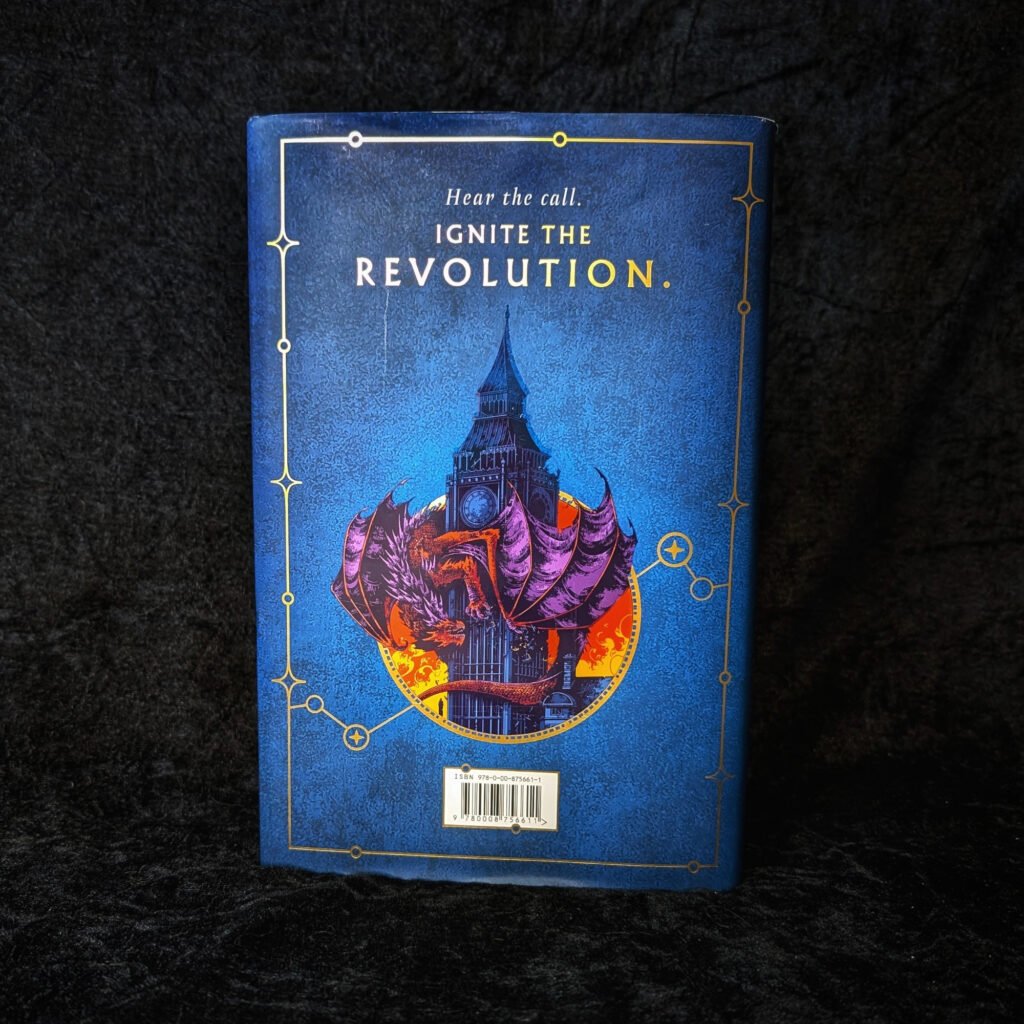
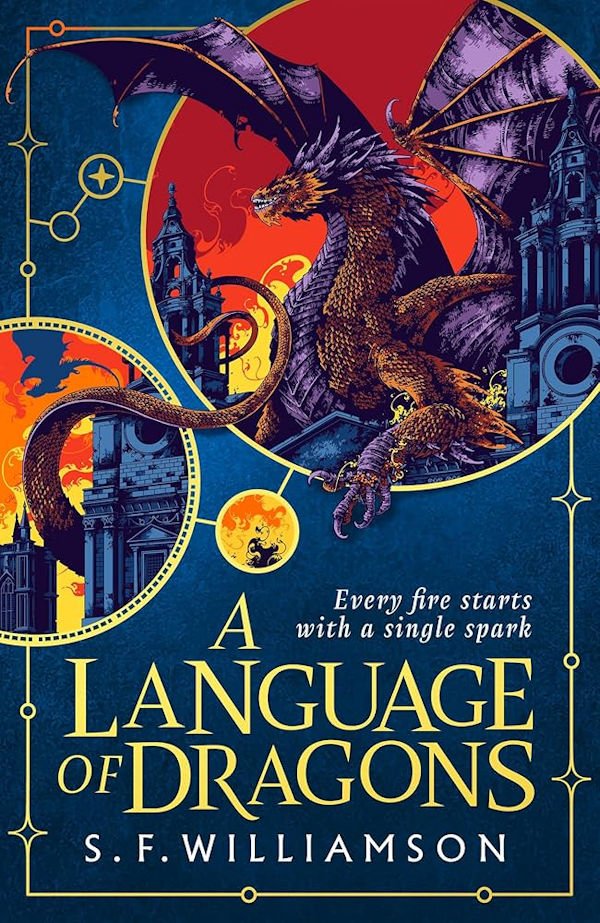
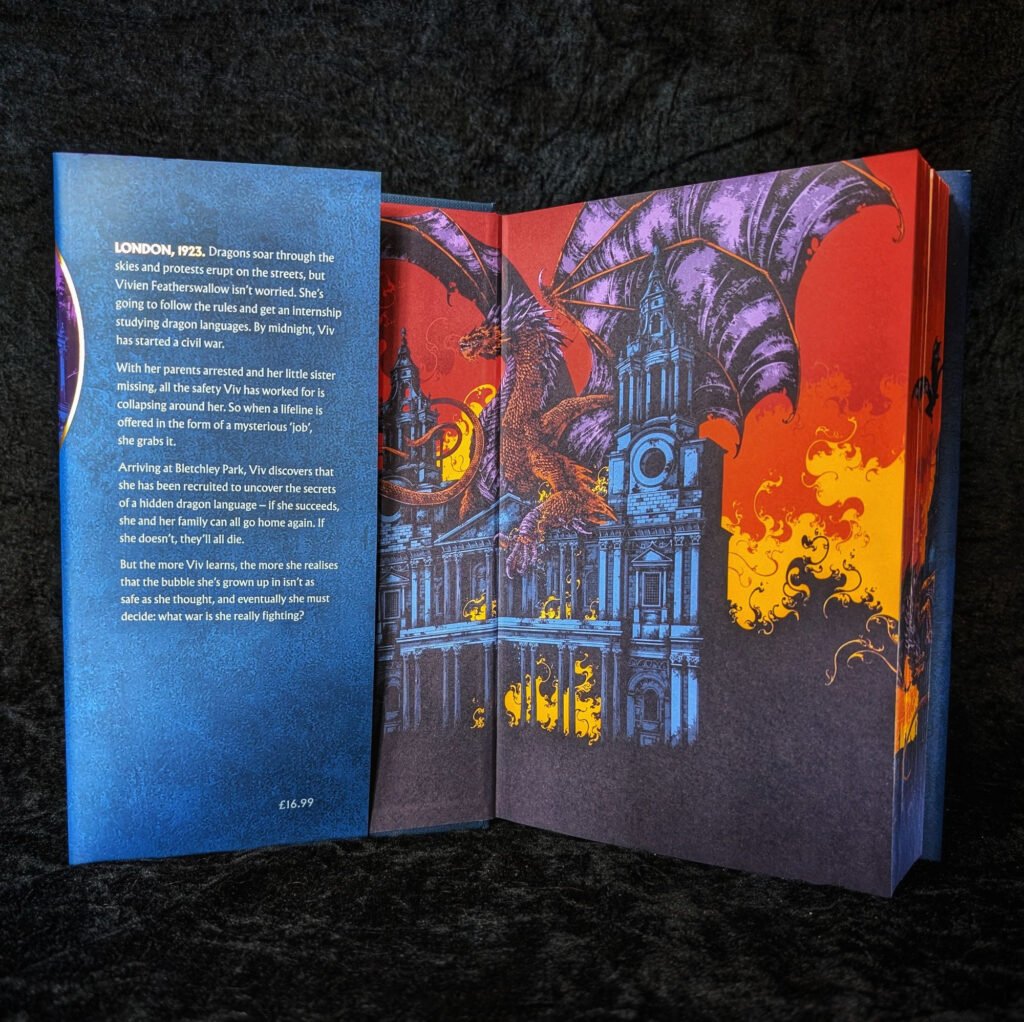
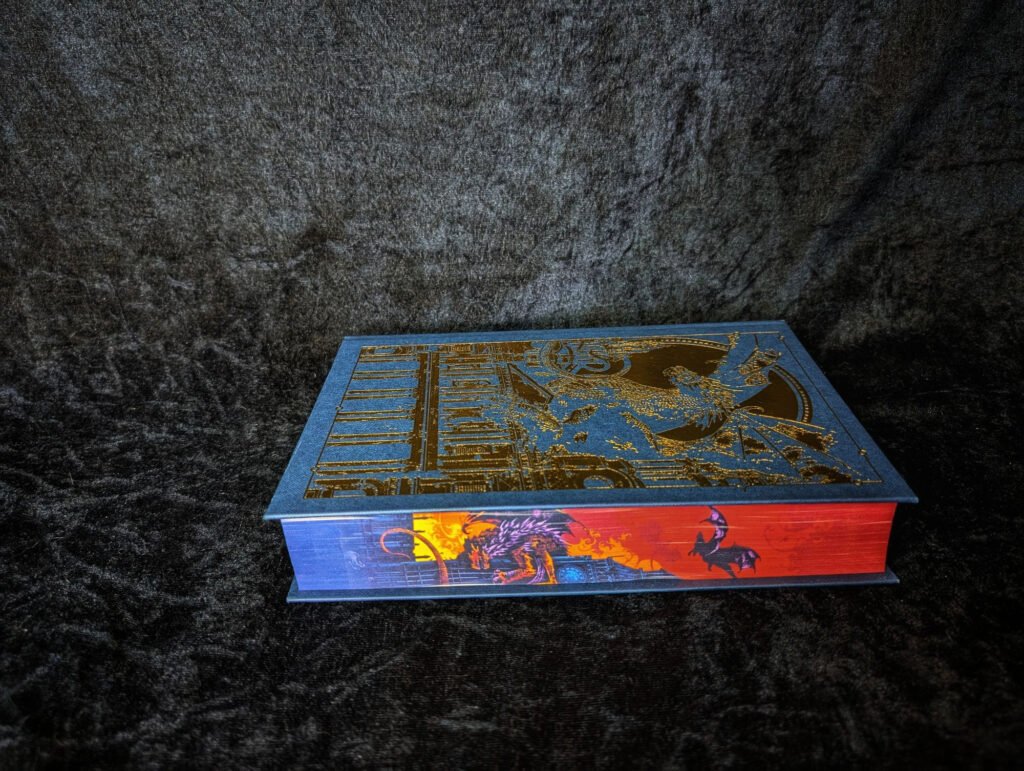
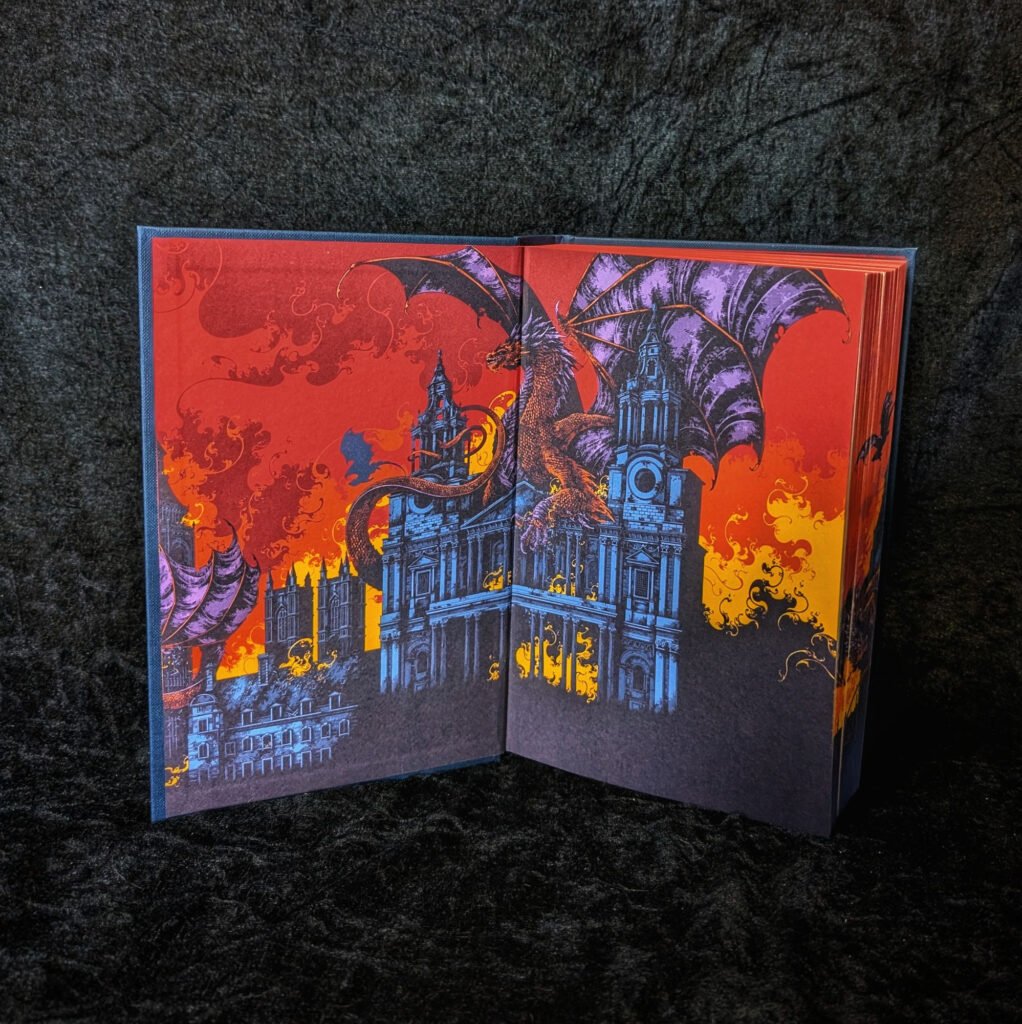
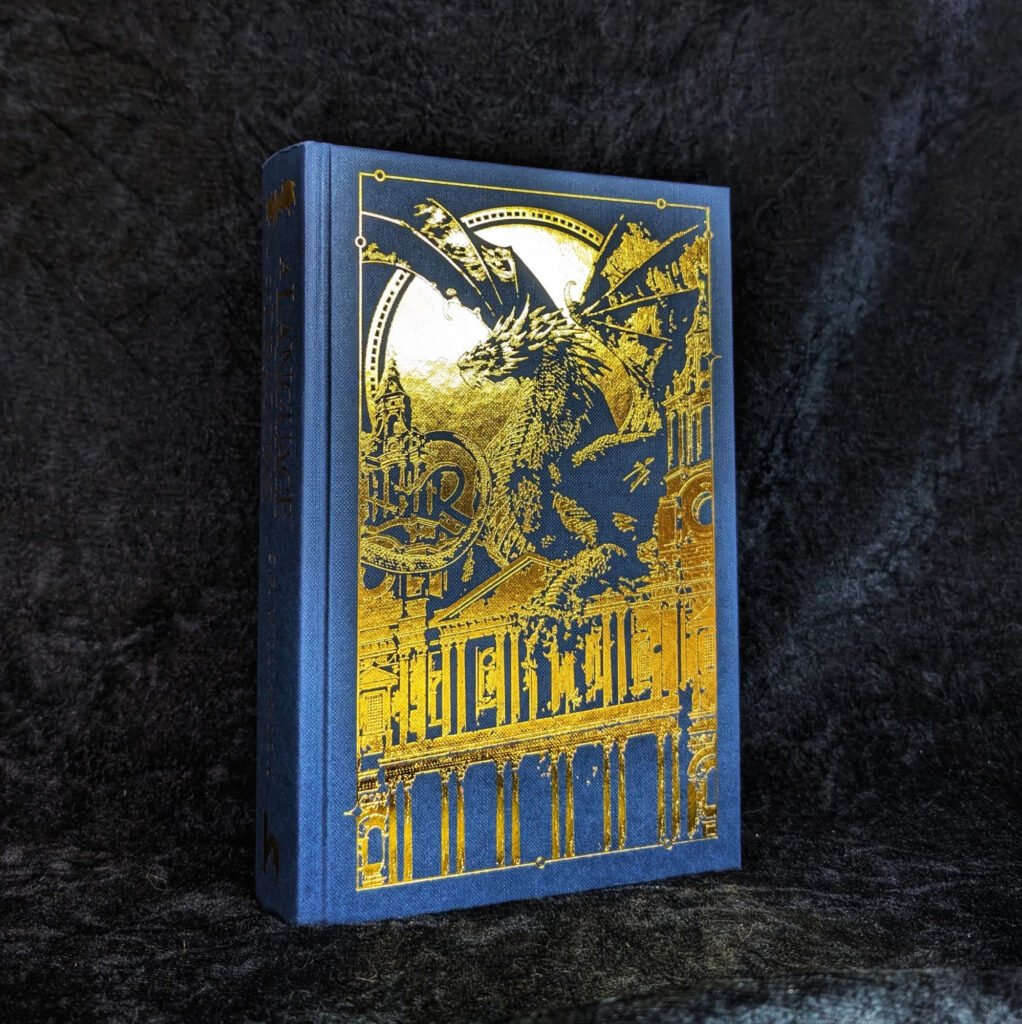
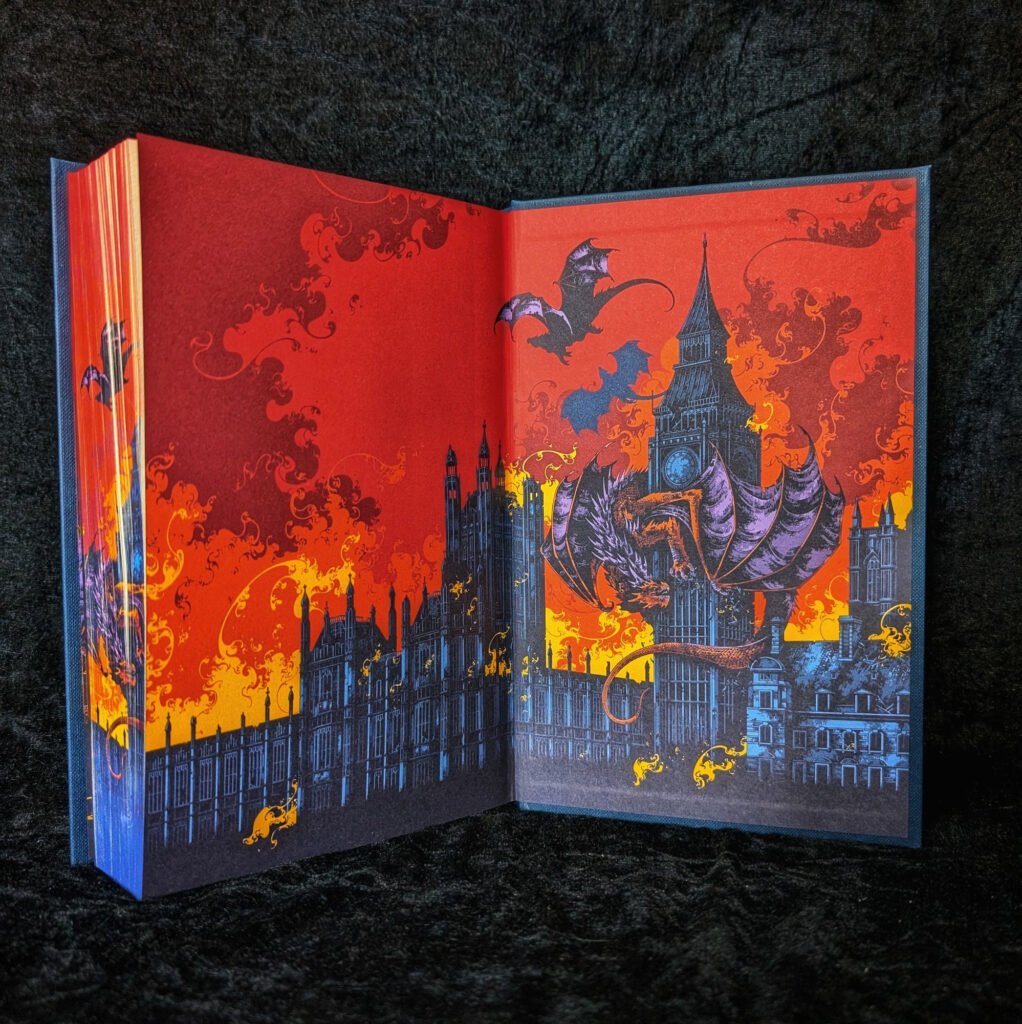
I stumbled across this randomly in a bookshop, and I just couldn’t resist the sheer beauty. I shall put some pictures of my pretty edition throughout the review, because, just look at it!
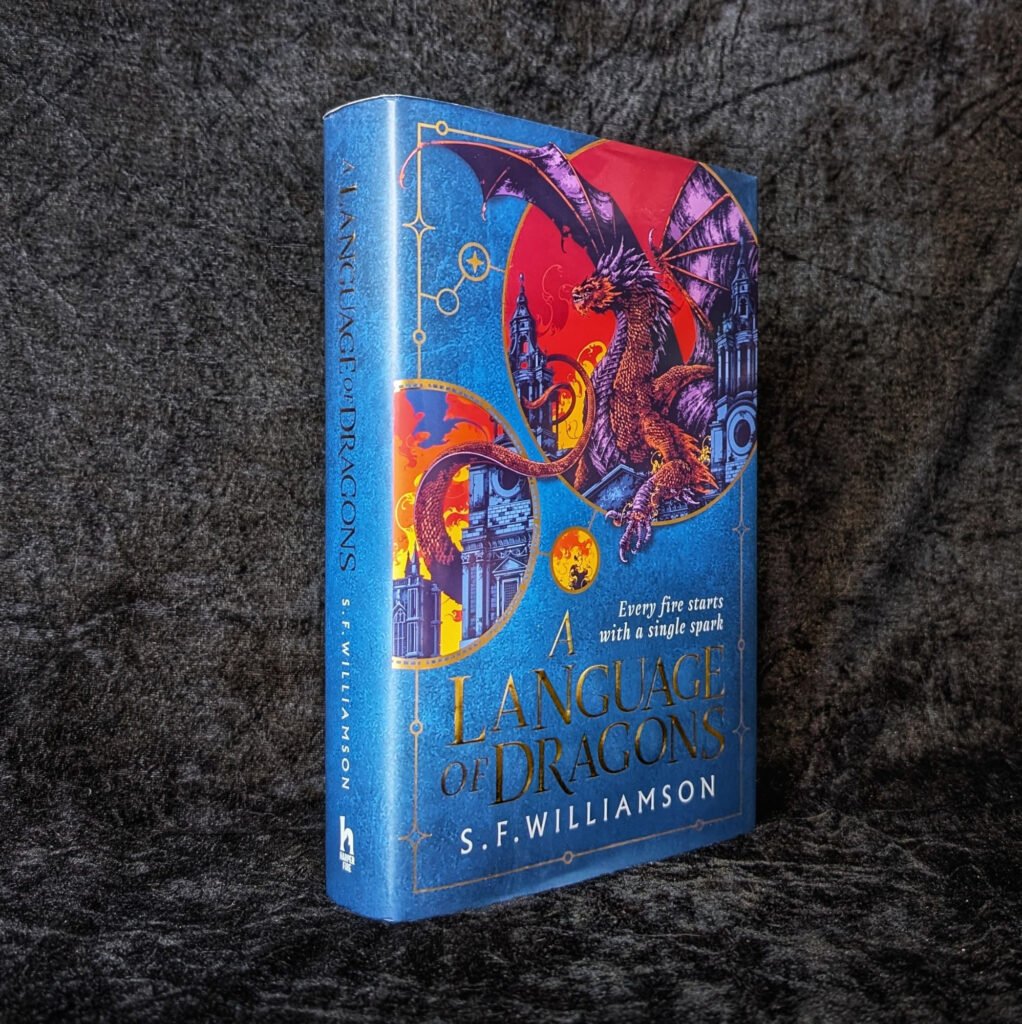
The Language of Dragons is a fun and thoughtful YA fantasy that blends the magic of dragons with the quiet power of words. While it didn’t quite blow me away, it had enough dragons, action, and heart to keep me engaged.
Set in an alternate London sometime after the First World War, dragons are no longer majestic, untouchable forces of nature—they’re integrated into society in uneasy ways, bound by restrictive treaties, and riddled with political tension. That backdrop adds a layer of complexity to the narrative.
The concept is strong: a world where language, spoken, written, and felt, has real power, and dragons are deeply intertwined with it. Our protagonist isn’t a warrior or a chosen one, but rather someone who begins to understand just how influential communication and translation can be. That aspect, the way language was woven into the story, worked beautifully. The reflections on the weight of words, on meaning and intention, added depth I really appreciated.
Of course, I found myself comparing this to To Shape a Dragon’s Breath, another recent YA dragon novel that also blends science, politics, and magical creatures. That book felt a bit more mature, with themes and writing that could easily appeal to readers of all ages. The Language of Dragons, on the other hand, feels firmly in the YA space, more accessible and lighter in tone. That’s not a criticism, though. As someone who still enjoys YA at an older age, I found a lot to like here.
The characters, while enjoyable in their own right, sometimes fall into tropey territory. There’s the gifted protagonist who needs to find herself, the brooding rival, the love interest that seems to be off limits, and the over-the-top villain whose evil is more theatrical than threatening.
The dragons however were fascinating, even if their role in society was a bit inconsistent. In one country they are clearly oppressed under a fragile “peace treaty”; in another, one is perched on a rooftop abroad, casually ordering a drink. The logistics, like, say, size of drink and how to deliver to a rooftop, are glossed over, which might bother some readers, but I chose to roll with it. Their dialogue and the glimpses into how dragons think were some of the book’s highlights for me. I especially enjoyed the more science-based tidbits scattered throughout. Journal entries and reports that added a layer of realism to the dragon lore and hinted at a deeper world behind the scenes.
The romantic subplot, which seems almost required in YA these days, was thankfully quite minor. It never overwhelmed the story, and while it was a bit underdeveloped, I far preferred that to pages of drawn-out angst and miscommunication. The focus instead stayed more on friendships, loyalty, and those small but meaningful moments of connection, new bonds forming, old ones being tested, that gave the story a bit of emotional weight.
Yes, the plot treads familiar YA ground: a rebellion against a corrupt government, an unfair class system, and a group of teens standing up when adults can’t. But that’s not necessarily a bad thing. While seasoned fantasy readers might find the setup a bit predictable, for the intended younger audience, it’s a solid introduction to these themes, and there are some delightful moments along the way.
In the end, The Language of Dragons may not be a genre-redefining masterpiece, but it’s an engaging read with some original touches, especially in its handling of language and magic. If you enjoy YA with dragons, smart protagonists, and a gentle sense of wonder, this one is worth picking up.