

If you’re like me, you’re very resistant to reading or experiencing things outside of your comfort zone. I am a hardcore YA and children’s fantasy reader, and it can be really difficult to branch out into other genres and formats. After years of not meeting my reading goals or expanding my horizons through normal reading tracker apps or challenges, I came across a video by a content creator called thisstoryaintover (also known as Jananie) on YouTube.
I started following her “Anti-Brainrot Reading Challenge” for the year, and one of the biggest challenges for me has been genre and format. To fulfill the challenge, you have to read from a variety of genres including non-fiction or formats such as a collection of plays or poems—two things I have not read since my days in high school. One of the most delightful things I have experienced since starting the challenge is exposure to titles I would not normally pick for myself—and my favorite read of the year so far has been one of those very titles.
Hekate: The Witch by Nikita Gill
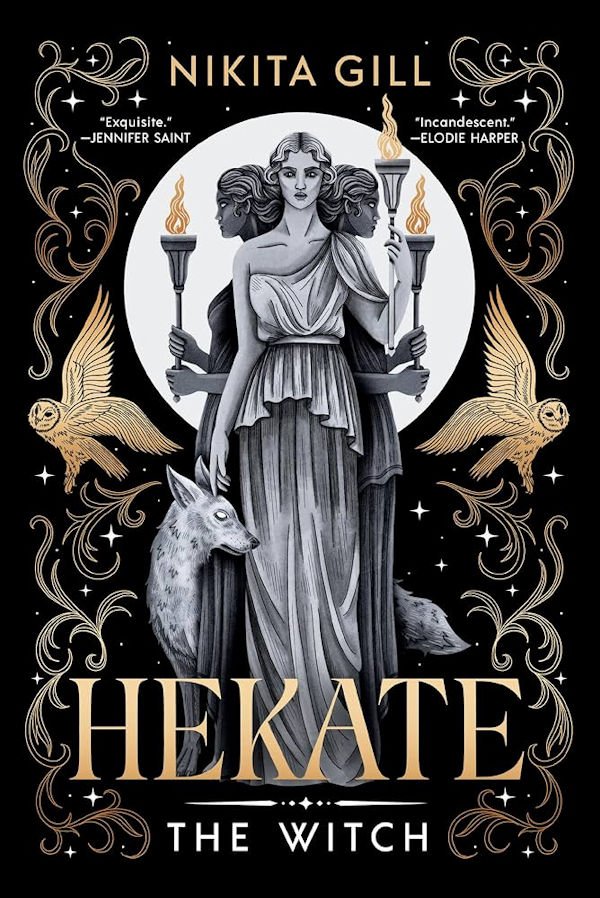
Born into a world on fire, Godling Hekate has never known safety. After her parents are on the losing side of the war between the ruling Titans and new Olympian Gods, Hekate is taken by her mother Asteria to the Underworld, where Styx and Hades agree to raise her. Meanwhile, Asteria is pursued across the world by Zeus and Poseidon and, to escape their clutches, transforms herself into an island in a stormy sea.
Orphaned and alone, Hekate grows up amongst the horrors and beauties of the Underworld, desperate to find her divine purpose and a sense of belonging in the land of the dead.
When Hekate finally uncovers her powers and ascends to Goddess status, she realises that even the most powerful Olympians are terrified of her. But when immortal war breaks out again, threatening to destroy everything from Mount Olympus to the Underworld itself, the Goddess of witchcraft and necromancy is the only one who can bring the deadly conflict to an end.
Nikita Gill’s Hekate: The Witch is a retelling of the life of the goddess Hekate from Greek mythology. It starts with her childhood, marred and destroyed by the Titanomachy, and continues through her life in the Underworld by the banks of the river Styx. Instead of using standard prose storytelling, Gill instead tells Hekate’s story as a novel-length collection of poems, making this a “novel in verse” (and fulfilling one of my format needs for my reading challenge!).
I often find myself bored with poetry and typically cannot tolerate modern attempts at it. This book smashed through my expectations and sucked away every ounce of reluctance I had regarding the format. Gill’s voice in this story is so powerful I found myself forgetting it was a work of fiction and not the journal entries of a real person living through crisis after crisis.
Hekate’s rage and desire to belong and deliver justice are tangible in a way that is hard to portray in fiction, let alone in a format as limiting as poetry. Gill balances the title character and the major players around her expertly, establishing fantastic characterization for every god and goddess who arrives in the story.
I am a massive purveyor of Greek mythology retellings and inspired pieces, and I found myself giddy at this portrayal of an already familiar story. The Underworld is painted in such a way that the reader feels Hekate’s sense of exile and loss at the beginning, and slowly the landscape and segments of the Underworld come into full view and color as she disobeys the older gods around her and explores. I found myself wanting more and flipping pages late into the night every time I picked up the book.
Some things in the world just work out perfectly. Nothing worked out so perfectly as finally finishing Hekate: The Witch the same week that Styx: The River released.
Styx: The River by Nikita Gill
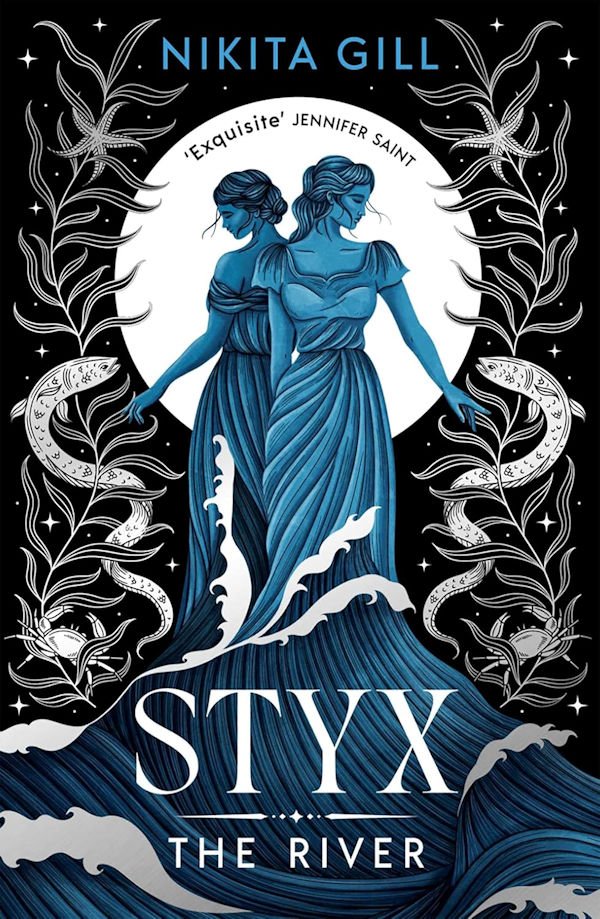
The firstborn child of Titans, Styx is revered as the first of her kind—until she is eclipsed and forgotten amid her scores of siblings, the Oceanids and the Potamoi.
Coming of age in a world simmering with paranoia and unspoken fear of Kronos, the volatile and unchecked god-king, Styx learns to conceal the rage ignited by her growing disillusionment with her parents and her vain and unkind siblings. Instead, she finds solace and sisterhood in her cousin, Asteria. Together, they train in the arts of creation and magic. And as they seek to learn their divine purpose and their place within the Titanomachy, they discover both the joy sparked by true love and the fierce resilience birthed from motherhood.
In this lyrical and heartrending tale of sisterhood, identity, love, and war, Styx must carve her own path to womanhood—and ultimately, godhood.
Styx is a character introduced in Hekate: The Witch and acts as both a savior and captor to Hekate throughout her childhood in the Underworld. While I was originally familiar with the fact that all rivers, lakes, and other bodies of water in Greek mythology typically had gods or goddesses associated with them, I have never had the pleasure of reading anything focusing on one of these as a main character.
Styx is portrayed as vicious, unforgiving, and powerful from Hekate’s point of view. Her title novel tells her story in the same format as Hekate’s, starting with a childhood rife with fear of Kronos and her struggle to survive under the shadows of her entitled siblings. Whereas Hekate’s story is permeated with a sense of loneliness and exile, Styx’s feels like she is drowning and thrashing under a constant torrent of other characters as she tries to claw her way to the surface to get the recognition and power she feels she is rightfully owed by being the first child of the Titans.
I will admit I have just started reading Styx at the time of writing this, and I still have much of the book to go. But I simply cannot wait any longer to sing praises about both of these books. I can already tell it will be just as powerful a story as Hekate: the Witch. Styx is serpentine and venomous in the way her words and actions bite, showcasing the rage and bitterness the Oceanid feels throughout her childhood and girlhood. As an eldest daughter who often felt othered or overlooked growing up, Styx’s waves of emotions and bitterness are both familiar and empowering to read.
Gill’s portrayal of the Greek Underworld and its goddesses has quickly become my favorite retelling of Greek mythology. While most modern retellings focus on stories filled with romance, longing, or jealousy (all things I enjoy), it was refreshing to find a portrayal focused solely on feminine resilience and rage. If you are a fan of books such as The Poppy War, Throne of Glass, and other popular titles showcasing female rage, this could be your opportunity to explore a new and unfamiliar format with classic mythological content.
I found myself finishing Hekate: The Witch ravenous for more, and Gill has absolutely delivered (so far) with Styx: The River. Gill has plenty of published works to dive into across multiple different mythos and pantheons, and I am eager to jump into them, but I am even more eager to see which Greek goddess she tackles next. Personally, I have my fingers crossed for Kore’s experience in the forest and coming into her own as Persephone, Goddess of the Underworld.
[Editor’s Note: The next book in the series has since been announce as Nyx: The Night, and has an expected release date of September 7, 2027. You can see the cover and read the summary below.]
Nyx: The Night by Nikita Gill
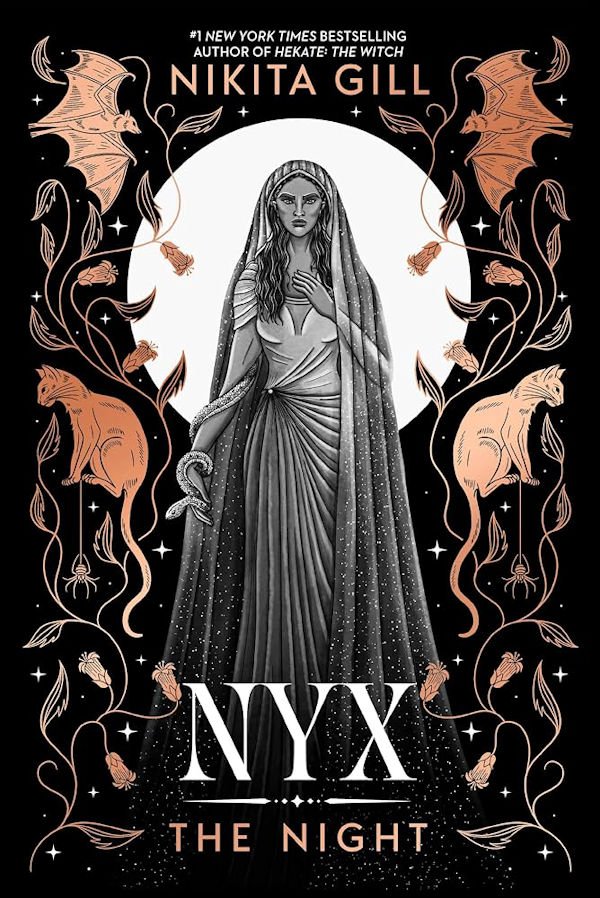
Born from darkness at the dawn of creation, Nyx was feared by her own mother and cast to the edge of the universe. While Kaos builds worlds of light, Nyx shapes black holes, shadows and death itself. Her only solace is her bond with Gaia, until pride tears the sisters apart.
Retreating into the depths of the earth, Nyx forges the Underworld, building a realm ruled solely by her will. But when the rise of the Olympians threatens her children, Nyx is forced back into the divine arena she had previously abandoned.
As Zeus tightens his grip on the cosmos, Nyx draws an army of ancient gods and horrors long forgotten, and a final war looms; one that will pit darkness against light, mother against child, and threatens to unmake the universe itself.

