
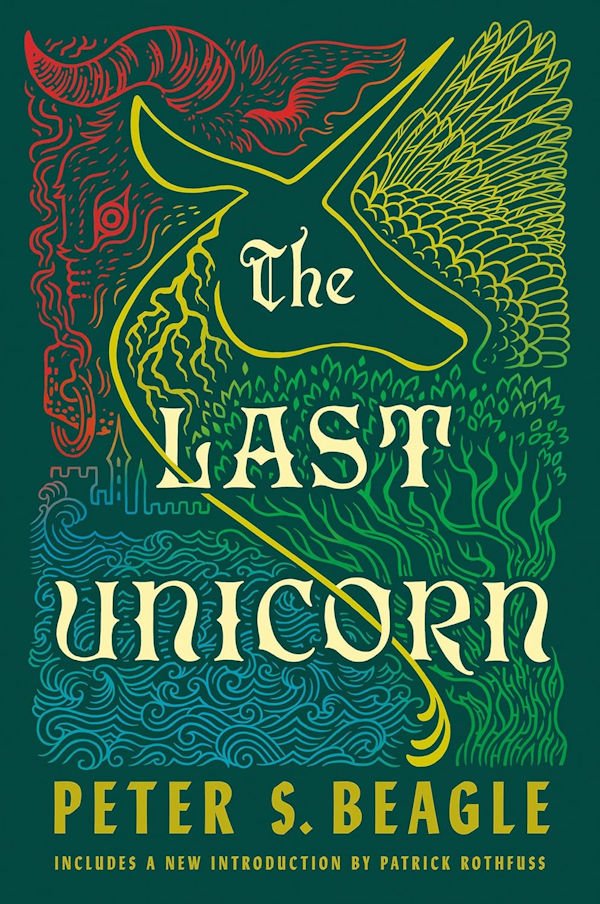
Recently, I was in a unicorn sort of mood, as one often is, and it occurred to me I could not recall if I’ve ever actually read The Last Unicorn by Peter S. Beagle. I saw the movie, but so long ago I cannot even say how it ends. I owned the book as a child, but recall being a bit stumped when trying to ingest the story. Sort of like when you read Beowulf too young. Likewise, for anything by Jane Austen. The words are there but reading them doesn’t necessarily put the story into your head, or guarantee you’ll comprehend the elegance of the writing.
To rectify this oversight, I sat down and read the book. By the time I devoured the final page, I’d come to a very firm conclusion. Everyone should read The Last Unicorn, be they fantasy lovers or no.
The Last Unicorn, at the story’s heart, has a universality that transcends time, cultures, and genre. Yes, it is most certainly a story about a unicorn, a magician, and a brigand on a quest, and sits firmly in the fantasy genre. However, the messages therein speak to everyone. By juxtaposing an immortal creature, the unicorn, with those who keenly feel time escaping them, Beagle speaks to hopes, fears, and aspects of human frailty found at the heart of us all. Through his characters, he poses questions every person confronts.
Many of these speak to the frailty of existence, illusions of happiness, and, most acutely, to the passage of time. Does enough time remain for each of us to achieve our goals, or have we squandered too many years already? Are our goals even worthy, or simply constructs of society? In essence, can we ever achieve happiness?
Beagle excels at presenting characters who traverse their lives in an unfulfilled state, and examining four of them can sum up the potential despair of mortal life. Firstly, Schmendrick the Magician, who can master magic only well enough to taunt himself. On him, Beagle writes:
“…your ineptitude is so vast, your incompetence so profound, that I am certain you are inhabited by greater power than I have ever known. Unfortunately, it seems to be working backward at the moment, and even I can find no way to set it right. It must be that you are meant to find your own way to reach your power in time; but frankly, you should live so long as that will take you. Therefore I grant it that you shall not age from this day forth, but will travel the world round and round, eternally inefficient, until at last you come to yourself and know what you are. Don’t thank me. I tremble at your doom.”
Schmendrick represents the futility of daily life when lived without achieving anything meaningful. He seems to have all the time he could possibly need, yet he can do nothing fulfilling with that time. He is, as noted, in a doomed state.
Then there is Molly Grue, who seeks the happiness of finding her own place in life, but fears she has left such things for too long. That, with the passage of her youth, no more opportunities for happiness will be hers.
“Where have you been?” she [Molly] cried. “Damn you, where have you been?” She took a few steps toward Schmendrick, but she was looking beyond him, at the unicorn.
“I am here now,” she [the unicorn] said at last.
Molly laughed with her lips flat. “And what good is it to me that you’re here now? Where were you twenty years ago, ten years ago? How dare you, how dare you come to me now, when I am this?” With a flap of her hand she summed herself up: barren face, desert eyes, and yellowing heart. “I wish you had never come. Why did you come now?” The tears began to slide down the sides of her nose.
In Molly we see the fear all of us hold, at least in some small part, that we are out of time. That life has already passed us by, and it’s too late to achieve anything. Thus, between Molly and Schmendrick readers are confronted with opposites sides of the same coin; having enough time but no happiness, and having run out of time to find happiness.
Lastly, Beagle uses the juxtaposition of King Haggard and his son, Prince Lír, to examine the worthiness of the means by which people choose to seek fulfillment. King Haggard, on the one hand, chooses to use his power to gather up the unicorns. To possess them. We find that, even though he has nearly every single one, he still knows no happiness. Only despondency, hollowness, and paranoia. Living for the desire to possess, colors King Haggard’s view of all others, convincing him they live for the same reason, which mires him in distrust.
When we meet Haggard and his son, Lír is little better off than his father. It is through love Lír learns to appreciate using his power, skills, and position for others, thus fully revealing the flaw in his father’s chosen path.
“You were the one who taught me,” he [Prince Lír] said. “I never looked at you [Lady Amalthea] without seeing the sweetness of the way the world goes together, or without sorrow for its spoiling. I became a hero to serve you, and all that is like you.”
We most clearly see Beagle’s views in the difference in how king and prince are treated when we come to the end of the book. In as spoiler-free a way as possible, let it simply be said that Prince Lír is the more rewarded of the two. He has found greater fulfilment in doing good than his father ever did in amassing possessions.
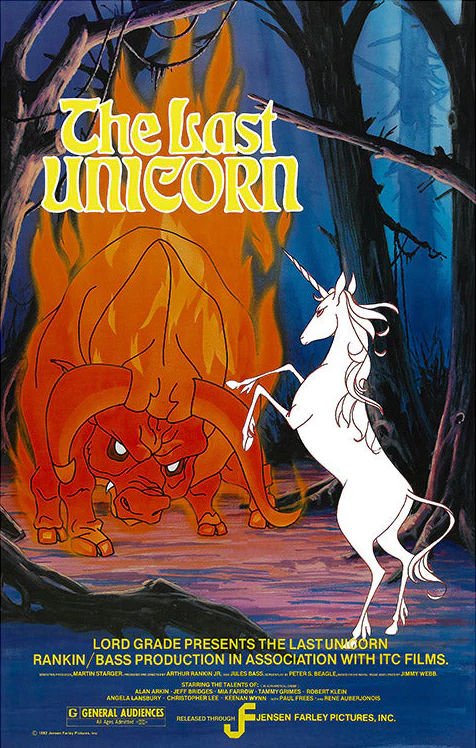
Lastly, we have the unicorn. When we first meet her, she cannot fully appreciate the beauty of existence, because she has never confronted the fear of death, metaphorically represented by being driven into the sea by the unfeeling, unrelenting force of the Red Bull. Ironically, in order to escape that metaphorical demise, the unicorn must become mortal. This is what allows her to finally appreciate that mortality is what gives life true meaning.
These opposing views can be seen in two juxtaposed quotes:
“This body is dying. I can feel it rotting all around me. How can anything that is going to die be real? How can it be truly beautiful?”
And:
“Whatever can die is beautiful—more beautiful than a unicorn, who lives forever, and who is the most beautiful creature in the world.”
Thus we can see the central theme that time is both cruel and necessary. A harsh master, and yet required in order for us to appreciate the lives we have and, hopefully, succeed in living them well.
But universal themes are not the only reason to read The Last Unicorn. The other is the writing itself. Told in a lovely, fairytale style, The Last Unicorn is a glory of poetic language and whimsy, peppered with wisdom.
For an example of Beagle’s masterful prose, look no further than his description of the unicorn’s home:
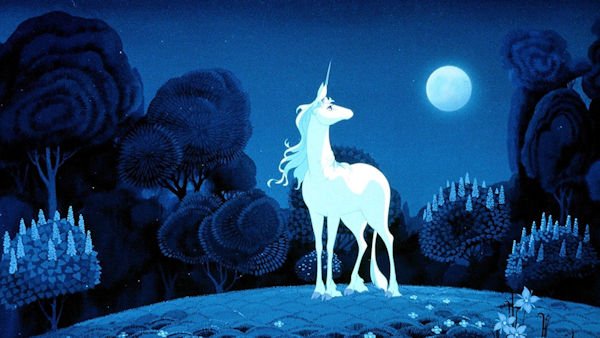
The unicorn lived in a lilac wood, and she lived all alone. She was very old, though she did not know it, and she was no longer the careless color of sea foam but rather the color of snow falling on a moonlit night. But her eyes were still clear and unwearied, and she still moved like a shadow on the sea.
And to break up this nearly lyrical telling, touches of whimsy exist throughout. Such as:
“I would tell you what you want to know if I could, mum, but I be a cat. And no cat anywhere ever gave anyone a straight answer.”
Or:
“I have ended my betrothal to the princess I had agreed to marry—and if you don’t think that was a heroic deed, you don’t know her mother.”
And let us not forget those moments of profoundness and truth every great author, sometimes intentionally and sometimes simply through the desire for a purity of telling, scatters throughout their work:
“A lord who cheats an ugly old witch will cheat his own folk by and by. Stop him while you can, before you grow used to him.”
Or:
“I always say perseverance is nine-tenths of any art—not that it’s much help to be nine-tenths an artist, of course.”
All of which is to say, The Last Unicorn is full of universality and beauty most everyone will appreciate, and should be at least attempted by all. For some, the fairytale-style telling and lyrical prose will not be a good fit, and that’s okay. Not every book is for everyone. For most, however, The Last Unicorn will strike a chord, a merging of human honesty and beauty, that will see you coming back to re-read this lovely tale year after year. Which is why everyone should read The Last Unicorn.