

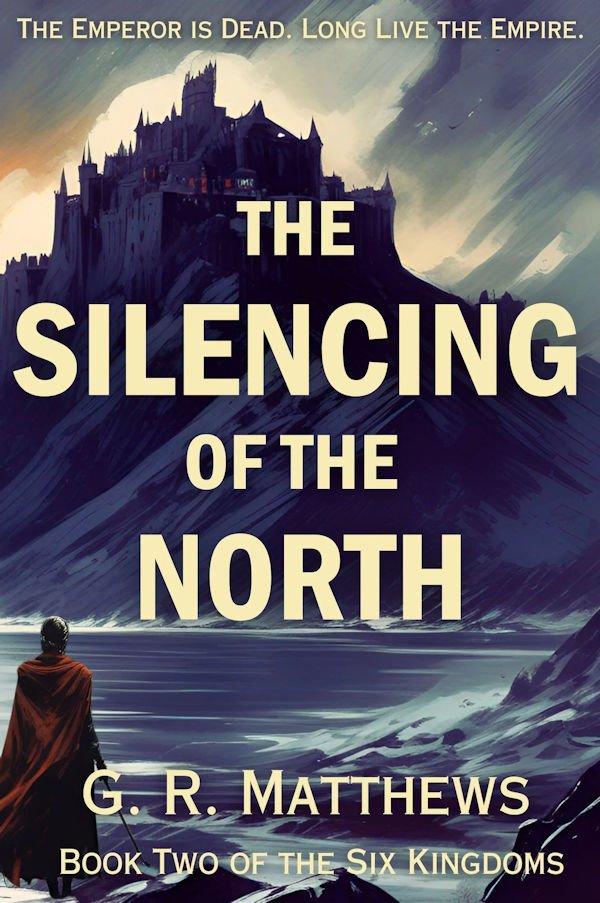
The North is waking to war.
Gawen, heir to the clans and reluctant future king, answers the High King’s summons as the Empire marches toward their borders. Beside him rides Steverd—a legend forged in grief—while Teva, Gawen’s wife, hungers for a crown with a fire fierce enough to burn any challenger.
As the Empire’s army marches north, young magician Ayita learns the Emperor is dead, magic is outlawed, and every mage is being hunted. Fleeing for her life with her injured master, she runs not only from soldiers and Inquisitors, but toward a destiny she never asked for.
As the Empire lays siege to the High King’s castle, alliances fracture. Battles are lost. Betrayals tighten like a noose. Every choice Gawen makes costs him blood—his warriors’, his family’s, and his own.
And in the snow-choked dark of winter, when all seems broken, the clans must decide:
How much are they willing to sacrifice to silence the Empire forever?
On January 29th, the sequel to Seven Deaths of an Empire will be released. Since I already loved the first book, I was genuinely excited to receive an ARC of The Silencing of the North. If this review whets your appetite, you can find the book on Goodreads.
The Silencing of the North begins exactly where Seven Deaths of an Empire left off, and it never pretends otherwise. This is not a fresh start or a soft reset. The ending of book one matters, and the consequences ripple through every page of the sequel. The story moves forward under the weight of what has already happened, and it refuses to let either the characters or the reader forget it.
This time, Matthews shifts the focus away from the central figures of the first book and onto characters who had previously stood more at the edges. One of the main points of view follows Gawen, a seasoned and formidable clan warrior, shaped by years of experience and equally honored and burdened by leadership and expectation.
The second point of view belongs to two women, Elouera, a master magician, and her apprentice Ayita. Their shared perspective brings a very different rhythm to the narrative, pairing hard-earned wisdom with youthful impulsiveness and curiosity. Their relationship feels real, and it adds both warmth and tension to the story. As a whole, the cast feels well balanced, women and men alike fight, lead, fail, and endure, and the story is richer for it.
The relationships between these characters are one of the book’s real strengths. They are practical, blunt, and often edged with dry, dark humour. Even when the situation is dire, the dialogue has a sharpness that keeps the characters feeling grounded and human.
“I am all for using natural camouflage, Apprentice,” her master said as she gazed back at Ayita. “However, the noise you made will bring any passing tribes, or the soldiers, straight to us.”
“Master, I didn’t… that is… I fell,” she finished, wiping her muck-covered hands down her cloak.
I also loved the small glimpses we get of Kyron’s life after the events of book one. He is no longer a central character, but those brief moments felt meaningful and quietly satisfying, small reminders that lives continue even as the focus shifts elsewhere.
The setting undergoes an equally important shift. In Seven Deaths of an Empire, the conflict unfolded in the tribal forests between the Empire and the north. Now we move beyond those woods and into the clan lands themselves. These lands are not endlessly bleak. In summer, they can be lush and alive, but winter is merciless. The story opens in late autumn, with the first real bite of cold already in the air, and winter looming ahead like a force that could decide everything.
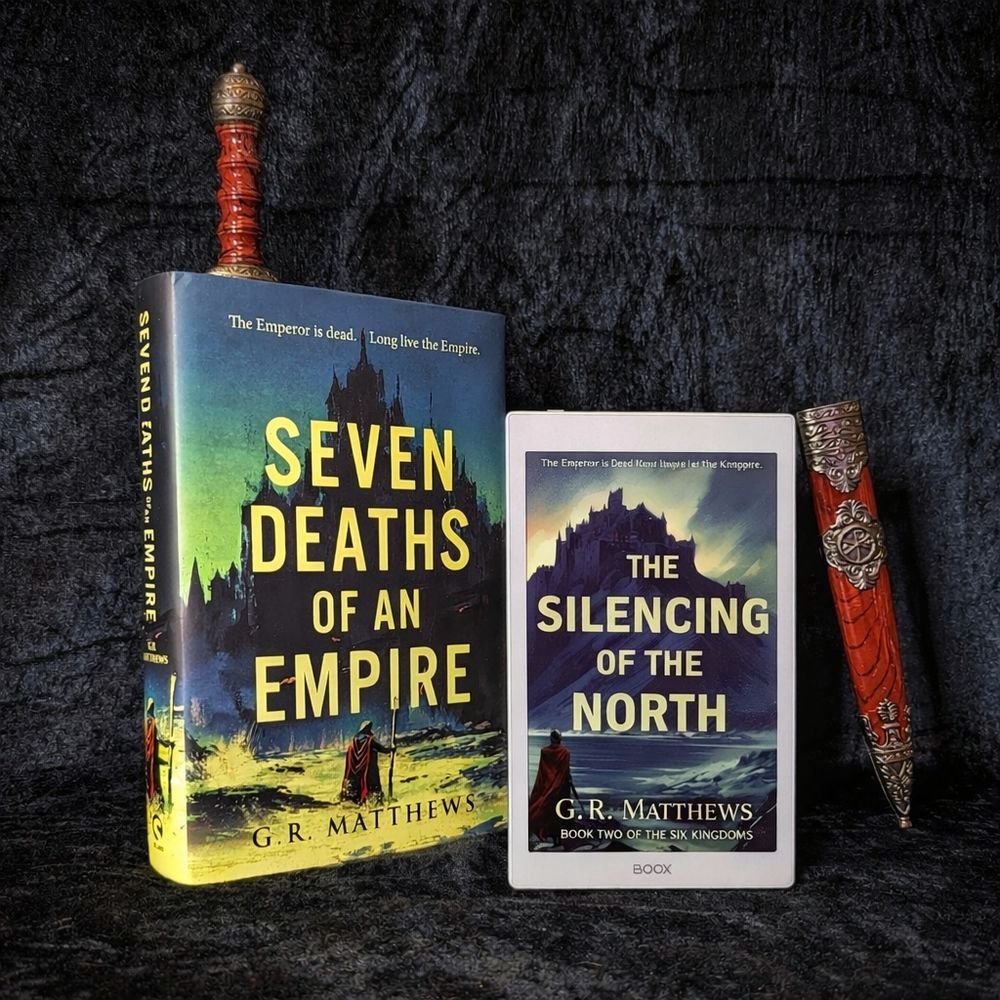
That sense of place permeates the entire book. The land shapes decisions, behaviour, and survival itself. Much of the clans’ hope rests on winter, at the same time, there is the quieter fear of what winter might take from the clans as well. Food, shelter, and what remains of the surrounding lands all matter, and the waiting becomes its own kind of pressure. Mistakes will be paid for dearly.
Although the focus is now firmly on the clans, tribal people still play a significant role, many of them refugees who fled ahead of the Empire’s advance. Their presence brings tension with it. From some perspectives, these are people who failed to stop the Empire and now arrive asking for protection and resources that are already scarce. Distrust runs deep, and when things go wrong, blame is quick to follow. Others see people in need and want to help, creating a divide that feels painfully believable. Some tribal folk fight alongside the clans, but it is an uneasy peace, and a siege weighs heavily on everyone involved.
“This is it,” Gawen said, his tone as heavy as the rock which had tried to end his life. “No more resting. No more waiting.”
“Just dying,” Steverd added.
“Didn’t you tell me once to give uplifting speeches?”
Rather than escalating the story into a larger, louder war, The Silencing of the North approaches the conflict from another angle. The stakes feel closer and more personal, but no less deadly. The Empire stands clearly as the antagonist, yet on the side of the clans and tribal folk, things are far messier. Among those we are meant to stand with, there is kindness and cruelty, courage and self-interest. Some are driven by fear, loyalty, or sheer necessity, others by ambition and the quiet pull of power. Matthews draws you deeply into these tensions, constantly nudging you to question first impressions and easy judgments.
That moral complexity comes through most clearly in how survival itself is discussed:
“The castle can withstand a siege,” Mathe said, looking to Tavien, who nodded in response.
“Aye, it can,” Gawen said. “Stone can survive the cut of a sword, the stab of a dagger, or the point of an arrow. It’ll be scarred and bruised, but it will stand strong. It’s the people inside who are not so strong, who depend upon water and food for life. They will starve, illness will come, plague even, as it does in every siege, and they will die.”
Seven Deaths of an Empire was already a dark book, and The Silencing of the North does not shy away from that darkness. Death comes swiftly and without ceremony, like a pilum to the throat or an axe swung in the dark. Important characters do not make it, and the book never softens that reality. The brutality feels honest rather than gratuitous, grim without sliding into despair, rooted in the understanding that violence always leaves scars, even on those who live through it.
The Roman-inspired Empire remains a strong presence, but it never overwhelms the narrative. The research is clearly there, yet it never turns dry or weighed down by explanation. This remains a character-driven story, not a history lesson. Worldbuilding and magic are woven naturally into the narrative, present but restrained, always in service of the people at the heart of the story.
At its core, The Silencing of the North is a book about damage and endurance, about what it means to keep going once you have already been broken.
“We are all made of cracks, girl,” Elouera answered. “No point hiding the marks of those times when we were broken. They are the medals awarded for a life experienced, not hidden away from all which our too few years have to offer. We’re not dolls of porcelain. We are the crafters of our own destiny.”
This sequel expands the world, deepens the characters, and complicates the conflict in ways that kept me fully invested. I already loved Seven Deaths of an Empire, but The Silencing of the North drew me in even more through its character growth and widening scope. It is a colder book in many ways, but also a richer one, and by the final page, I was more than ready to follow this story wherever it goes next.

