
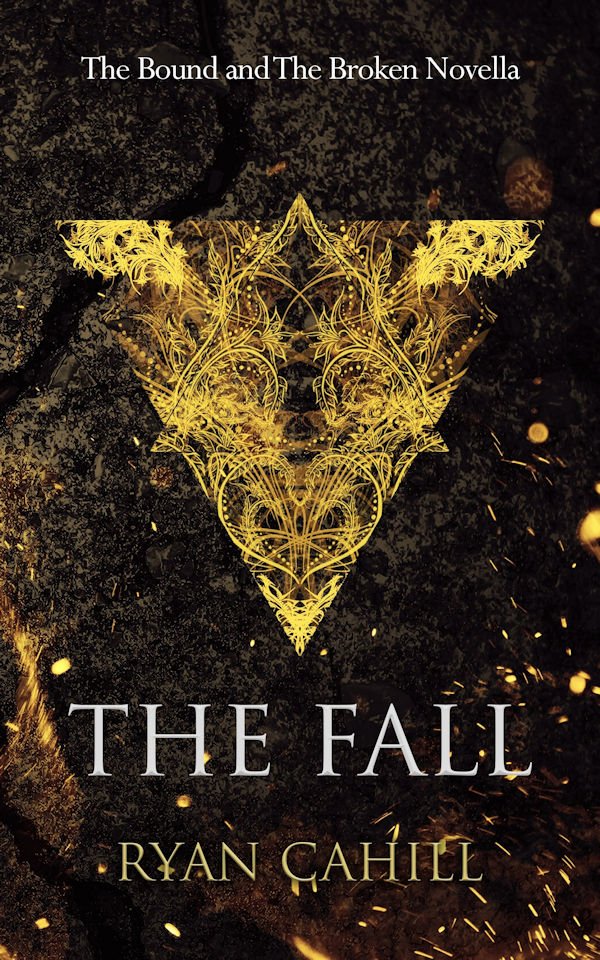
The Order have watched over the continent of Epheria for thousands of years. But there are those who believe The Order has had its day. That it is corrupt, indulgent, and deceitful—that it is ready to fall.
The City of Ilnaen is on fire.
Dragons fill the skies.
Traitors fill the streets.
Too often, I find prequel novels try too hard to justify themselves by reaching for scale and spectacle. They explain way too much and shout way too loud, as if they’re afraid the reader might miss the significance. But the more effective prequels understand something simpler and far more difficult to execute: they recontextualise established truths to reshape what will come after. Ryan Cahill’s The Fall chooses the harder and more effective path, dialling down the volume so we feel the weight of what’s already been lost.
If you’ve not started The Bound and the Broken series, make sure you do so at your earliest convenience. Set before the first novel, Of Blood and Fire, The Fall looks at the fallout rather than the build up to one of Epheria’s most significant events, and there’s a sense, almost from the first page, that this is a story moving towards something inevitable. It’s that inevitability that is the whole point. Rather than ramping up the tension towards a twist or a grand reveal, Cahill leans into a quieter form of tension, and we understand, well before the characters fully do, that this is a world on the edge of collapse. The power of the story comes from watching the realisation settle and deepen.
The novella focuses on connection. The character work is deliberately low-key and intimate, built around relationships, memory, and legacy, with Cahill giving these elements time and space to breathe, whilst the epic carnage happens on the fringes. When the story reaches its conclusion, it settles with a quiet emotional weight rather than explosive drama.
At under 30,000 words, it’s short, and there are moments where you feel the edges of what could have been expanded further. Certain character beats pass quickly, and the world itself is sketched rather than deeply explored—that’s left to the weighty main novels in the series. But this is also where the novella is at its most effective. The brief seems to be: Get in, make us care, and then creep out quietly.
There is no denying The Fall draws on familiar fantasy DNA. We have fallen kingdoms, betrayal, lingering magic, the long shadow of history, and really big dragons, so readers looking for radical reinvention won’t find it here. What they’ll find instead is a confidence in owning these influences. Cahill leans into these tropes with clarity and purpose, resulting in a story that feels grounded, sincere, and very human.
One of the most interesting aspects of The Fall is how it seems to grow in retrospect. On its own, it is a solid, emotionally resonant introduction, but in the context of the wider series, it becomes something more. Details take on greater meaning, emotional beats deepen, and what once felt like a small, contained story begins to echo outward. Like many successful prequels, it manages to stand on its own and also reshape the story that is to follow, and making it feel heavier.
The Fall won’t be remembered as a groundbreaking work of fantasy, but that’s okay—its ambitions are more controlled and precise. It sets a tone, establishes an emotional foundation, and invites the reader into the aftermath.
The Bound and the Broken is one of the most remarkable fantasy series for many years, and this is an important stepping stone on that epic journey.

