

Disclaimer: This is an opinion piece based on my personal experience with the Malazan series. I’m entirely expecting people to disagree with these opinions, and that’s okay.
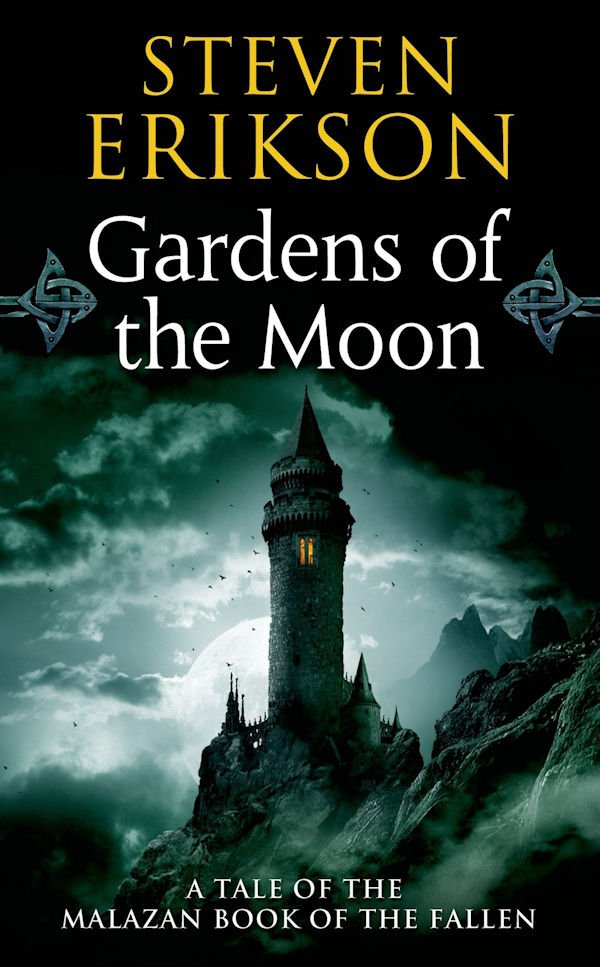
I love Malazan… now. But that wasn’t always the case.
It shouldn’t be news to anyone that the Malazan Book of the Fallen series by Steven Erikson has a reputation for being an unaccommodating fantasy series for its newer readers. “It doesn’t hold your hand,” is a phrase that gets thrown around a lot when people talk about it, but what does that even mean?
Yes, it contains hundreds of fantasy terms unique to its world you either have to look up or learn through pure pattern recognition. Yes, there are hundreds of characters with names you’ll be lucky to remember upon second mention—that is, if the book decides to provide them in any given scene (even if they are the viewpoint character of that scene). And yes, the sudden time skips, setting shifts, and head hops can be a little jarring and confusing. But let’s be fair, Malazan isn’t alone in those issues. Plenty of older epic fantasy series share many of those qualities yet still aren’t this difficult for readers to penetrate. And you do get used to them eventually. At least I did.
No, I think there’s a bigger reason at the heart of this series’ reputation, and figuring it out was my key to finally unlocking my enjoyment of it.
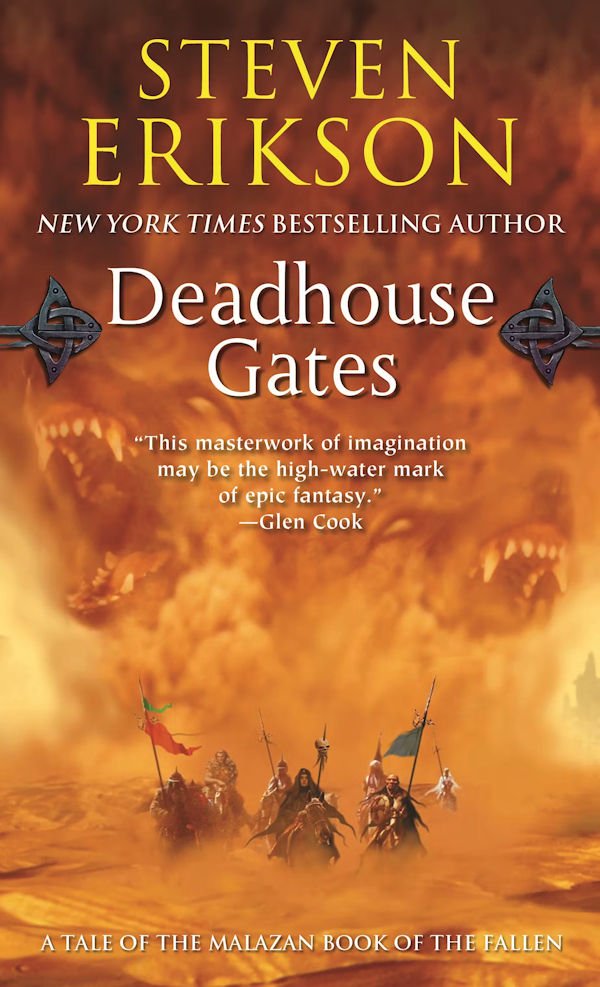
It took me a decade to get into Malazan, and that’s not for lack of trying. I must’ve read Gardens of the Moon three times before finally continuing with the rest of the series, each attempt made with an earnest desire to finish it or at least proceed to Deadhouse Gates. Yet, each time, I found my resolve waning after finishing book one, finding myself asking what I’ve heard so many reviewers of Gardens of the Moon ask in their reviews: “Why should I care?”
It wasn’t the characters. With over a dozen viewpoint characters to follow, only a few stood out as memorable. It wasn’t the stakes. So overwhelmed are the readers with massacres and city- razing from the first chapters that there’s little threatening the characters they haven’t already faced (13,000+ of the Bridgeburners are dead by the beginning of chapter two!). What Gardens of the Moon does have in spades is spectacle and foreshadowing. And that’s enough for some people: promises.
Another phrase I heard a lot is, “Malazan is a marathon, not a sprint.” So, I tried the first book again. And again. Each time hoping something would spark my motivation to continue. But then a strategy dawned on me that allowed me to break my decade-long DNF (Did Not Finish) of this series: What if, next time, I instead just start my readthrough at book two?
I’m now five books deep into the series and loving it. Needless to say, starting my next readthrough at book two was an effective strategy. But why? I have my suspicions as to the reasons. Yes, reasons—multiple—because I’m far from the only one who has DNFed this series after “bouncing off” book one. What is it about Gardens of the Moon that makes it, for lack of a better word, detrimental to those wanting to sink their teeth into Malazan?
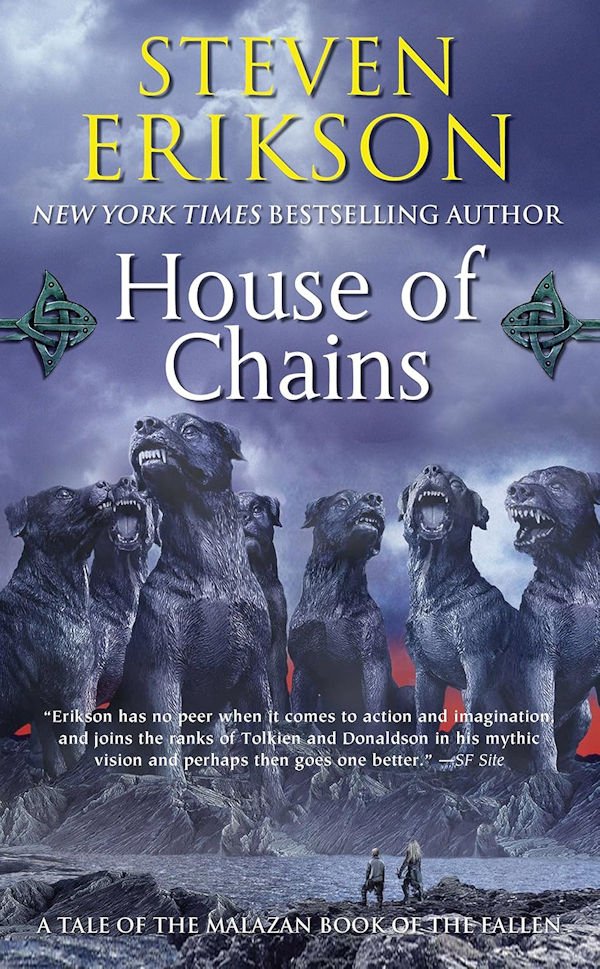
One of those reasons, I believe, is why I decided to go back and reread Gardens of the Moon a fourth time after finishing book four, House of Chains: the references. That’s right, the references to prior events, like what you might read a prequel book for. Therefore, I’m tempted to defy all common sense and recommendation rules and suggest a reading order that does not align with its release order. For newer readers, or those making a second attempt, start at book two, Deadhouse Gates. Read Gardens of the Moon after House of Chains, so it acts more like a prequel. Call me insane, shout blasphemy from the rooftops, but this strategy is what finally allowed the series to click for me. And for those who have bounced off the series in the past, this might be a viable strategy.
But, so what? Why does it matter that the first book isn’t the ideal way to get into the series? Well, the title and first line of this article should give you a clue. What’s more frustrating than trying to recommend a beloved fantasy series to friends by saying, “The first book isn’t the best, but it gets better?”
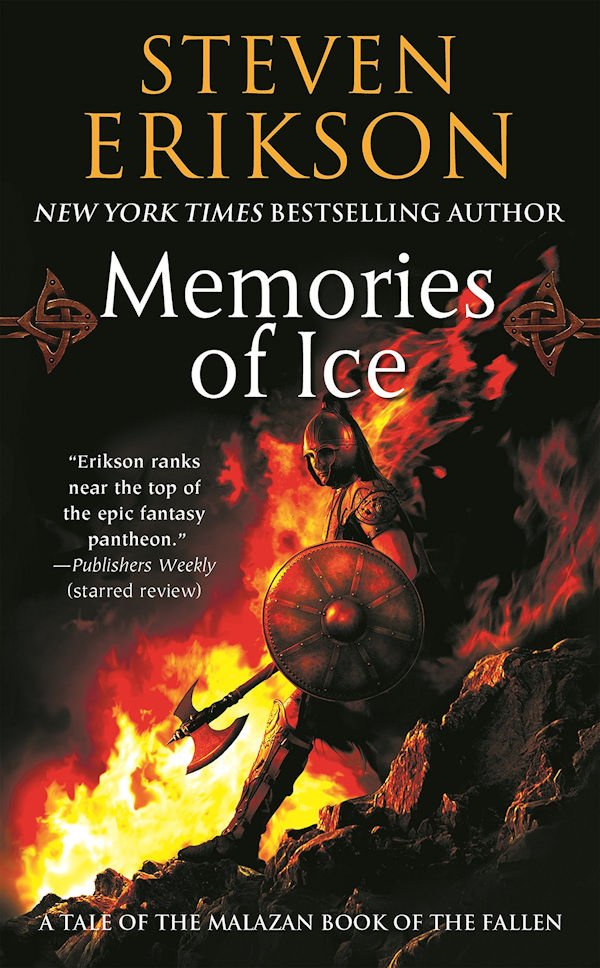
People naturally want to be able to recommend the first book in a series first, and for readers to enjoy it from the beginning rather than continuing on a promise that it might improve. You might’ve also noticed your own gut reaction to my suggestion that readers should start at book two. Needless to say, both suggestions have inherent flaws, but the default choice often leads people to give the series a chance, decide not to continue, and not really get a sense of how great it is. BUT, given the way the Malazan series unfolds, with the aforementioned setting shifts and character changes, beginning at Deadhouse Gates isn’t too unreasonable. It gives the readers a smaller cast with direct goals, and book three, Memories of Ice, concerns a conflict barely touched upon in Gardens of the Moon. And please note, I’m not saying you shouldn’t read Gardens of the Moon. I’m merely saying you shouldn’t read it first.
So, why is Malazan so hard to recommend? If this article is trying to say anything, it’s this is the wrong question, and the right question is: Why is Gardens of the Moon so hard to recommend?
I have done my best to answer this without giving spoilers and have provided a possible solution to those who bounced off it. However, there will be a number of you who read this who either loved Gardens of the Moon on your first readthrough or have no problem reading a difficult first book to get into a great series. And to you, I say: great. Whether anyone disagrees with my sentiment or not, my message is primarily directed at those who bounced off Malazan because of Gardens of the Moon, as I did, and might decide to try Malazan again in the future.
Give Deadhouse Gates a go first. I think you’ll be surprised.

