

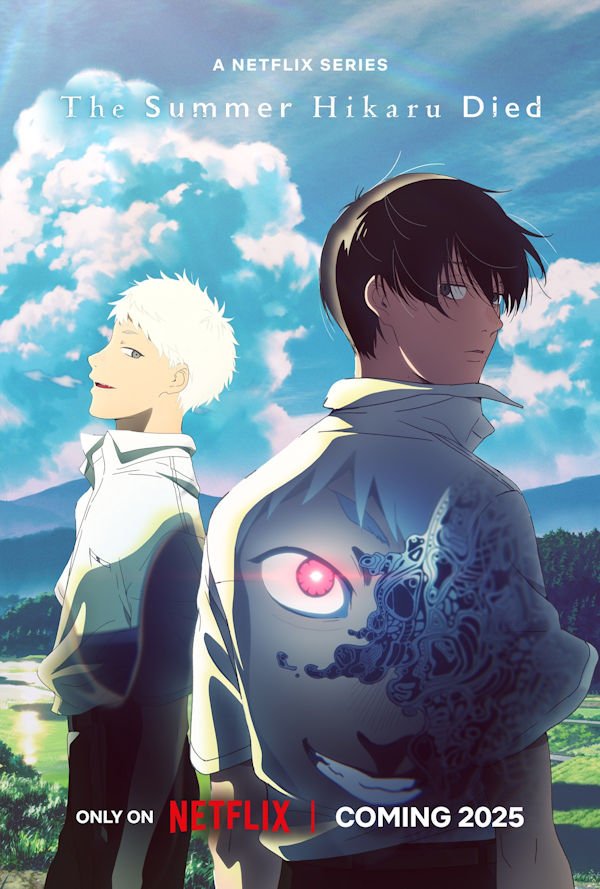
With the recent release of Leviticus, the Boys’ Love (BL) genre is gaining new fans, perhaps searching for more difficult titles than Heartstopper, Netflix’s hit BL show. In the film Leviticus, two teenage boys are thrown into a horrific situation. After being outed to their evangelical Christian community and forced to complete a reprogramming ritual, they are haunted by a mysterious entity that takes the form of the person they most desire: each other. What follows is a new horror gem, which is already facing criticism for its depiction of a same-sex relationship. Review bombers targeted the movie, saying it was nothing but a fetish film. A similar situation happened with certain “fans” of last year’s hit Netflix exclusive anime The Summer Hikaru Died. Atmospheric and jarring, Hikaru is a fine match for Leviticus and a great foil to the wholesome Heartstopper.
The ongoing manga of The Summer Hikaru Died by Mokumokuren has been published since 2021, and the anime’s first season aired in the summer of 2025. Set in a small town in rural Japan, the series focuses on teenage Yoshiki, a quiet, introspective boy, and Hikaru, his outgoing best friend. Here’s the catch: Hikaru is dead. After an accident in the nearby mountains, Hikaru returns to his normal life, but he isn’t the same person Yoshiki remembers. In his friend’s place is an eldritch monster hiding inside Hikaru’s shell, though he’s taken on much of Hikaru’s personality and quirks.
How is Yoshiki supposed to deal with “Hikaru” and should he turn the monster in? The anime takes the viewer inside their relationship, showing how the real Hikaru and “Hikaru” differ and how Yoshiki struggles with the monster’s existence. Not only is Yoshiki left worrying about his old and new friend, he’s also hiding a massive personal secret.
Yoshiki isn’t the only one with problems. “Hikaru” protects Yoshiki and their friends from ghosts and ghouls who travel down the mountain while trying to maintain his new form. His struggles with identity and purpose also inform the story, making him an intriguing and unique character. How often do we get to see the Lovecraftian monster’s point of view? However, he’s also a violent, unpredictable entity, and he dispatches a villager in the very first episode with extreme prejudice.
In the first two episodes, plenty of terrifying things occur, but nothing is as frightening and eerie as the grocery store cashier. All-knowing and nosy, the woman’s monologue of questions and prying opinions is creepier than anything “Hikaru” says. She epitomizes what’s wrong with the village, and so early on in the series/manga. She knows that Yoshiki’s sister is missing school, that he is in the photography club, and that his parents were fighting the night before. The audacity of this woman to insert herself in Yoshiki’s supposed private life will be familiar to anyone who grew up in a small town. “Hikaru” isn’t Yoshiki’s greatest fear; it’s the villagers like this woman who poke and pry until all secrets are laid bare.
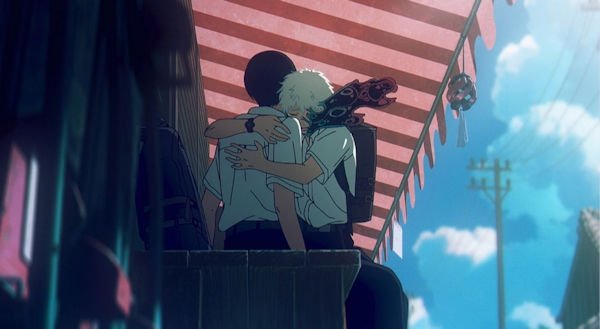
“There’s no way you can stay together like this,” says well-meaning Rie Kurabayashi, a woman Yoshiki meets who harbors minor psychic abilities. Although she’s talking about Yoshiki hanging out with “Hikaru,” this dialogue also strikes home the show and manga’s main theme: coming to terms with oneself, especially when pertaining to sexuality. Rie means that Yoshiki should abandon the monster, but there’s a double meaning. In such a small, conservative community, how could Yoshiki be accepted as gay?
The show hints at Yoshiki’s love for Hikaru without smacking the viewer in the face with it, keeping things unsure, since Yoshiki himself is unsure of himself and his feelings. As the series goes on, he becomes more comfortable about facing his inner worries, but this first season is mainly about him struggling with grief and depression as well as the death of his romantic love. The only person he felt comfortable with is gone, so where can he go from here?
The show/manga handles themes of homosexuality, external and internalized homophobia, as well as women’s roles and rights. There is a lot to unpack here, and the show doesn’t pull punches. One moment, you’re watching the kids play with sparklers, and the next, you’re assaulted by horrific figures that start haunting the town. Besides “Hikaru,” none of these ghosts and monsters have much of a mind left. They stalk the town and its people, wreaking havoc.
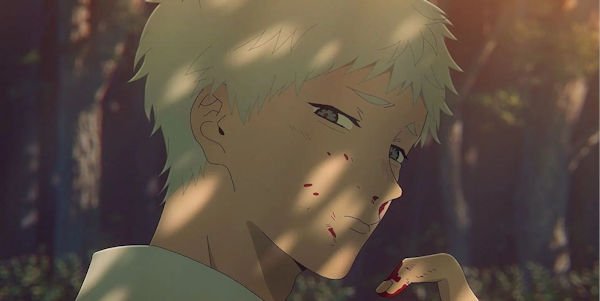
Then there are the townspeople, those in on the village’s dark history. They hide the truth, making Hikaru’s family partake in an ancient ritual in the mountains, an errand that killed not only Hikaru but his father as well. Unraveling the town’s secrets is a major part of the story, since the actions of adults burden children throughout the town’s history. While Yoshiki and “Hikaru’s” relationship is always central, the writer makes sure to populate the story with plenty of antagonists and friends. Psychic classmate Asako and Rie Kurabayashi help out when they can, and odd ghost hunter Tanaka fills out the main cast, helping ground the viewer/reader. Their stories develop alongside the main characters’ and are just as intriguing.
Creator Mokumokuren tries to appeal to people’s emotions instead of relying on scares. They want the reader to connect with the work while also being frightened. They are also keen to support the work as a queer story. It’s not only about romance but also about how people who are not heteronormative are often left out of conversations about sexuality. These people, like Yoshiki, might have fears of being the outsider and never feeling normal. Works like this are important, as they can help those like Yoshiki who are left out of those conversations.
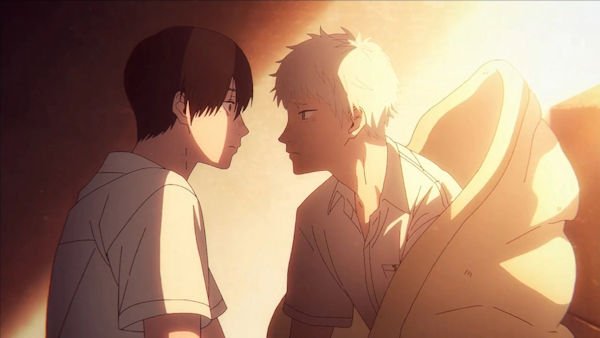
The show and manga’s detractors might say things like, “Why does it have to be gay?” or, “Why couldn’t they just be best friends?” The entire point is Yoshiki struggles with his queerness and has no one to talk with about it. His existence is marred by the absence of communication, especially within his family, as his father is hinted to have been in love with Hikaru’s father in the past. By creating a queer horror story, while also making it a coming-of-age tale, Mokumokuren does an excellent job straddling the genres.
I recommend this anime and manga to horror fans looking for a deeper story and not just jump scares. The complex themes will keep you thinking long after you’re done watching. While you’re hiding behind a blanket or closing your eyes, be sure not to skip past the opening sequence and its excellent song, “Saikai” by Vaundy.

