

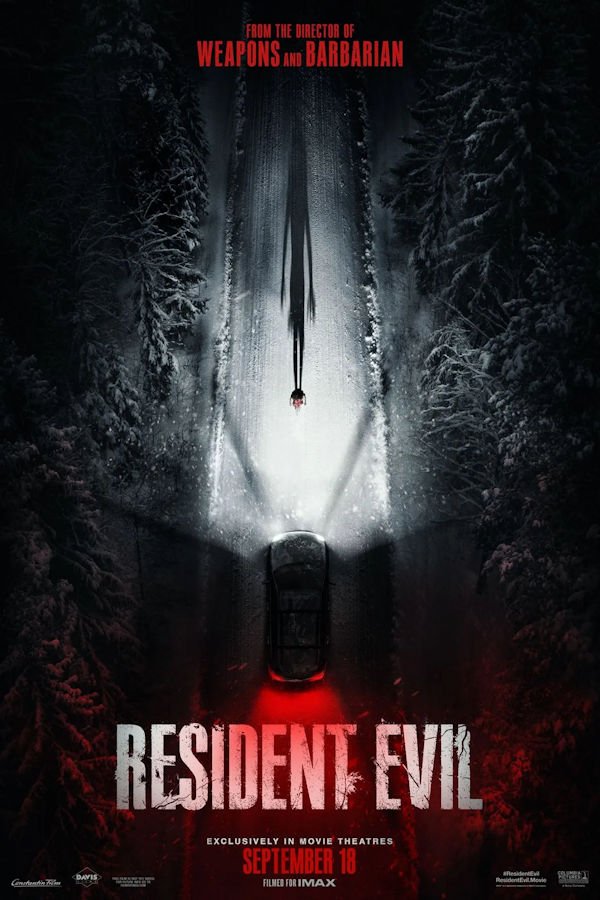
Every spooky season, I watch as much scary stuff as possible. It can be “cute” scary like Over the Garden Wall or “you will not sleep for a week” scary like The Descent. Whether returning to old favorites or seeking out new horrors, I love it all. This year, I goaded my brother into watching Zach Cregger’s reboot of the Resident Evil franchise.
After watching it, and being thoroughly entertained, I started seeing discourse on social media about the main character’s actions throughout the film. NPC medical courier Bryan signs up for one last lucrative run as his relationship with pregnant girlfriend Michelle crumbles over the phone. Delightfully played by Cregger regular Austin Abrams, Bryan moves through the movie like he’s playing the Resident Evil videogame, like a normal person stumbling through terrifying gameplay.
The main thing that had people talking—and arguing—was whether Bryan played his situations smart. Was he too kind and empathetic to the woman he accidentally hits with his car in the opening moments? Or was extending a hand to an injured child stupid? This got me thinking, because my initial reaction was to see Bryan through a lens of empathy but also to know that his character is in a movie, but he doesn’t know that. Why wouldn’t he try to help someone? Especially a woman he injured or a helpless child? He doesn’t know exactly what’s going on, says repeatedly that it’s not real.

Those who called him stupid would love to think they’d be the game’s Main Character, the one who knows how to handle weapons and is a badass. In reality, those people would more likely be frightened out of their minds and would lack the fortitude to get to the movie’s end like Bryan does. His goal is to help himself, yes, but not at the film’s beginning. So, was Bryan stupid, or have we lost an important part of what makes us human?
I also rewatched a classic anime series to coincide with October. I saw it when I was younger, so watching it now after seeing more horror films and shows put it in a different perspective for me as well as catapulted it higher on my favorite anime list.
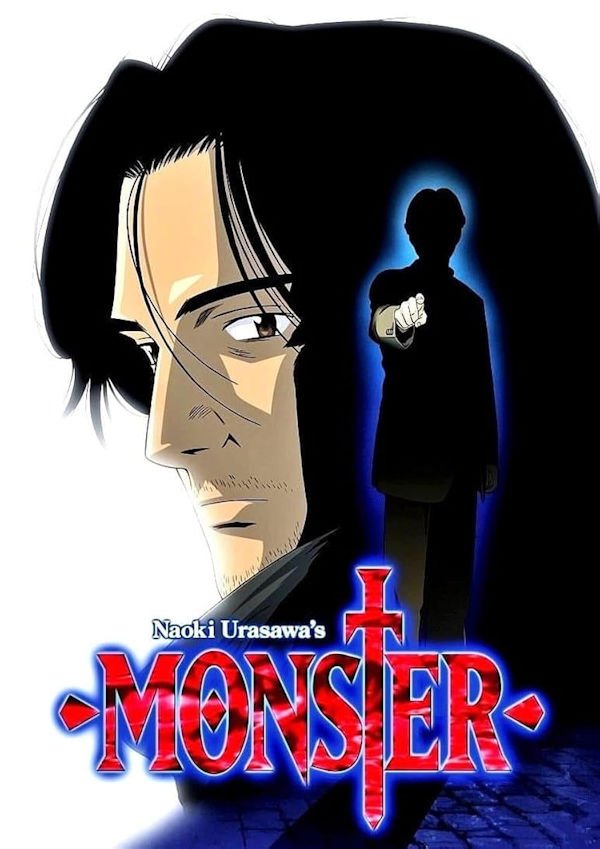
Adapted from Naoki Urasawa’s manga of the same name, Monster begins realistically enough. Young genius neurosurgeon Kenzo Tenma has everything: a great job at a prestigious German hospital, the favor of the hospital director, as well as a beautiful fiancée, who happens to be the director’s daughter. His life is set, so long as he toes the line. One thing that ultimately sets him back is his empathy, the drive to treat all patients equally.
When he’s called in one night to perform emergency surgery on a young boy, the city’s mayor arrives in critical condition. Tired of the hospital’s unethical separation of patients (important versus unimportant), Tenma refuses to leave the boy. As the mayor dies, the boy lives, but Tenma’s role falls alongside the mayor. The hospital director, angered Tenma disobeyed him, gives a promotion to another surgeon, while Tenma’s fiancée leaves him.
Sitting at the comatose boy’s bedside, Tenma rants people like that have no reason to live. Unfortunately for Tenma, the boy isn’t as innocent as he appears. The three people Tenma railed against end up dead, and Tenma is suspected. The boy and his twin sister disappear from the hospital, and Tenma is left to ponder the consequences of his words and actions. Ten years pass, and the boy reappears, shocking Tenma by killing one of his patients in cold blood. Tenma can’t escape the law this time and is forced to flee, now with a new mission: destroy the monster he saved.
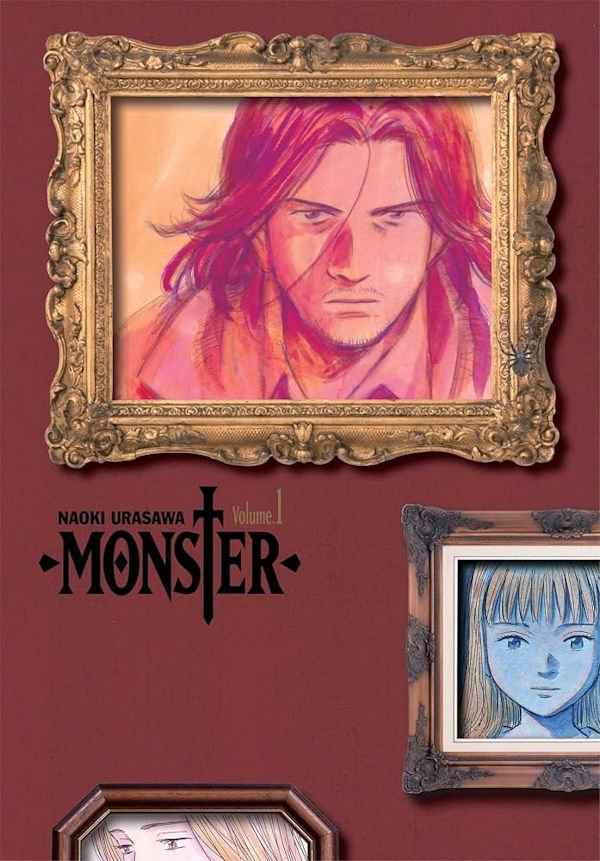
This story could have been fairly short. Tenma could have caught up with the boy, Johan, and dispatched him, much like those video game heroes. However, the journey for a man as ethical as Tenma becomes twisted and frightening as he confronts his own thoughts on morality as well as Johan’s monstrous activities. Tenma unearths a massive conspiracy, which includes child brainwashing, a program that made Johan what he is.
Throughout the series, Tenma meets various people. Some with evil motivations, some innocent bystanders caught in Johan’s web, and many that become unlikely allies. What struck me the most about this rewatch was how I perceived Tenma. What might seem foolish to some, Tenma’s inability to kill obstructive people or even hesitating to kill Johan, I saw as his defining character trait.
For those who have seen Deathnote, Tenma is the anti-Light Yagami. Where Light sought to destroy for power and had no allies, Tenma could kill but chooses not to. He could leave behind the injured but chooses to save them. His dedication to saving lives becomes his boon, as those whose lives he’s touched bloom into comrades in arms. If Tenma wasn’t kind and empathetic, his journey might have ended in suffering. Many characters die because of Johan, but so many survive because of Tenma.
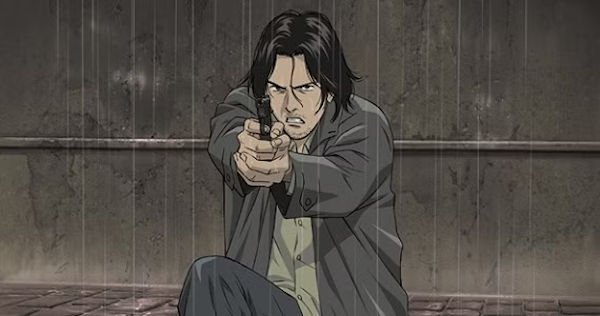
Monster ends with the idea that monsters aren’t born, they are made, which is antithetical to what characters say about Johan through the entire show. Tenma must think about his role in helping Johan, as the boy’s talent for manipulation leads to many deaths, but he also learns that Johan did not become a monster because it was his nature from the start.
Is justice served by the show’s end? To some, perhaps, but Tenma won’t slow down in his pursuit in helping those who need him.
*Spoiler Alert*
[The remainder or this article contains spoilers for Resident Evil (2026). Read with caution if you have yet to watch the movie.]
When Bryan, infected by the little girl he attempted to save, transforms into a monster at the end of the movie, it’s startling to watch. We’ve spent the entire film by his side, hoping he’ll be cured at the last moment. His bravery and compassion bring him to the goal, but his empathetic response to the infected girl has made the journey end in tragedy. Did he make the right choices along the way? Was his empathy a roadblock?
While he ends up a monster, I would argue that Bryan’s character would feel empty without how he responds to those around him. If he hadn’t reached out his arms to that girl, instead maybe shooting her in the head, how would we feel about him as a character? Could we root for him to reach his destination?
Some viewers might say yes, blow her head off and get moving, but I believe this isn’t what Cregger wanted for the character. He wrote Bryan as humane. He’s not a monster. While his humanity did seal his fate, how can we say we would have chosen differently? Choosing to become a monster versus choosing to embrace humanity brings these properties together. Both Tenma and Bryan choose empathy over and over. While Byran turns into a literal monster, his efforts created the cure. It sits in a bed of snow below him, but it exists, waiting for someone to find it and cure everyone. Without Bryan, the cure wouldn’t exist at all. So, while his humanity seems like stupidity to some, it has actually saved people in the future. Or so we can hope. For Resident Evil and Monster, there is hope alongside tragedy at the end.
Featured image by Luis Villasmil.

