


I begin this review with great anticipation and, admittedly, a little trepidation. For years, David Gemmell has been one of my favourite authors. There is something in his work I genuinely adore: a quality that is both comforting and captivating. Many of his books are ones I return to between other series, like familiar roads I never tire of walking.
My intention here is to share my thoughts on Gemmell’s overall style as a writer, while also highlighting my three favourite books of his. They are in no particular order, because ranking them would be far too difficult to even attempt. Hopefully, along the way, I can pinpoint why these magnificent tales have stayed with me for so long.
I would describe Gemmell as one of heroic fantasy’s great masters. His legacy is filled with stories that inspire, shining a bright light on human courage while never ignoring the flaws, fears, goodness, and ugliness that make people feel real. His heroes are rarely perfect, but that is precisely why they endure.
So, let us begin.
Waylander
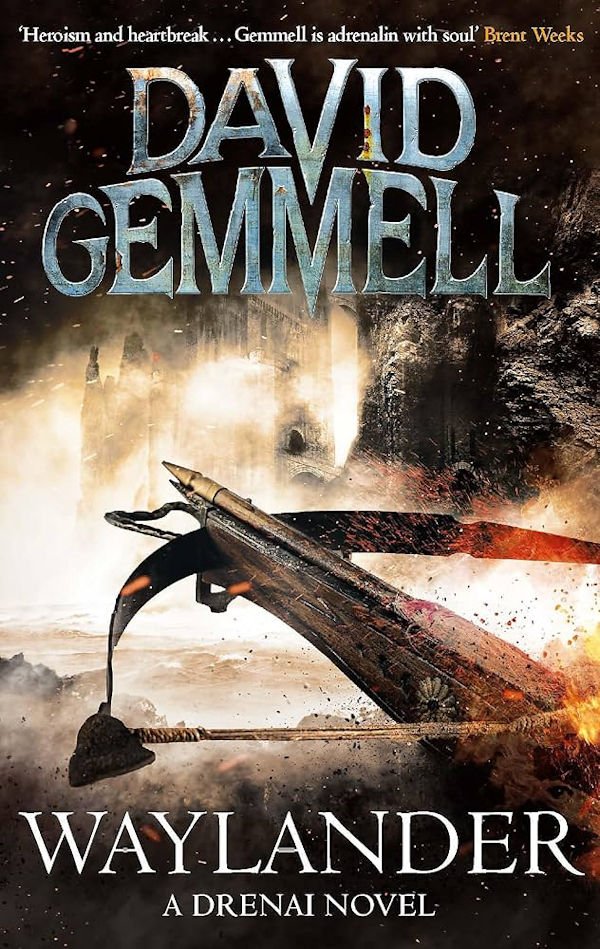
All of Waylander’s instincts had screamed at him to spurn the contract from Kaem the cruel, the killer of nations. But he had ignored them. He had made his kill. And even as he went to collect his gold, he knew he had been betrayed.
Now the Dark Brotherhood and the hounds of chaos were hunting him, even as Kaem’s armies waged war on the Drenai lands, intent on killing every man, woman, and child. The Drenai soldiers were doomed to ultimate defeat, and chaos would soon reign.
Then a strange old man told Waylander the only way to turn the tide of battle would be for Waylander himself to retrieve the legendary Armor of Bronze from its hiding place deep within a shadow-haunted land. He would be hunted. He was certain to fail. But he must try, the old man commanded—commanded in the name of his son, the king, who had been slain by an assassin.
Waylander was the most unlikely of heroes—for he was a traitor, the Slayer who had killed the king.
My first selection is Waylander.
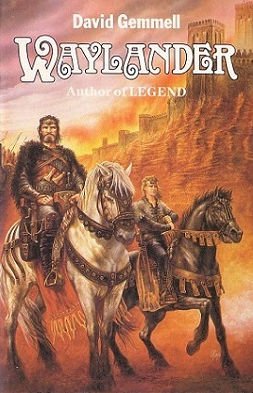
This was actually the first of David Gemmell’s books I read, and from that moment on I was completely immersed in his world. It is the third book in the Drenai Saga, and the novel where we are first introduced to Waylander: an amoral assassin whose murder of the Drenai king throws the realm into chaos and leaves it vulnerable to the invading Vagrians. Burdened by guilt, Waylander is sent on an epic quest to retrieve the legendary Armour of Bronze—a mission that becomes both a desperate hope for the Drenai and a path towards redemption for the man who helped bring them to ruin.
Throughout the book, we watch Waylander slowly rediscover his humanity. From his first encounter with Dardalion, the idealistic priest he saves, to his relationship with Danyal, a woman travelling with three vulnerable children, Gemmell gradually reveals the conscience buried beneath the cynicism. As the story unfolds, you are plunged into a world of war, love, sacrifice, and flawed heroes.
For me, what makes Waylander so memorable is it is not simply a tale of adventure, but a story about whether a man who has done terrible things can still choose to become something better. Waylander begins as a selfish cynic and killer, but through pain, loyalty, and courage, he becomes one of Gemmell’s most compelling heroes.
Legend
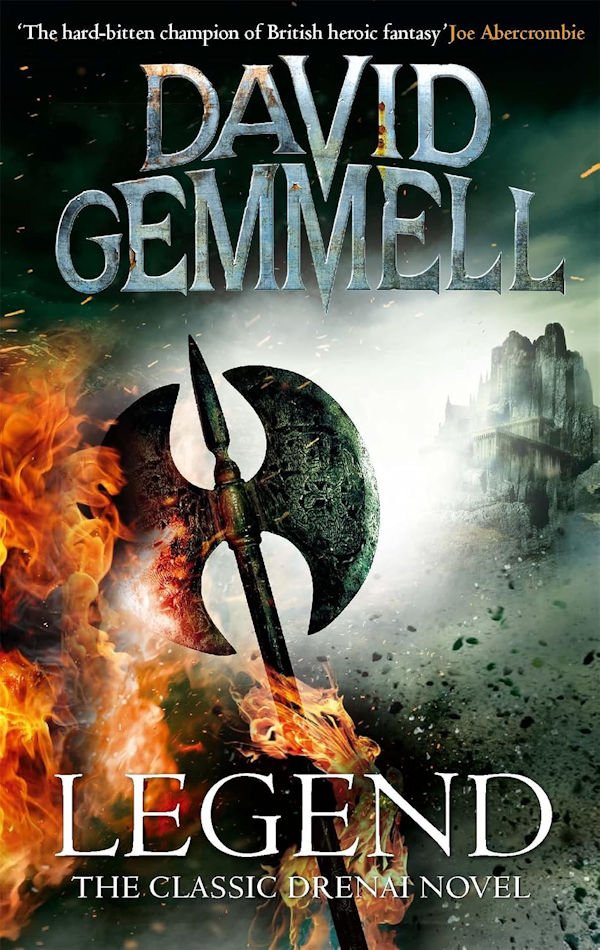
The Legend
Druss, Captain of the Axe: the stories of his life were told everywhere. Instead of the wealth and fame he could have claimed, he had chosen a mountain lair, high in the lonely country bordering on the clouds. There the grizzled old warrior kept company with snow leopards and awaited his old enemy, death.
The Fortress
Mighty Dros Delnoch, protected by six outer walls, the only route by which an army could pass through the mountains. It was the stronghold of the Drenai empire. And now it was the last battleground, for all else had fallen before the Nadir hordes.
And hope rested on the skills of that one old man.
Onto my second book: Legend.
Perhaps the antithesis of Waylander as a character, and arguably Gemmell’s most famous creation, is the lead figure in this book: Druss the Legend. This was Gemmell’s first published novel, and the rawness of the writing is visible when compared with some of his later work. Does that matter? Absolutely not. The story, the characters and the sheer emotional force of the book elevate it into something incredible.
Heroes stand fast upon the walls of the legendary fortress of Dros Delnoch, facing almost certain death against an invading horde of Nadir warriors. Lacking leadership, underprepared, and underequipped, their chances of holding out behind the six walls of the fortress look grim. Then hope is restored as Druss enters the fray.
Gemmell’s mighty champion, born a woodsman and forged into a hero through hardship, wields the formidable axe Snaga and embodies courage, honour, and the stubborn refusal to yield. He is not a perfect man, but he is the kind of man others believe in when all hope seems lost. The majority of the book focuses on the siege itself: the brutality, the exhaustion, the fear, and the crushing weight of inevitable defeat. Gemmell captures these emotions perfectly, exploring the depths of the human spirit when faced with annihilation.
We also discover an unlikely hero in Rek, who finds his true destiny as the Earl of Bronze, donning the legendary armour and sword of Egel to inspire the men around him. As the defenders are steadily pushed back through each wall, you gain a real sense of desperation and impending defeat, as men sacrifice themselves and battle to their last breath.
Elements of the story feel almost historical. The siege of a great city is a familiar thread, but Gemmell weaves fantasy into it through The Thirty, magical warrior monks, who aid in the defence.
As the book draws to its conclusion, you find yourself completely absorbed in every detail. At times, you believe you are standing on the walls of Dros Delnoch yourself, sword in hand, watching as the horde approaches. Roused by the words of Druss the Legend, you feel ready to fight beside him.
“Some of you are probably thinking that you may panic and run. You won’t! Others are worried about dying. Some of you will. But all men die. No one ever gets out of this life alive. I fought at Skeln Pass when everyone said we were finished. They said the odds were too great, but I said be damned to them! For I am Druss, and I have never been beaten, not by Nadir, Sathuli, Ventrian, Vagrian, or Drenai.
By all the gods and demons of this world, I will tell you now—I do not intend to be beaten here, either!”
Perhaps this isn’t Gemmell’s most polished book, but I think that’s part of why it remains one of my favourites. It is his purest expression as a writer: ordinary people banding together against impossible odds, finding courage they never knew they had, inspired by true legends and heroes, and standing together against an impossible foe.
Sword in the Storm
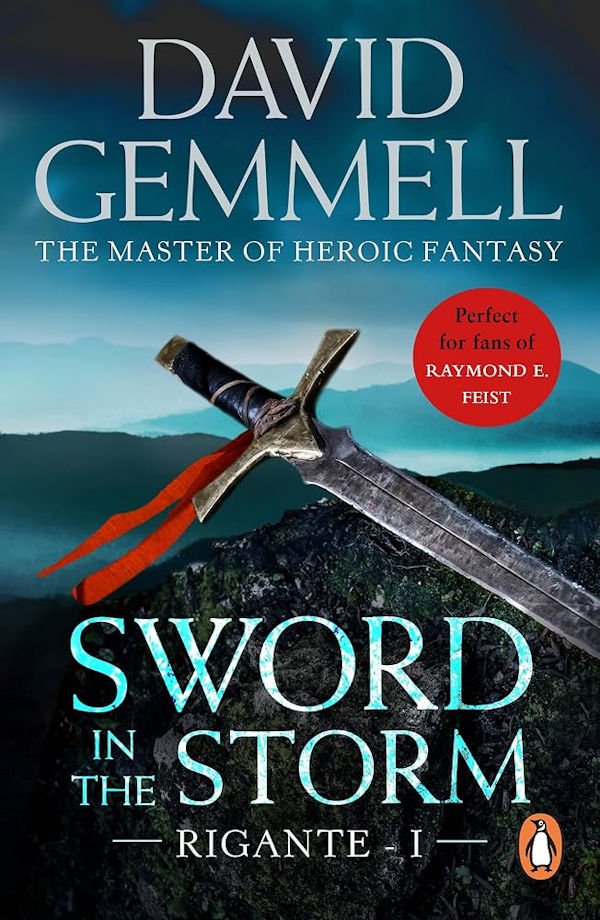
Fierce and proud, the Rigante dwell deep in the green mountain lands, worshiping the gods of air and water, and the spirits of the earth. Among them lives a warrior who bears the mark of fate. Born of the storm that slew his father, he is Connavar, and tales of his courage spread like wildfire.
The Seidh—a magical race as old as time—take note of the young warrior and cast a malignant shadow across his life. For soon a merciless army will cross the water, destroying forever the timeless rhythms of life among the Rigante.
Swearing to protect his people, Connavar embarks on a quest that will take him into the heart of the enemy. Along the way, he receives a gift: a sword as powerful and deadly as the Seidh who forged it. Thus he receives a name that will strike fear into the hearts of friend and foe alike—a name proclaiming a glorious and bitter destiny.
Demonblade.
And so, to my final selection: Sword in the Storm.
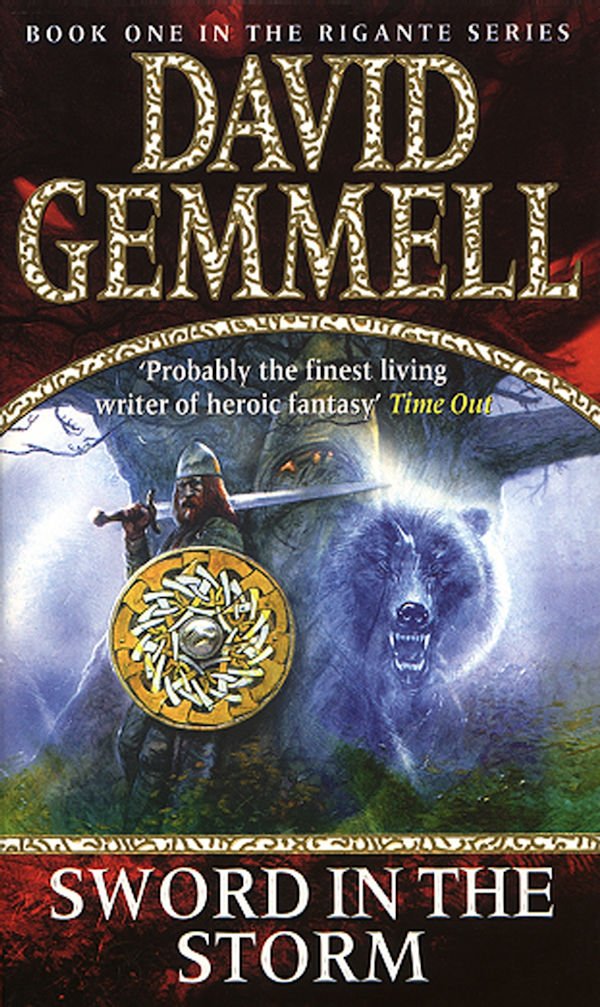
The first book in the Rigante series, this is a true coming-of-age story. We follow Connavar (Conn) from his birth in the quiet rural settlement of Three Streams, to his ascendancy as the uniter of the tribes, and ultimately to his epic victory against a formidable invading enemy. I instantly loved this book, and Conn remains my favourite of all Gemmell’s characters. In contrast to Waylander, a man seeking redemption for past sins through noble action, Conn is someone we watch being shaped in real time. He becomes a product of the experiences we share with him as readers. From growing up taunted by his fellow villagers because his father died branded a coward, to the heartbreak and agony he feels when Arian betrays him, these moments sculpt him and give real depth to his character.
There are two scenes that have stayed etched in my memory. The first is Conn’s meeting with the fawn tangled in brambles in the forest. After he frees it, the Seidh (magical spirits) take an interest in him and set him on the road towards his destiny. The second is when he single-handedly fights a bear to save his friend. The encounter leaves him with near-fatal wounds, but it also cements his status as a legendary hero among the Rigante. Both moments are pivotal in transforming Conn from a boy of promise into something far greater.
But to defeat a great enemy, you must learn to think like them. Conn joins the army of Stone in order to master their advanced military tactics, ensuring that when they march on his homeland, he will be equipped to defeat them. As with every great Gemmell character, Conn is deeply flawed. His wife is killed in a raid by a rival clan while he spends the night with his former love, Arian. Consumed by guilt and rage, he seeks vengeance and slaughters an entire village, men, women, and children. In that moment, we witness part of Conn die. From then on, he carries a new darkness within him. For me, this complexity is one of the reasons I love the story so much. Conn is heroic, but he is never clean. He is inspiring, but he is also terrifying.
A recurring theme in Gemmell’s work is people coming together to face an overwhelming enemy, and Conn ultimately embodies that idea. Following his act of vengeance and subsequent reclusion, he returns to unite the tribes. They follow him not only because of his heroism and military brilliance, but because of the fear and awe he inspires, a quality shared by many great leaders in Gemmell’s world. Taking up his legendary sword, forged by the Seidh, Conn leads the Rigante against the Empire of Stone’s army in an epic battle. In victory, he earns the fearsome title of Demonblade. A name that captures everything he has become. Saviour, warrior, legend, and something much darker.
Picking just three of Gemmell’s works was like trying to conquer Dros Delnoch. Near impossible. So perhaps the real question is not simply which books are best, but what makes him such a great author, and why his stories are cherished by so many. I can’t speak for everyone, but for me it comes down to a few key things.
Perhaps the most important is his ability to portray people. Yes, they are often larger-than-life heroes or villains, but fundamentally they feel real. Every single one of them, regardless of their nobility or darkness, carries human flaws we can all recognise: self-doubt, indecision, fear, hatred, regret, and hope. Gemmell drew inspiration from the people around him to craft believable and memorable personalities, and it shows.
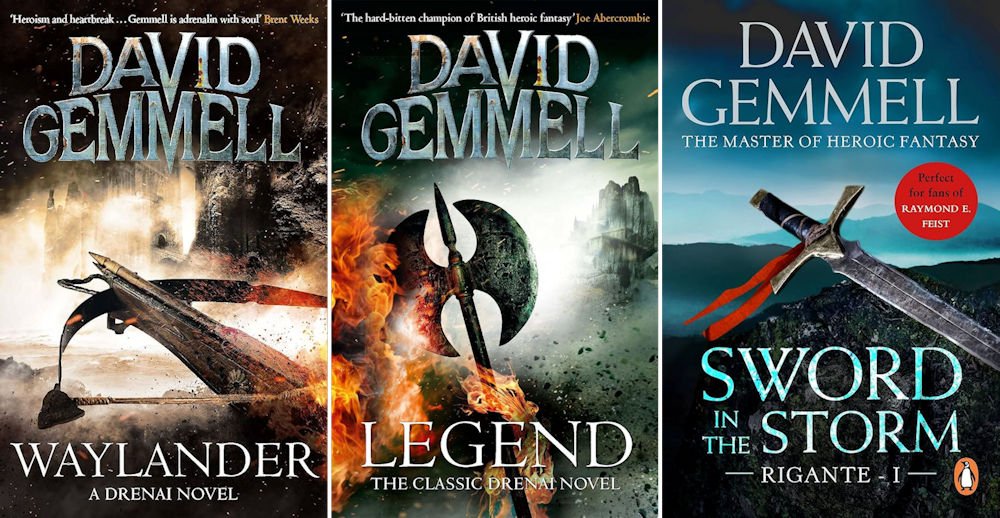
I’ve touched on Waylander, Druss, and Connavar, but there are countless supporting characters who shine just as brightly, enriching the stories and deepening his worlds. As a reader, you care deeply about these people, and that emotional resonance is incredibly powerful and immersive. His prose is also lean and fast-paced, which I think is a huge part of his appeal. The books are easy to read, but never simplistic. They keep you moving forward, with very few flat spots, and allow you to focus on the story, the characters and the choices they face. Compared with more complex and challenging writers, such as Gene Wolfe, who is also one of my favourites, Gemmell offers a different kind of pleasure: direct, urgent, and deeply human storytelling.
Lastly, and perhaps most importantly for me, there is the deep moral core that runs through his work. Again and again, his stories return to courage, sacrifice, loyalty, redemption, and love. However dark the world becomes, however brief the moment may be, the bright light of hope still shines. Ordinary people are elevated to acts of valour and heroism, not because they are perfect, but because they choose to stand when it matters.
In a genre often praised for its grimness, David Gemmell showed us that love could prevail. Through his exploration of flawed people, real relationships, and impossible choices, he reminds us what heroism truly means.
Picking my top three books and reflecting on why I enjoy Gemmell’s work so much has been a pleasure, much like turning the page of one of his novels for the first, or even the fifth, time. So, if you’ve never read one of his books before, give one a try. I’m confident you’ll enjoy it, and it won’t be long before you’re searching for every Gemmell book you can find.


 Angela Boord
 Tom Joyce
 Jennie Ivins