


June is here, and so is another round of cuts in this year’s Self-Published Fantasy Blog-Off (SPFBO)! Today we are saying goodbye to three more books in our Fourth Fall. We have 8 more books to cut, before we turn our full attention to the four semi-finalists.
Just a reminder: We don’t read the books in any particular order, and we don’t let them go from worst to best either. Each round we review a couple books until we reach our semi-finalists, who each get their own dedicated review.
Most importantly: All reading is subjective. What didn’t work for us might be exactly what you are looking for. If anything here sounds like your kind of book, please do check it out!
A big thank you to all the authors who entered. We know it takes courage to put your work forward for a competition like this, and we genuinely appreciate every single one of you.
You can keep up with round one of the contest on the official SPFBO website. And if you have no idea what I’m talking about, you can learn more here.
Sigil of Enderune by Rosaire Bushey
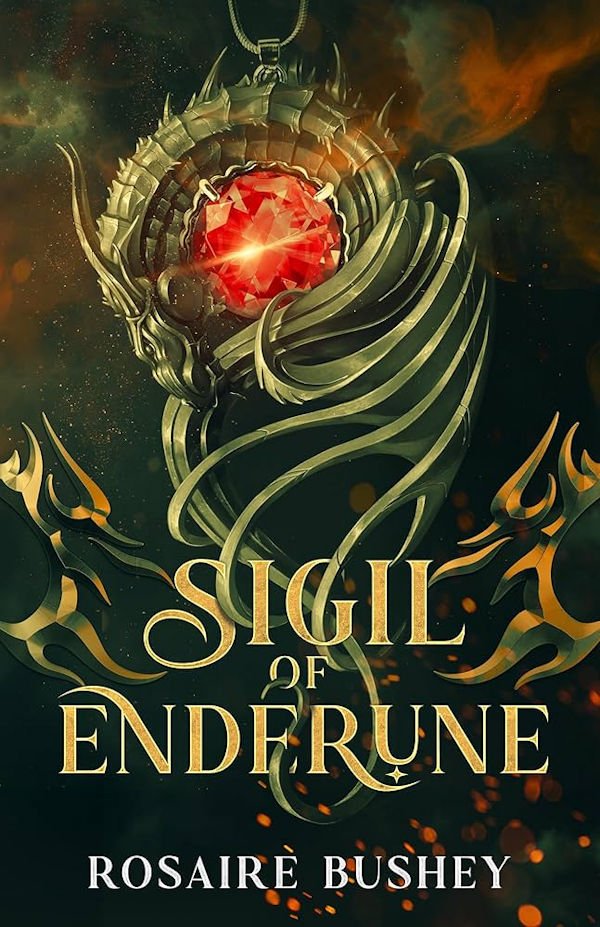
In the world of Revin, magic must be written in ink, and read. In the history of the world, only once has there been a true Artificer, a magician who could wield magic with a thought; and his power came from a magical artifact that has been lost for centuries. The story and potential of the Sigil of Enderune, however, still draws many to search for this ultimate talisman of power.
This one had a mixed reception across the team. The worldbuilding and magic system drew genuine praise. Written spells where ink colour, brush type, and direction all matter is a creative and well-executed concept. The political intrigue and secret rebellion gave the plot enough momentum to keep some judges turning pages, and the Snapdragons were a clear highlight: small, spunky, and memorable. One judge read the whole thing in a single night.
The problems, though, were hard to ignore. Several judges struggled to get their bearings early on, with the opening chapters making it difficult to identify the main characters and follow what was happening. Characterisation was uneven. Two of the male leads felt too similar to distinguish, and the main female character didn’t leave much of an impression. Head-hopping mid scene and characters reappearing without reintroduction added to the confusion.
The editing issues were the most consistent complaint. Sentence construction was often awkward, contradictions cropped up, and something as basic as a character’s codename was spelled two different ways throughout the book. For a ninth novel, the team expected a more polished result. There’s real potential in the bones of this story, but it needed more work before publication.
Changebringer by Jean K. Silver
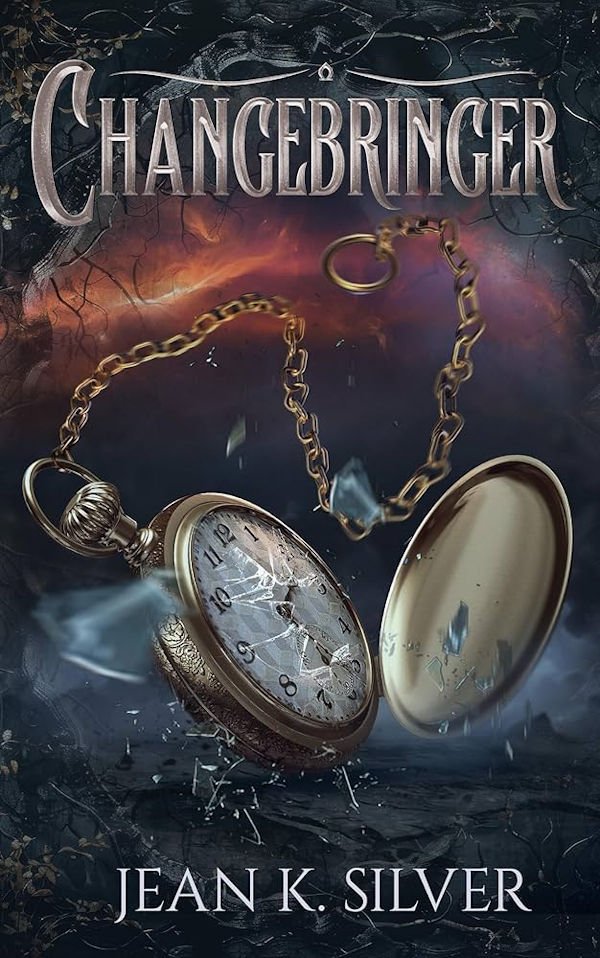
Aurelia is a devout priestess of The Lord of Time, traveling through the ages at His whim. She sews shut rips in the fabric of existence and executes the power-hungry mages who dared open them. This sacred duty is meant to be solitary—a fact that Vlad, an immortal vampire, simply won’t accept.
That, or his insistence that Fate brought them together is one of his many, many lies.
His incessant flirting is irritating; his undeniable charm is distracting; most of all, however, his eagerness to step between Aurelia and her enemies is dangerous. The more their timelines intertwine, the deeper she falls for the man who seems to already know her future while she slowly pieces together his past.
Their doomed romance is torn asunder by a threat even greater than Aurelia’s. Destiny chooses a mortal as Her Champion, a desperate measure to prevent the fast-approaching Death of Magic. The catch? The Champion’s plan involves killing The Lord of Time and usurping His domain.
With the world she bled to protect at stake, Aurelia must persuade Vlad to claim his birthright and lead their magical kin to salvation—the same birthright he’d been unsuccessfully fleeing for centuries.
If the price of victory is betraying the man she loves, so be it.
This one divided the team fairly cleanly along the lines of how much you enjoy romantasy. The premise is genuinely intriguing: a priestess of the God of Time who seals magical rifts, meets a vampire who already knows and loves her, and the two have to find each other over and over across different eras. For the right reader, that setup has a lot of appeal.
Some judges never got far enough to find out. The opening confused a few, and one judge stepped away early specifically because of anachronistic language: a character who had supposedly never travelled beyond the 1600s using decidedly modern turns of phrase was too immersion-breaking to push past.
For those who stayed longer, the repetition became the main issue. As Kerry put it, the story fell into a “rinse and repeat” style, with the MC being constantly saved by either her vampire lover or a convenient stroke of luck. The time travel itself drew consistent criticism too. Jumps were frequent but rarely distinct, and despite a story spanning centuries, most settings felt broadly medieval. The weight of time passing never quite landed.
Interestingly Julia, who usually doesn’t enjoy romance likes this one best.
– – –
Julia
To be honest, without SPFBO I would never have picked up a book described as “a time traveler falls in love with an immortal vampire.” Because of that, this ended up being a surprisingly solid read for me, even if it did not fully win me over.
The time travel was fun in principle, but often felt rushed and a bit disjointed. We jump a lot, sometimes so quickly that there is barely time to settle into a place or moment before being pushed onward again. We often drop straight into a scene and leave just as quickly, without much sense of the world around it. As a result, many timelines ended up feeling surprisingly similar. Even though the story is meant to span centuries, most settings felt broadly medieval fantasy. Outside of a few larger set pieces and the watch marking different years, I rarely felt the weight of time passing. I would have preferred fewer jumps and more space to really experience the places we visit, their culture, daily life, and atmosphere.
This also ties into my biggest pacing issue. The story relies heavily on urgent jumps, last second saves, narrow escapes, and near deaths. Taken on their own, those moments work, but they happen so often that they start to feel repetitive. When almost every jump becomes another rescue or another brush with death, the tension flattens instead of escalating, and the plot armor becomes hard to ignore.
There is one major time related plot choice in the second half that really annoyed me. I cannot go into details without spoilers, but it felt unnecessary and frustrating, especially when I was already a bit worn down by the constant motion and urgency. It did not ruin the book for me, but it definitely pulled me out of the story at that point.
The romance worked better for me than I expected. I usually struggle with romance heavy stories, but this one avoided many of the tropes I dislike. There is no endless cycle of loving and hating, no cheating, and no conflict built purely on miscommunication. There is angst, but the characters are adults who actually talk to each other and try to deal with their problems.
The explicit scenes were written in a fairly straightforward, matter of fact way, without leaning into excessive purple prose, which I appreciated. They did not make me cringe or roll my eyes, something that often happens to me in romantasy.
That said, the general prose did have some clunky moments. Every now and then a line would feel oddly phrased or overly ornate in a way that briefly pulled me out of the story. It was not constant, and it did not ruin the reading experience, but it was noticeable.
What I really liked was the main character. She is generally a good person, but not a saint. When people she loves are in danger, her morals bend, sometimes sharply, and she is very aware of that. I enjoyed watching her confront how far she is willing to go when loyalty and love are tested. The theme of trust, betrayal, and what you do when the people you love might also be the villains added real depth to the story.
The book also stood out by having very few male main characters, which felt like an interesting reversal of many epic fantasies. I am not sure I liked it more, but it was refreshing to see the balance flipped for once.
In the end, Changbringer has a strong hook, a morally interesting protagonist, and a romance that did not actively get in my way. But the constant jumping, repetitive high stakes moments, lack of distinct timelines, and a few frustrating plot choices kept it from fully landing for me. This is very much a romantasy first and foremost, and readers who enjoy time travel romance, devotion, angst, and dramatic rescues will likely have a great time with it. I am glad I read it for SPFBO, and I can see why it works for its audience, even if it was never quite meant for me.
– – –
Readers who love time travel romance, devotion, and dramatic rescues will likely have a much better time with Changebringer than our team did. It just wasn’t quite the right fit for us.
Keeper of the Gate by Margaret Feuerman
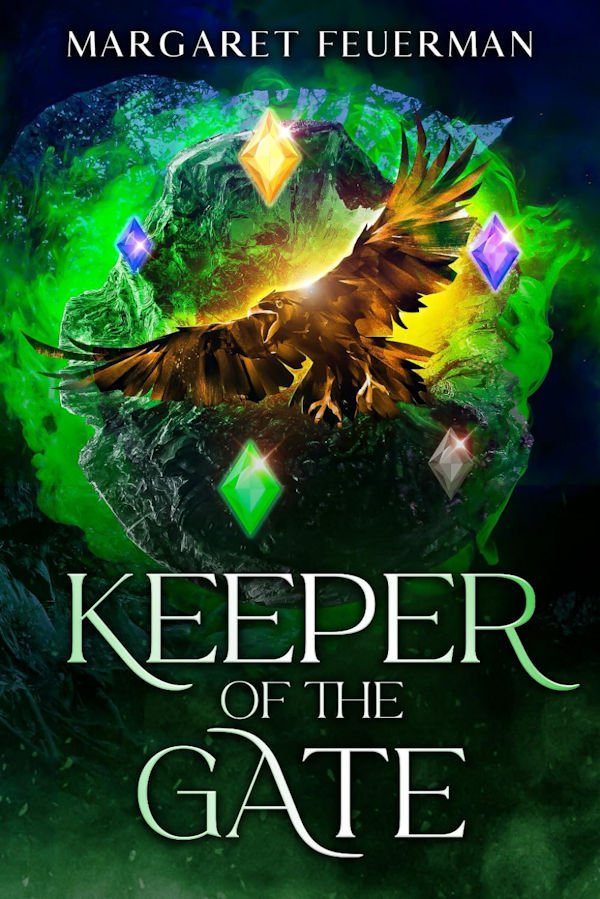
Please, Lady of Hope, grant me your strength to lead my people home and shut the Gate forever, so my children need not become strong and deadly.
Froth covers Bess Sonnenberg’s long lost Kingdom. One touch, one breath of the noxious fog turns people into monsters, slaves to a dark god imprisoned beyond a shattered Gate.
At five, Bess’s grandmother taught her how to cast firebolts.
At eight, her grandfather placed her fallen mother’s sword in her hands.
At twelve, she stepped to the frontier—shifting banks of poisonous Froth in a polluted land, monsters lurking in the mists, battle, blood.
Froth doesn’t wait for a Princess to grow up. Will she survive long enough to become the Queen her people need her to be?
Keeper of the Gate sits firmly in noblebright territory: a multi-generational fight against an evil god, a world shaped by centuries of that struggle, and characters who tend toward the virtuous. Whether that lands, depends a lot on what you are looking for.
EG was the clear enthusiast on the team.
– – –
EG
Keeper of the Gate is the start of an epic, noblebright story about one world’s fight against an evil god, a fight that persists for generations untold and will persist until he is contained once more.
I really enjoyed this book all the way through. The prologue grabbed me in a desperate hook, then led into events that began unfolding generations later. Watching Bess grow from child to queen was fascinating and extremely well executed. I loved the little moments in there where she just wanted to be a girl, not ruling her country as they fought a great evil. Plot-wise, this book is fairly steady in pacing, with a decent amount of downtime between action scenes so the characters can regroup and build skill and hope. I think that some people might find it a smidge slow, but I liked the space between each major action scene; it allowed me to follow the details more closely.
As for the details, I think this book does a wonderful job of creating a world that actually fits the situation in which it exists. This was a medieval fantasy, but it didn’t feel like your typical patriarchal medieval world that we see so often. Instead, the culture felt very much shaped by the encounters they’ve had over the generations. I think the politics were well done, though not as involved as I would have liked (expecting more from book two). But the world itself was very well done indeed.
I will say that the overarching plot is a bit easy to figure out, if not entirely predictable. But, then, such often happens with noblebright fantasy. Good must win out, after all, and so there is a particular pattern that it follows. Still, I didn’t mind too much. Overall, this was a great example of a noblebright fantasy and I thoroughly enjoyed reading it.
– – –
Others struggled more. One judge found the characters a little too uncomplicated, and while acknowledging the imaginative ideas behind the portal system and ghost grandmother, they never felt fully pulled inside the world. Another found the writing style scattered and unfocused from the very first pages. A third landed somewhere in the middle, not won over but intrigued enough to keep going.
This is a book that will reward readers who love classic noblebright fantasy and don’t need moral ambiguity or psychological complexity to stay invested. For those who do, it may feel like it keeps them at arm’s length.
And there you have it! Our fourth post of cuts! Thank you again to the authors who took the time to enter and had the courage to let us read their work. We wish you all the best in the future!
That leaves us with 12 more books to get through. You can see the entire list of 300 books on Mark Lawrence’s website. Good luck to all the authors, and happy reading!
- The Artificer’s Knot by Eric Lewis
- City of Stone by K. T. Holder
- The Crimson Court by Brendan Noble
- Hunter’s Apprentice by Simon Shugar
- Island of the Dying Goddess by Ronit J.
- Leave No Dragon Stone Unturned by Alexa Grave
- Liches Get Scritches by H. J. Tolson
- The Non-Magical Declan Moore by Nathan Taylor
- Of Mages and Makers by Rel Carroll
- Physical Magic by William C. Tracy
- Remnant by K. R. Solberg and C. R. Jacobson
- Shadow of the Pyre by R. T. Silveus
Our judges this year Adawia Asad, Eva Geraghty, Evelyn Grimald “E.G.” Stone, Julia Kitvaria Sarene, Karen Lucia, Kerry Smith, Kit Caelsto, Maureen Neuman, Robert Max Freeman, Sara Rosevear, Sherry Cammer, Stacey Markle, Tianna Twyman, and Yaniv Rosenfeld Cohen. If you’d like to learn more about us, including our likes and dislikes, you can read about them here. And again, you can learn more about the contest here.
Any queries should be directed to the editor, Jennie Ivins, via DM (Bluesky/Threads).
Featured image by Rhamely.

