

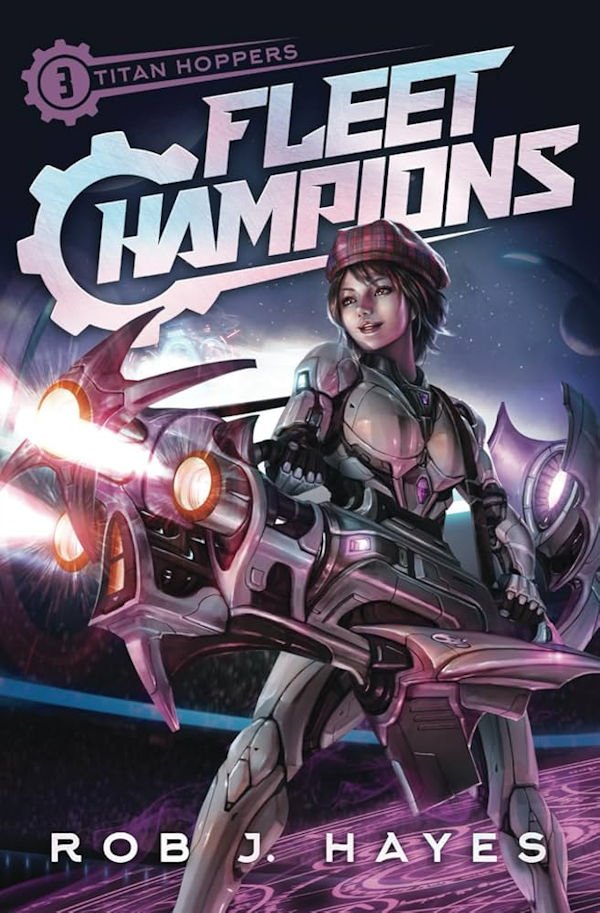
After surviving the Spire and opening their Second Gates, Iro and Emil are named Heroes of the Fleet, their faces on posters across every ship. But with the benefits of notoriety, comes a dangerous new responsibility.
The Raider Fleet, not content with stealing their food and murdering their people, demand ownership of the wing. To avoid an unwinnable war, the Home Fleet agree to a grand martial tournament, Hopper against Raider, and both Iro and Emil must compete.
Can they fight their way through the competition to claim the title of Fleet Champion? And why are the Black Cloaks so eager to see who wins?
This series just keeps getting better.
What started as strong progression fantasy in space has grown teeth. The fights are bigger, the stakes are harsher, and the emotional cost lands harder. Yes, there’s a tournament. Yes, people get crushed. Yes, it’s wildly entertaining in that crash-boom, powers-clashing kind of way. But what makes this book hit isn’t just the spectacle. It’s what all that pressure does to the characters.
Iro, who once felt closer to the classic hero mold, now has to reckon with the darker edge of himself. In battle, he doesn’t always stop when the enemy falls. He wouldn’t harm the innocent, but rage has weight, and power has momentum. The question of who he really is, and how much of his cold exterior is performance, adds a sharp undercurrent to every fight.
At the same time, the crew bonds are tested hard. Not shattered, but strained in ways that force growth. This book strengthens the found family theme by making them work for it. Loyalty isn’t automatic. It’s chosen, defended, and sometimes painfully reaffirmed.
And this is progression fantasy that dares to level sideways. When the path forward seems blocked, when the rules suggest there’s only one way to grow, these characters refuse to accept it. They look for another angle. Another approach. Another way that fits them instead of forcing themselves into someone else’s mould. It’s not just about getting stronger. It’s about deciding what strength means.
All of this unfolds against the still-unanswered mysteries of the Titans and the fleets, which keeps the world feeling larger than the arena fights we see.
And that ending? It’s brutal. It’s open. It hurts. But it hurts in a way that makes you lean forward instead of back. There’s loss and sacrifice, but there’s also a thread of hope running stubbornly through it.
Fleet Champions balances explosive action with deepening character arcs in a way that feels earned. Darker, sharper, and more emotionally charged than the previous books, it proves this series isn’t just escalating in power. It’s escalating in consequence.

