

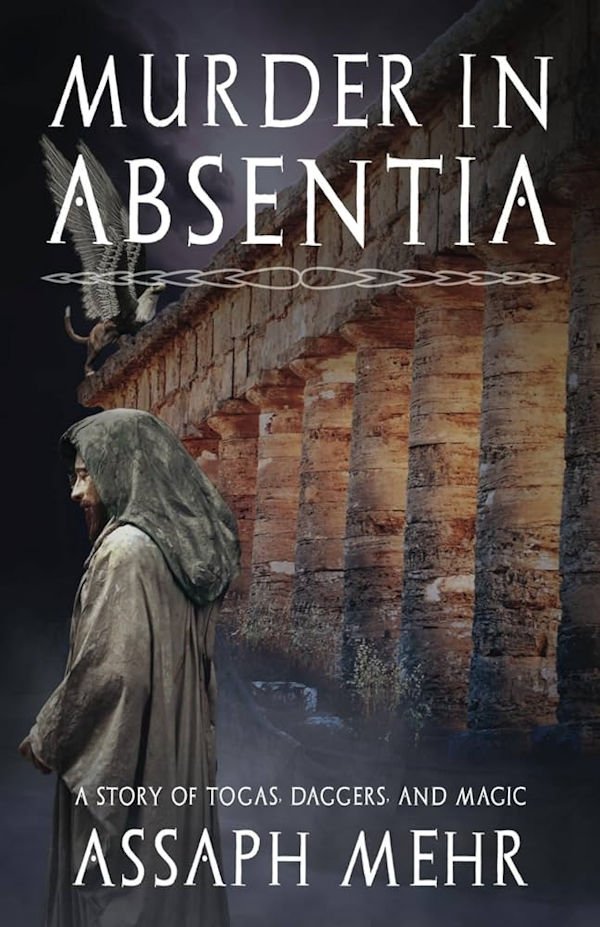
A young man is found dead in his bed, with a look of extreme agony on his face and strange tattoos all over his body. His distraught senator father suspects a cult death, and knows who to call for discreet resolution.
Enter Felix the Fox, a professional investigator. In the business of ferreting out dark information for his clients, Felix is neither a traditional detective nor a competent magician—but something in between. Drawing on his contacts in the shady elements of society and on his aborted education in the magical arts, Felix dons his toga and sets out to discover the young man’s killer.
This has been sitting on my e-reader for ages, I finally managed to get around to it after literally years of planning to read it.
Roman-inspired fantasy noir with a snarky but sensible detective, vivid worldbuilding, and a mystery that’s tastier than its solution. Come for the investigation, stay for the food and magic. But brace for some male gaze.
A fantasy murder mystery set in the Rome-inspired city-state of Egretia, where detective-for-hire Felix “The Fox” is called to investigate the suspicious death of a powerful official’s son. There is money, there is sorcery, there is danger, and there is a lot of food. The world feels lived-in, with detailed customs, politics, and geography. The mix of Roman history, Greek touches, and the author’s own ideas makes for a rich setting. The gradual introduction of magic is one of the highlights. The magic stays mostly a mystery, but fits the world and story well.
Felix himself is a strong lead. He is clever, snarky, and knows when to keep his mouth shut. He is refreshingly aware of his limits and hires muscle or gets help when needed. He is not overpowered, which makes the stakes feel real and the danger convincing. His past is hinted at just enough to spark curiosity, but I wish the book had given a little more on that front.
The mystery is well-paced in the early and middle sections, with plenty of clues to chew on. I liked the way the investigation took us through different layers of Egretian society, from the respectable public face to its seedier corners. The ending, though, did not quite land for me. The reveal was unpredictable, but not as satisfying as the journey to get there.
Where the book lost me at times was the male gaze element. It is the familiar noir trope of women falling for the main character, complete with a few sex scenes that add nothing to the story or characters. Felix is not a misogynist, but he notices and at times compares women’s looks in a way that I’m just tired of. The hand job during the gladiator games might have been meant to underline the decadence of society, but mostly it felt like a “look how Felix got lucky” moment.
The worldbuilding is immersive but occasionally repetitive, with a few bits that could have been cut without losing anything. Even so, the combination of historical inspiration, original fantasy touches, and a wry but capable protagonist makes this a memorable read.

