

The following is based on the 17 books in the Anita Blake series by Laurell K. Hamilton. This article contains spoilers if you have not read up to the most recent book. Read with caution if you are still reading the series.
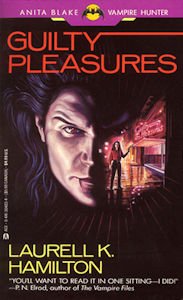
The first time I met Anita Blake, I was immediately impressed by this feisty, petite young woman—a licensed vampire hunter known as the Executioner. She embodied qualities I admire (strong, determined, willing to take risks, wry sense of humor, loyal to friends, passionate about her work, and seemingly non-judgmental) and I found in her, a character similar to Buffy. To me, she was the love child of Blade & Buffy. She exuded a quiet strength, lived life as a single, independent strong woman and she loved Sigmund, her toy penguin. I could almost imagine we were alike and could have been friends, except I’m taller and have a toy puggle from The Lost Forests, and of course, there are no preternatural in my world. Anita was my ultimate heroine: my “girl crush”.
Anita introduced me to her world where I met Ronnie, her best friend. She loved penguins and had quite a collection of stuffed toys. I felt her frustrations with her boss Bert, observed her quiet respect for her R.P.I.T. (Regional Preternatural Investigation Taskforce) boss, Dolph, and I cautiously followed her as she walked in a world of zombies, vampires, and shapeshifters. She also introduced me to the scary and cold killing machine Edward as well as the blue-eyed vampire Jean-Claude, and later, to the delicious brown eyed werewolf, Richard.
In the beginning, Anita was first and foremost known as an Animator and one of the talented few who was able to raise the dead using ritualistic magic (freshly killed animals). She was able to help families confirm the outcome of a will, help the police determine if a death was non-accidental, and provide closure to loved ones, where someone’s life ended prematurely.
I stood by Anita as she took down Nikolaos but not without a major cost—a cost that later led to the last strips of humanity falling from her. You see, in order to take down Nikolaos she had to take two of the four marks by Jean-Claude.
Marks? What are marks? This is a term used by Hamilton to describe the growing bond between vampires and humans. The first mark, enables the human to become stronger, faster, and able to withstand their master’s (the vampire) stare as well as strengthening their bond. The second and third marks grant them almost vampiric like strength without them becoming a vampire. Unfortunately for Anita, she was tricked into receiving the first mark. Once marked, the only way to severe the bond is for one of them to die.
Anita did not want to fall in love with vampires or werewolves. Poor Anita. You see, she had a troubled childhood. Oh from the way she tells it, it does not seem all that traumatic. When she was eight-years-old, her mother was killed in a car accident and it is my view, this affected Anita greatly, leaving us with an adult unable to deal with relationships, love, and loss in a mature and healthy way. In addition to this, her father later married and went on to have a child. Anita’s mother was Mexican and her father white (German). When he married again, his wife was a blue-eyed blonde, and she came along with her daughter as well as having a child together. Anita grew up as the darker haired, mixed heritage girl in an otherwise ‘perfect’ blonde family, with strong Catholic ideals.
Anita was sent to live with her grandmother, a Vaudun priestess, after she raised her dead dog, making Anita a necromancer/animator. Apparently, her grandmother thought it best to ensure Anita understood the ways of the Lord as a way to protect her against her necromancy. So here was Anita, a teenager without her mother, her father has remarried, and physically, she does not belong, and emotionally, she is distanced from her father. Furthermore, she was sent to live with her grandmother to help control her necromancy but even her strong grandmother, felt Anita needed to embrace Christ’s religion in order to save her soul. In hindsight, I wonder if her grandmother was actually psychic?
Anyway, going back to Anita in the here and now—or back when I met her. Anita was working a case, which she did in the early days—she worked as an Animator and was also a consultant with R.P.I.T. Anita hunted the monsters, was a licensed vampire executioner and she seemed to have a relatively balanced life. And then she worked a case with Jean-Claude. Master Vampire of St. Louis. Whilst investigating vampires being murdered, she becomes attracted to Jean-Claude who makes all attempts to seduce her.
As her attraction for him grew, I urged her to reconsider and hold on to her humanity—he was a vampire, she hunts vampires. Vampires are their own community. Her friends and colleagues also warned her to stay clear. But then she became marked. She had a bond to Jean-Claude. She was able to understand the vampires more. She got to know them better and her role as animator and vampire executioner was often catapulted into Jean-Claude’s world.
Hmm, so anyway, Jean-Claude, the blue-eyed beautiful effeminate vampire, begins to fall in love with Anita—as much as a vampire can of course ‘love’. But in between all of this, Anita meets and begins a relationship with Richard, a werewolf who struggles with his inner monster. He seems so human and does ‘normal’ things, like lectures at uni, and cooks dinner. He and Anita become engaged and despite her ongoing attraction to Jean-Claude, her loyalty and love belong to Richard. But of course, he is also a werewolf and he can’t be both human and werewolf.
After a particular difficult case, Richard ultimately turns into a werewolf on top of Anita—eww, how scary. And… well… Anita runs… To Jean-Claude.
Perhaps this is where it all starts to go Pete Tong. You see, in order to fight yet another battle, Anita, Richard, and Jean-Claude form a Triumvirate, and with their bonds, become a very strong group that will prove useful in running, not only the city they reside, but against other vampire ‘kisses’ (covens) that want to grow and take over other kisses. They also are supreme over other shapeshifters. The more battles they fight—against others and within their little triumvirate—the more powerful Anita becomes. Because now, Anita is like a fire—consuming everything she touches, soaking up every kind of power and lycanthrope strain she comes into contact with. So whilst she is not just ‘one’, she is ‘one’ of everything—she has inside her a werewolf strain, a wereleopard strain, a weretiger strain etc., etc. And then, pretty much every shapeshifter is strongly attracted to Anita—even before she developed the Ardeur (which is an affliction that can only be sated, sorry fed, through sex. With lots of people at the same time).
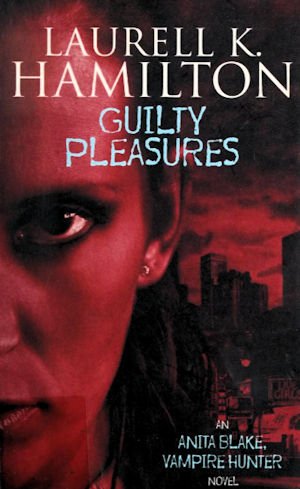
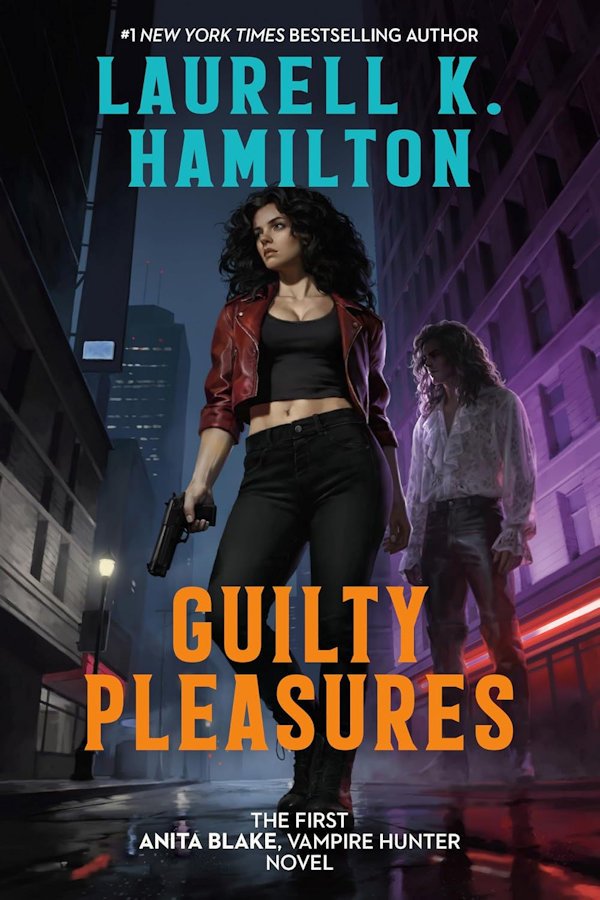
So the Anita I met, the Anita who wanted to wait to have a sexual relationship once she was married, is now sleeping with a range of men—Jean-Claude (vampire), Richard (werewolf), Micah (wereleopard). I am only naming three here. At one stage, she was with six men at the same time. Oh maybe not ALL together, but she would wake up with two, later that day do another two, and then end with a dessert of two to three men.
Through all of this, Anita becomes this whiney woman in a vicious circle of self-loathing. All these beautiful men are in love with her and want to be with her but she does not feel beautiful. She feels slutty. On top of all this, her power grows and she becomes an effective killer. She struggles to accept who she has become. Okay, so we have all (mostly) done something we regret and/or don’t like, but these are the choices we make at a time based on resources available to us then. These choices, these decisions influence who we are now. If we are not happy, let’s move on, let’s make changes. But Anita? Noooo. She continues to self-loathe, hates that the Ardeur makes her have sex with so many people. Didn’t Spiderman’s uncle say, “With great power, comes great responsibility?” Thing is, how has Anita accepted this responsibility? I don’t mean the responsibility to those she is sleeping with, but the responsibility of making decisions and leading different groups of people who see her as a ruler, a leader, a queen. As Anita grows, so does her inherent conflict, which at times frustrates me and is almost repetitive.
The Anita I know now, to me, has developed into a selfish woman with little to no boundaries. Anita has somehow become this ultimate killing machine—a monster. And going back to the beginning, she is pretty much everything she disliked. I wonder at this self-sabotaging behavior you sometimes see in teens who are emotionally and physically abused. Again, this is a common theme amongst Anita’s group of friends and loved ones. Most, if not all, have been sexually and/or physically tortured. Most of the men despair at their lot in life. I just want to shout at them and tell them to ‘man up’. Which is kind of ironic, as I like a man who is sensitive and nurturing, but c’mon. I mean, I also want him to get up in the middle of the night if there is a loud noise.
In summary, I feel Anita has not accepted any responsibility for her choices, her actions. She even said, “sometimes I fear I am becoming a sociopath.” She started out as someone wanting to beat the monsters, and at first, fought hard to remain true to herself and her friends. However over time, she fell in love with vampires, adopted men who were sexually abused and/or otherwise neglected as children, took on primary lovers who remain true to her, and allow her to have sex with whoever, whenever, whilst they don’t engage in sex with others. I find the way in which Anita treats the various men in her life, cruel. She fears other strong female characters and as such, those females who are in her world are below her on the whole vampire/werewolf line or they are ‘gay’. Or they act out in jealousy of what she has (even though she moans she does not have anything).
I am confused by the way in which Anita treats those closest to her in her life and wonder what childhood incident has allowed her to develop into this self-loathing, destructive adult? I wonder what relationship her mother and father had and what family life was really like during her early years as she does not, or seems incapable of, having a healthy relationship with the men in her life. It seems to me she always has to be dominating yet yearns to be dominated. She wants ‘men’ yet is surrounded by men who are feminine in different ways: Jean-Claude and his gay love with Asher; the cling-on Nathaniel, abused as a young boy and ‘adopted’ by Anita, and later becoming her lover; to name a few.
At first I was impressed with her selfless ability to care for and protect those vulnerable, yet this care and protection becomes sexual. And I feel Anita cannot exist in a relationship where there is no sexual attraction to her or where she is not sexually involved with them. So perhaps this is due to the Ardeur—yeah ok, but I also feel flaws in Anita’s character led her to this.
I wonder with her mother’s death whether Anita felt abandoned by the only person she knew as being able to protect her. But protect her from what? Was she being sexually abused by her father? She has little to no relationship/contact with her birth family. What was really so tragic that she has now turned into this killing machine who dominates through sex? I wonder what the BAU (Behavioral Analysis Unit) of Criminal Minds would make of her? I wonder what Dean and Sam (Supernatural) would do to her? Hell, I wonder what Buffy would do?
It is my view that the women of my generation today concede great status to women who move forward and show strength where there is loss of love, loss of family, and major career turns. We applaud women who can be both carefree and yet committed in a relationship, who are fashion savvy and care about the environment. Many of us have watched Sex and The City and completed the ‘which one are you’ questionnaire, we know who Buffy is, we admired Jessica Biel’s toned body in Blade 3, and supported Sydney Bristow in Alias—we still wanted her to get back with Michael after he married ‘the other woman’. We still feel for Jennifer Aniston and the whole Brangelina media orgy. So why does Anita make us frustrated? Perhaps if the novels started off with Anita as this Ardeur-victim-and-her-harem who then becomes this free, independent, and strong scary Executioner, then we would admire her and want to be her.
Oh well, I suppose when Anita’s loved ones start dying or if Marmee Noir removes her powers and leaves Anita with nothing but her necromancy, and she then begins the journey of self discovery, I will happily join her for the ride. But in the meantime, I will continue to wait till the book is available at the library and read a few chapters before deciding to buy it.
The Anita Blake series, is by far, the most impressionable paranormal/urban fantasy series for me and one which inspired me to explore this genre further. Anita Blake at first was an amazing heroine—I wanted to be her friend, hell I wanted to be her. I fantasized over who would play her in a movie and I found myself wondering ‘what would Anita do’ in various situations. The first few books in this series were pure genius. Up until Obsidian Butterfly that is. From then, the books turn into a porn fest. Now I enjoy a little giddy-up here and there, but the series takes on a triple-X rating often involving multiple partners—although, Hamilton stops just short at bestiality. ‘Just’ I tells ya. For me, the first seven or so novels were well written, with believable and intelligent plot lines, developed characters, and a likeable heroine with a sarcastic sense of humor. Hamilton’s world of the preternatural is second to none—nope not even Anne Rice. Anita’s ability to use weapons and fight hand-to-hand combat is believable and what keeps me hanging on.
During my years of Facebook group forums, other web forums, and Wikipedia I have read that Jean-Claude was meant to be killed off in the third book, and the character of Anita is based on Hamilton herself. If the latter is the case, then Hamilton is one mixed up, conflicted, troubled woman and she will probably soon go off the deep end ala Charlie Sheen.
What I don’t understand is how did Anita go from this likeable, if not slightly troubled heroine, to a woman who doubts her own sex appeal and beauty, is vulnerable in love (if you can call it that) with those around her, shares her body with others due to a ‘genetic’ addiction (the Ardeur), and has turned into the monster that in the first book, she would have put down with a stake to the heart?
In the realm of vampires, werewolves, etc., Anita Blake’s world at first was believable, but after book nine, it is no longer so. I have not purchased the last three novels—I borrow them from the library. I flicked through Flirt so quickly that I might as well have bought a magazine on lawn balls for all the interest it held for me.
So, now you know why I broke up with Anita Blake.

