
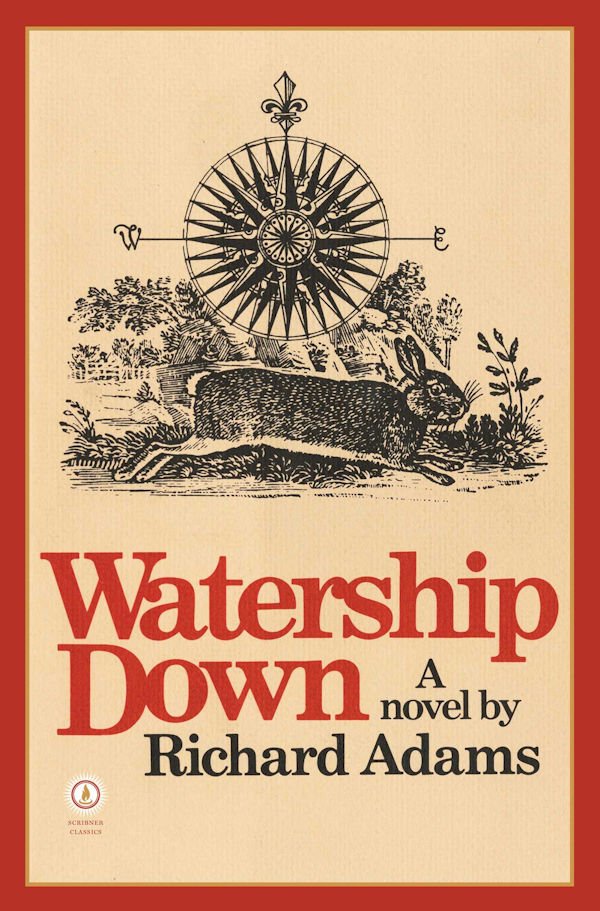
In sixth grade, my English teacher tried to talk me out of reading Watership Down when I found it in the school library. It was too big and “advanced” for me, a 12-year-old human. But I’d already read Lord of the Rings years before, and Watership Down was my favorite movie at the time. There was no way I wasn’t going to read the book.
My teacher didn’t think I could handle it, not because it wasn’t “a book for kids”, it was because I wasn’t smart enough. I misbehaved in class, sucked at taking tests, and never did my homework. A kid like me would never be able to understand something that advanced. Turns out, that was because I had ADHD, dyslexia, and learning disabilities (among other things). In reality, I was stupid amounts of smart (probably smarter than her, honestly), but the teachers and the school were treating my undiagnosed disabilities as my actual intelligence level and writing me off as someone to stick in the “dumb English class” and forget about.
Watership Down was in my school library because it was a book kids my age could read if they wanted to. It was just me who shouldn’t read it, because I was too dumb to understand it, as far as my teacher was concerned.
I did, in fact, read it anyway and loved it. (You should also read it. Watership Down is the best book about Nazi rabbits ever written.)
Why do I bring this up? Earlier today I saw a post on Tumblr, then I signed into Twitter to get a fresh copy of the original tweet and the poster’s username. So, I hope y’all appreciate the lengths I went through to tell this story.
The post begins with a dude on Twitter crashing out over The Hobbit, because,
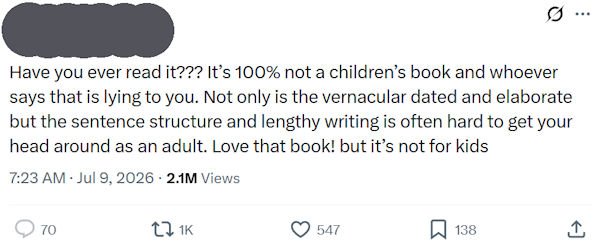
“It’s 100% not a children’s book and whoever says that is lying to you. Not only is the vernacular dated and elaborate but the sentence structure and lengthy writing is often hard to get your head around as an adult. Love that book! but it’s not for kids”.
Then Lucía Lobosvilla quote tweets his post and points out that it is, in fact, a children’s book and,
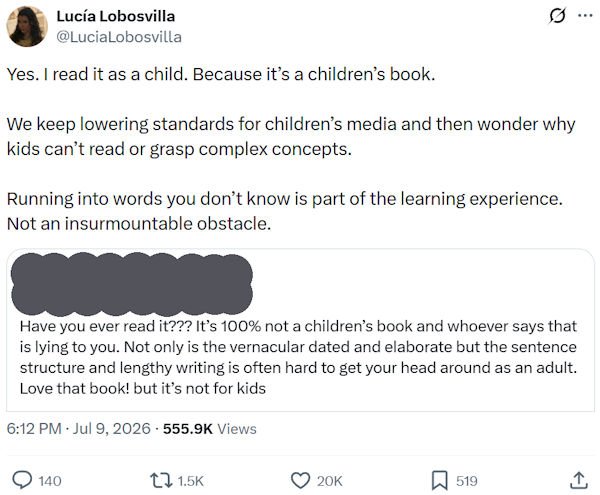
“We keep lowering standards for children’s media and then wonder why kids can’t read or grasp complex concepts.
“Running into words you don’t know is part of the learning experience. Not an insurmountable obstacle.”
The Tumblr post where I first saw this discussion contains even more astute commentary if you are interested.
My addition to this line of thinking is to hard agree with Ms. Lobosvilla. Unfortunately, this kind of book gatekeeping is very present today, and not just from randos on Twitter. I think my sixth-grade argument would have gone completely different, if it had happened today. But not in the way you would expect.
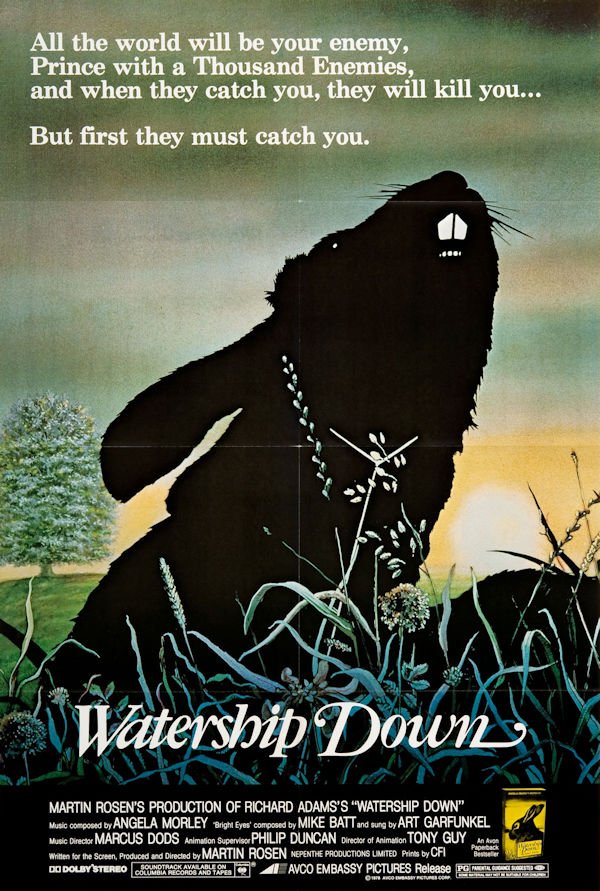
When I was growing up in the 80s-90s, kids were treated like mini-adults (regardless of age) unless we were actual children (toddlers). Back then, we were almost completely ignored, unless we got into trouble. Kids could watch anything that was a cartoon (see my favorite movie at age nine being Watership Down). Read pretty much any book in the library. Movies didn’t even have a PG-13 rating until 1984.
Then somewhere in the 90s attitudes started to shift. The internet came online, people started getting home computers, knowledge was reaching farther than it ever had. And kids were absorbing as much of it as they could. There was a sweet spot in there right between the knowledge being available and the knowledge becoming “dangerous”, and the turn of the century is where it shifted.
We hit the early 2000s and kids couldn’t do things on their own anymore. They had to be protected. This is probably an overall good thing. Yeah, we had more freedom in the 80s, but there were definitely times when supervision should have been warranted. But that attention soon slid over to the other side of the scale. This was the beginning of helicopter parenting. Everything had to be planned ahead. Everything had to be checked over before the kids were exposed to it. You couldn’t be too careful!
Kids didn’t meet up to play at the park anymore, parents planned playdates. You couldn’t just turn on the TV and let kids watch whatever they wanted, now you had to screen everything first, even shows for toddlers. Because kids weren’t mini-adults anymore, instead they stayed little kids, until they were almost adults themselves.
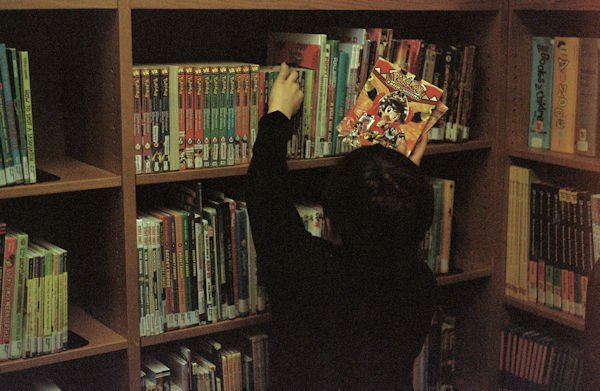
In the mid-2010s, that process of keeping kids from any independence started slipping back the other way, but only in certain parts of life. Playdates stayed a thing. Screening traditional media did as well. But everything was online now. Every kindergartner had a phone. Everyone and everything was on social media. I think this loss of control got funneled into one of the only medias left that parents and teachers could have direct influence on: books.
Leading up to today, middle grade and YA, both categories that didn’t exist when I was a kid, have taken over bookstores and libraries. Next to the picture books, there are whole sections of chapter books geared towards very specific age groups. Books with the age or grade level printed on the cover, in case you weren’t sure if your child could handle it or not. And for the kids whose tastes and reading levels leaned higher than average, there is a separate section apart from the younger kids, but also apart from the adults: the YA section. This is where they put books “too advanced” for the younger kids, but still not “grownup” enough for the adults.
I’m going to pause for a moment, because I want to be crystal clear: I am not anti-middle grade or YA. Having books geared toward certain age groups and reading levels is not a bad thing. More books is never a bad thing. And just because a book is rated middle grade or YA doesn’t mean the reader needs to fit the young-kid-to-teen age range suggested by their genre. Having new categories is not bad on its own.
But these subsections also put boxes around kids that were never there before. It makes adults less likely to let kids try things outside their perceived abilities. I personally know parents who treat the age ratings as gospel, and would never think of letting their kids try anything outside of where their ages fall, regardless of the content.

On the more severe side of things, there are parents angry that “certain topics” are being shown to kids in school libraries at all. And others (see above) saying older books written for children are far too hard for kids these days to read. There are even some complaints that there shouldn’t be big, hard to understand words in books for adults! Because big words put readers off.
We have overcorrected. We have gone from borderline ignoring children until they reach adulthood, to treating them like they are incapable of making their own decisions. A larger swath of the population than I like to think about, asks ChatGPT all their questions, even though it does nothing but make up answers. We are, as a society, getting dumber. And the problem is not the kids’ ages, or the books’ ages, or the difficulty of the books’ vocabulary. The problem is adults refusing to think for themselves, and because of that they are assuming kids won’t or can’t do so either.
The thing is, adults have limits on what they can understand. Or to put it a better way, adults have limits on what they will try to understand. But kids? No one knows their limits. Until they’ve become adults, they are plastic, moldable, stretchy, and have unlimited potential.

What’s the worst thing that could happen if a kid picks up a good book that’s “too hard” for them or comes from the “wrong” section in the library? They’ll put it down? They’ll get confused? They’ll ask a trusted adult what something in it means?

What’s the best thing that could happen? They discover new worlds, new types of people, new ways of thinking? A love of reading? A love of discovery itself?
What’s the most likely thing that will happen? Maybe a mix of both? Who knows. I don’t, but neither do you.
So please, for the sake of humanity’s future, don’t be my sixth-grade English teacher. Let kids read good books. It doesn’t matter how big they are, or what age range they are “supposed” to be for. Encourage them to find their own places in the stacks.
Don’t assume a kid is too dumb for something– I’m sorry not advanced enough for something. It’s way more likely you are just not advanced enough to see their potential. And give yourself some grace there too. Maybe you have more potential than someone once thought you did. Maybe all you need to grow beyond your current potential, is to find the right book.
Feature image by Johnny McClung.

